Vijayawada, June 9 : Manipal Hospital Vijayawada conducted a press meet to create awareness about the availability of
advanced Extracorporeal Membrane Oxygenation
services and
critical care capabilities at the
hospital, highlighting the successful recovery of a 55-year-old patient who battled severe Acute
Respiratory Distress Syndrome and life-threatening lung failure.
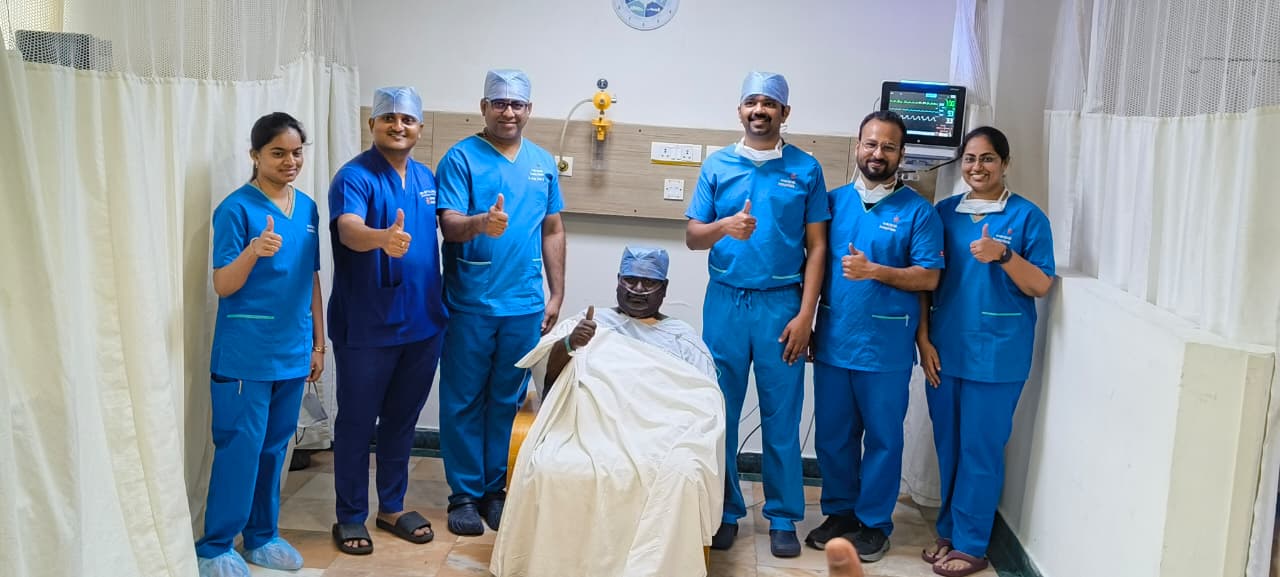
The press meet highlighted the growing role of ECMO as a lifesaving intervention for patients with severe respiratory failure when conventional ventilator support is no longer effective. The session was led by Dr. Lokesh Gutta, Consultant – Interventional Pulmonology; Dr. Uday Kiran G, Consultant – Pulmonology; Dr. V. Dinesh Kumar Gontla, Consultant – ICU & Critical Care; Dr. T. Srinivas, Consultant – Critical Care & Intensive Care Medicine; Dr. Dilip Ratti and Dr. Varun Pamidi Consultants – CTVS who shared insights into the hospital‘s advanced ECMO capabilities, multidisciplinary treatment approach, and specialized critical care services available in the Vijayawada–Amaravati region, enabling patients to access world-class care closer to home.
As part of the session, the clinical team presented the case of Mr. Gumma Venkata Rao, who was admitted to Manipal Hospital Vijayawada in a critical condition with oxygen saturation levels dropping to 60 percent. Diagnosed with severe ARDS, the patient continued to deteriorate despite mechanical ventilation, prone positioning, antibiotics, and intensive medical management. The case was further complicated by morbid obesity, with the patient weighing approximately 140 kilograms. With conventional treatment proving insufficient, the medical team initiated ECMO support, which temporarily took over the function of the lungs and allowed them to recover.
During the course of treatment, the patient also developed a massive airway bleed that required an emergency rigid bronchoscopy procedure to remove large blood clots obstructing the airway. Following two and half weeks of ECMO support, close monitoring, respiratory rehabilitation, physiotherapy, and multidisciplinary care, the patient was successfully decannulated from ECMO and has made a remarkable recovery. He is currently conscious, clinically stable, tolerating oral feeds, and requires only minimal oxygen support. The patient has spent 27days in the ICU and is being discharged in a Hemodynamically stable condition.
Speaking on the occasion, Dr. Lokesh Gutta and Dr. Uday Kiran G, Department of Pulmonology, Manipal Hospital Vijayawada, said,
“ECMO is one of the most advanced forms of life support available for patients with severe respiratory failure when conventional ventilator support is no longer effective. This case demonstrates how timely intervention, advanced technology, and close collaboration among multiple specialties can help save lives even in the most challenging clinical situations. The successful recovery of this patient reinforces the importance of having advanced ECMO services readily accessible within the region.”
Mr. Ramanjaneya Reddy, Hospital Director, Manipal Hospital Vijayawada, said,
“This successful ECMO-supported recovery reflects the strength of our multidisciplinary teams and the advanced critical care infrastructure available at Manipal Hospital Vijayawada. Our objective is to ensure that patients across Andhra Pradesh have access to world-class healthcare without having to travel outside the region. The availability of ECMO and other advanced critical care services at our hospital is helping bridge a crucial gap in the management of complex medical emergencies.”
The hospital emphasized that advanced services including ECMO, interventional pulmonology, rigid bronchoscopy, and comprehensive critical care are now available in the Vijayawada-Amaravati region, enabling timely treatment of complex respiratory emergencies and improving patient outcomes closer to home.

