
The Vocal for Local Karva Chauth market is highlighting how India’s festive traditions can create meaningful business opportunities for small traders, artisans and regional manufacturers. Beyond its cultural and religious significance, Karva Chauth has become an important seasonal opportunity for businesses selling traditional clothing, Puja essentials, jewellery, cosmetics, sweets and gifts.
The growing emphasis on indigenous products under the Vocal for Local and Swadeshi campaigns has encouraged consumers to pay greater attention to locally made goods. For many shoppers, purchasing handcrafted items or buying from neighbourhood stores is not simply a festive tradition; it is also a way to support local livelihoods and preserve traditional skills.
Festive spending creates demand across an extensive supply chain, connecting manufacturers and wholesalers with retailers, street vendors, home-based entrepreneurs and service providers. This makes Karva Chauth an important example of how cultural celebrations can contribute to economic activity at the local level.
Rising Festive Sales Create Opportunities for Small Businesses
Karva Chauth brings a seasonal increase in demand for products associated with traditional celebrations. Clothing stores, jewellery shops, beauty salons and local markets often prepare weeks in advance to meet shoppers’ requirements.
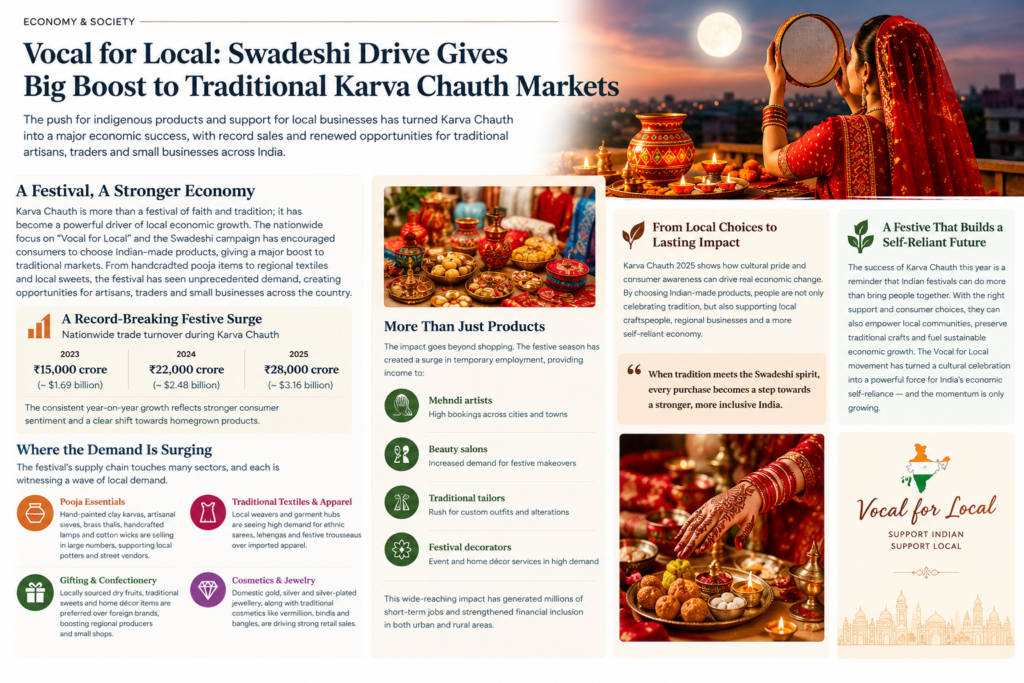
Festive trade estimates have highlighted the scale of this commercial activity, with nationwide turnover associated with Karva Chauth reportedly rising from around ₹15,000 crore in 2023 to ₹22,000 crore in 2024 and an estimated ₹28,000 crore in 2025. These figures indicate the potential scale of the market, although they should be treated as reported estimates rather than independently verified sales totals.
For small retailers, the festive period can provide an important opportunity to increase revenue, attract new customers and improve cash flow. Many businesses depend on seasonal demand to offset slower trading periods, making festivals particularly significant for their annual performance.
Traditional Crafts and Pooja Items Find a Ready Market
Traditional Karva Chauth products remain central to the festival’s shopping activity. Decorated earthen pots, known as karvas, traditional sieves, pooja thalis, clay lamps and other ceremonial items create demand for local artisans and small manufacturers.
Potters, metalworkers and handicraft sellers can benefit when consumers choose locally produced items instead of mass-produced alternatives. These purchases help sustain traditional occupations and provide income to families whose livelihoods depend on craft-based production.
Small vendors also play an important role by making festive essentials available at affordable prices. Their presence allows shoppers to find products suited to different budgets while keeping a portion of consumer spending within the local economy.
Ethnic Wear and Jewellery Drive Retail Demand
Clothing and jewellery remain important parts of Karva Chauth shopping. Sarees, lehengas, festive suits, bangles, bindis and traditional ornaments attract customers looking for outfits and accessories for the occasion.
This demand supports several connected businesses, including textile retailers, local weavers, garment manufacturers, tailors and embroidery workers. Tailoring and alteration services can also experience increased demand as customers prepare their festive clothing.
Jewellery stores and smaller accessory sellers benefit from interest in traditional designs, including gold, silver and imitation jewellery. Meanwhile, local cosmetics retailers often see demand for products such as mehndi, sindoor and other festive essentials.
For small businesses, the opportunity lies not only in selling products but also in offering personal service, regional designs and price options that reflect the preferences of their customers.
Local Sweets and Gifts Strengthen Regional Businesses
Food and gifting are another important part of the festive economy. Traditional Indian sweets, dry fruits, decorative gift items and locally produced home accessories contribute to seasonal demand.
Sweet shops, neighbourhood confectioners and small food businesses can benefit from increased orders, particularly when customers prefer freshly prepared products or regionally familiar flavours. Local producers of packaged foods and handcrafted gifts can also use the festive period to introduce their products to new buyers.
Choosing locally sourced goods helps connect consumers with regional businesses and gives smaller enterprises an opportunity to compete through quality, freshness and distinctive products.
For entrepreneurs operating on limited budgets, seasonal demand can also provide valuable feedback about customer preferences and help them plan future inventory.
Festive Services Generate Temporary Employment
The economic impact of Karva Chauth extends beyond retail sales. Mehndi artists, beauticians, salon workers, tailors, decorators and delivery providers often experience increased demand during the festive period.
For many independent service providers, these bookings provide additional income without requiring significant investment in permanent infrastructure. Home-based entrepreneurs and self-employed workers can also reach customers through local networks and digital platforms.
Although the number of jobs created specifically by Karva Chauth varies and is difficult to establish precisely, the festival demonstrates how seasonal spending can support temporary work and supplement household incomes.
Women-led microbusinesses, in particular, may find opportunities in mehndi services, handmade decorations, festive food preparation and clothing-related work. Such activities can help small entrepreneurs strengthen their customer base and build more stable sources of income over time.
How Vocal for Local Can Strengthen the Festive Economy
The Vocal for Local movement encourages consumers to recognise the value of domestic production and local enterprise. During festivals, this approach can translate into practical purchasing decisions, such as buying from neighbourhood shops, choosing Indian-made products and supporting regional artisans.
However, lasting benefits depend on more than consumer sentiment. Small businesses also need access to affordable credit, reliable supply chains, digital payment facilities and effective ways to reach customers. Better packaging, consistent product quality and online visibility can help local sellers expand beyond seasonal demand.
Retailers can strengthen their position by managing inventory carefully, offering products across different price ranges and building lasting relationships with customers. For artisans and manufacturers, collaborations with local stores and online marketplaces can open additional routes to market.
The objective is to turn temporary festive demand into sustainable business growth rather than relying exclusively on a short trading window.
Conclusion
Karva Chauth illustrates how India’s cultural traditions can support a broad network of small businesses and independent workers. From potters and textile sellers to sweet makers, jewellers and mehndi artists, the festival creates opportunities for local enterprises to generate income and connect with consumers.
The Vocal for Local and Swadeshi campaigns add another dimension to this activity by encouraging greater awareness of Indian-made products and the people behind them. While festive sales estimates offer an indication of the market’s potential, the deeper economic value lies in supporting livelihoods, preserving traditional skills and strengthening neighbourhood businesses.
Ultimately, choosing local products can make festive shopping more than a seasonal expense. It can help sustain the people and enterprises that keep India’s traditional markets active, distinctive and economically relevant.
