


The earphone and headphone industry is no longer a simple consumer electronics segment focused only on sound quality. It is rapidly evolving into a smart wearable ecosystem shaped by artificial intelligence, wireless connectivity, and changing digital lifestyles.
Modern audio devices now sit at the intersection of communication, entertainment, productivity, and personal health. This shift is redefining how consumers choose, use, and upgrade their devices.
Audio Devices Are Becoming Everyday Smart Wearables
Earphones and headphones have moved from being occasional-use gadgets to essential daily companions.
They are now widely used for:
- Work meetings and virtual collaboration
- Online education and remote learning
- Gaming and immersive entertainment
- Fitness tracking and outdoor activities
- Short-form video and streaming consumption
This shift has significantly increased daily usage hours and raised consumer expectations. Buyers now look beyond sound quality and prioritize comfort, battery performance, microphone clarity, and seamless device switching.
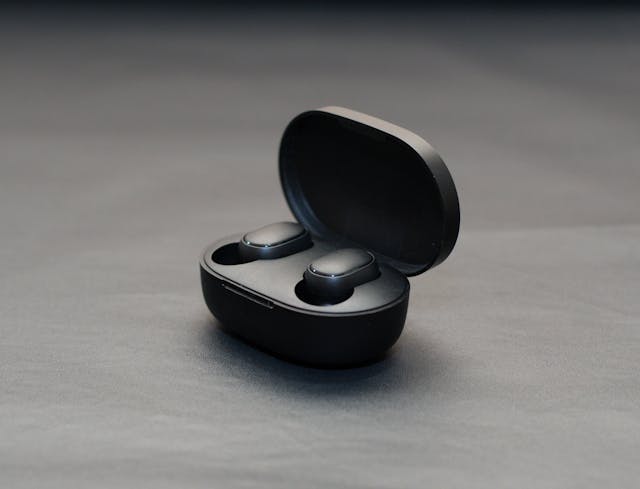
Wireless and True Wireless Stereo (TWS) Become the Industry Standard
The global market has almost fully transitioned from wired to wireless audio devices.
True Wireless Stereo (TWS) earbuds have become the dominant product category due to their compact design and ease of use. This shift has been accelerated by smartphone design changes, especially the removal of headphone jacks, and improvements in Bluetooth technology.
Key factors driving wireless adoption include:
- Better connectivity stability and lower latency
- Longer battery life with fast-charging cases
- Reduced device dependency and cable-free convenience
- Wider availability across all price segments
Wireless audio is now the default expectation for most users, not a premium upgrade.
AI Integration Is Transforming Audio Experience
Artificial intelligence is becoming one of the most important innovation layers in the headphone market.
Modern devices are increasingly equipped with AI-driven features such as:
- Adaptive sound tuning that adjusts based on surroundings
- Real-time background noise reduction during calls
- Voice enhancement for clearer communication
- Personalized sound profiles based on listening habits
Some advanced models are also exploring early-stage capabilities like real-time translation and contextual audio optimization.
This shift is turning headphones from passive audio output devices into intelligent, responsive wearables that adapt to user behavior.
True Wireless Stereo (TWS) Leads Volume Growth
The TWS segment continues to dominate market expansion, especially in urban and price-sensitive markets.
Even entry-level and mid-range devices now offer features that were previously limited to premium products, including:
- Active Noise Cancellation (ANC)
- Environmental noise suppression for calls
- Water and sweat resistance ratings
- Touch and gesture controls
- Fast pairing and multi-device connectivity
This feature convergence has intensified competition while also making advanced audio technology more accessible to mass consumers.
Premium Segment Grows Alongside Mass Adoption
While low-cost devices drive volume growth, the premium segment is steadily expanding as well.
Consumers in this category are increasingly investing in headphones that offer:
- High-resolution and spatial audio experiences
- Advanced adaptive noise cancellation
- Multi-device ecosystem integration
- Longer battery cycles with rapid charging
- Superior microphone systems for hybrid work environments
Premium headphones are increasingly positioned as productivity tools and lifestyle accessories rather than just entertainment devices.
Gaming, Work, and Fitness Are Major Demand Drivers
The expansion of use cases has become a key growth engine for the industry.
Three major categories are shaping demand:
Gaming:
Low-latency audio and immersive sound effects are critical for competitive and mobile gaming experiences.
Work and communication:
Remote and hybrid work environments have increased demand for clear voice quality, noise isolation, and long-duration comfort.
Fitness and mobility:
Sweat-resistant, secure-fit earbuds are widely used for workouts and outdoor activities.
This diversification has made audio devices a constant-use product category rather than a niche accessory.
Emerging Markets Continue to Drive Expansion
A significant share of global growth is coming from emerging economies, where:
- Smartphone penetration is rising rapidly
- Internet access and streaming consumption are expanding
- Young, digitally active populations dominate usage patterns
- Affordable wireless devices are widely available
Price-sensitive markets are particularly important for TWS adoption, with regional brands playing a major role in expanding access.
Key Market Challenges
Despite strong growth momentum, the industry faces several structural challenges:
- High competition and price pressure in entry-level segments
- Rapid product replacement cycles
- Battery degradation in low-cost devices
- Fragmentation across ecosystems and brands
- Increasing concerns around electronic waste and sustainability
These challenges are pushing manufacturers toward differentiation through software, AI features, and ecosystem integration rather than hardware alone.
Future Outlook: From Audio Devices to Intelligent Wearables
The future of the earphone and headphone market is centered on convergence.
Audio devices are expected to evolve into fully integrated smart wearables with capabilities such as:
- Deep AI-based personalization
- Health and activity sensing features
- Spatial and immersive audio experiences
- Seamless integration with smartphones, PCs, and smart devices
The boundary between headphones, wearables, and smart assistants is gradually disappearing.
Conclusion
The earphone and headphone market is transitioning from a traditional hardware category into a smart, AI-driven wearable ecosystem.
Future competition will not only be defined by sound quality or price, but by intelligence, adaptability, and seamless integration into users’ digital lifestyles.