
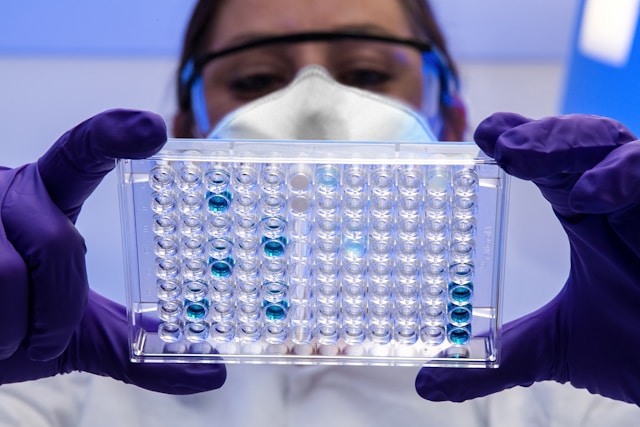

Peptides occupy a critical niche in modern scientific inquiry, serving as molecular tools for dissecting complex biological pathways. Among these, Ipamorelin has emerged as a particularly intriguing synthetic peptide, widely explored for its distinctive properties within the growth hormone secretagogue (GHS) family. Initially designed as a selective growth hormone–releasing peptide, Ipamorelin has become a subject of growing research interest not only for its possible interaction with established receptor systems but also for its broader implications in signaling, energy regulation, and structural biology.
The fascination with Ipamorelin rests on its proposed precision. Where earlier members of the GHS group displayed broad receptor activity, Ipamorelin was designed to achieve a refined selectivity profile, engaging specific signaling pathways with reduced cross-reactivity. This property has encouraged researchers to investigate the peptide not only in the context of classical endocrinology but also as a platform for understanding receptor-ligand specificity, metabolic modulation, and cellular signaling fidelity.
Structural Identity and Selectivity
Ipamorelin is a pentapeptide engineered with a sequence believed to favor interaction with the growth hormone secretagogue receptor (GHS-R1a), a G protein-coupled receptor (GPCR). The peptide’s compact structure is thought to enhance both stability and receptor affinity, allowing it to persist long enough in research settings to provoke measurable responses. Unlike some other GHS-related molecules that interact promiscuously with a variety of receptor systems, Ipamorelin is theorized to maintain a narrower engagement profile.
This selectivity is particularly important in receptor biology research. Studies suggest that by focusing primarily on the GHS-R1a receptor, Ipamorelin might allow investigators to delineate the specific intracellular cascades triggered by receptor binding. For example, the peptide has been hypothesized to preferentially activate the phospholipase C-inositol triphosphate (IP3) pathway while exhibiting minimal activity at unrelated receptors. This receptor-targeting precision makes Ipamorelin an ideal probe for experiments aimed at mapping GPCR signaling dynamics.
Intracellular Signaling Pathways
Research indicates that Ipamorelin may initiate a complex cascade of events once it binds to its target receptor. Central among these is the mobilization of intracellular calcium and the stimulation of protein kinase C (PKC), processes that are widely implicated in cellular communication and metabolic regulation. Investigations purport that the peptide might also influence the cyclic AMP pathway, though to a lesser extent compared with other GHS-related molecules.
This signaling flexibility suggests that Ipamorelin could serve as a valuable model for investigating GPCR-biased signaling. In such scenarios, a ligand does not merely activate a receptor but rather steers the receptor toward specific intracellular outcomes. Ipamorelin’s hypothesized bias toward certain pathways makes it an attractive candidate for studies seeking to decode how GPCRs translate extracellular cues into selective cellular responses.
Energy and Metabolic Insights
Another dimension of Ipamorelin’s research potential is believed to lie in metabolism. Findings imply that by engaging receptors implicated in energy balance, the peptide might influence the regulation of nutrient utilization, storage, and mobilization. Investigations purport that Ipamorelin may contribute to the fine-tuning of glucose and lipid turnover, though the precise mechanisms remain speculative.
These properties have sparked interest in using Ipamorelin as a research tool to study metabolic homeostasis in organisms. For instance, the peptide has been hypothesized to illuminate how intracellular signaling networks prioritize energy distribution under varying experimental conditions. Furthermore, by probing the peptide’s impact on insulin signaling intermediates, scientists may uncover novel interactions between the growth hormone axis and metabolic regulation.
Theoretical Impacts on Tissue Research
Beyond receptor and metabolic investigations, Ipamorelin has been hypothesized to influence tissue dynamics in research models. Its potential to stimulate growth hormone release suggests downstream impacts on processes such as cellular proliferation, matrix remodeling, and protein turnover. While the scope of these impacts remains under exploration, research indicates that the peptide may help clarify how growth hormone and related signals contribute to structural integrity in different tissues.
For example, Ipamorelin could be applied as a molecular tool to study and dissect the role of growth-related peptides in maintaining tissue equilibrium under controlled conditions. This line of inquiry might extend to cartilage, connective frameworks, or muscle systems, where regulated turnover and repair processes are fundamental. The peptide’s selectivity makes it particularly suitable for these investigations, as it seems to reduce confounding influences from unrelated pathways.
Neuroendocrine Research Possibilities
Another frontier where Ipamorelin is being explored involves the neuroendocrine interface. The growth hormone secretagogue receptor is widely distributed not only in peripheral tissues but also in neural circuits linked to appetite, circadian rhythms, and stress regulation. Scientists speculate that by engaging these receptors, Ipamorelin may act as a window into the neural regulation of endocrine outputs.
It has been hypothesized that Ipamorelin could influence the hypothalamic-pituitary axis in unique ways, providing a controlled model for assessing how neuropeptides integrate environmental and internal signals. Research suggests that the peptide might also modulate neurotransmitter systems indirectly, although the exact pathways remain a matter of active investigation. If substantiated, these interactions could position Ipamorelin as a versatile probe for mapping the neurochemical regulation of hormonal release.
Studies in Cellular Aging
A particularly intriguing dimension of Ipamorelin research lies in its potential relevance to cellular aging. Growth hormone signaling has long been connected with the regulation of cellular repair, protein synthesis, and metabolic balance—all processes that change over time. Ipamorelin’s potential role in stimulating these pathways suggests it may be a valuable investigative tool in aging-related research.
It has been theorized that Ipamorelin could help clarify whether selective receptor activation influences markers of cellular senescence, protein turnover rates, or mitochondrial dynamics. Such inquiries remain highly speculative but underscore the broader scientific interest in peptides as modulators of aging biology.
Broader Research Applications
Ipamorelin’s expanding role in scientific exploration is not confined to endocrinology or metabolism. It has been hypothesized that the peptide might also be leveraged in diverse domains ranging from regenerative biology to stress physiology. Its interaction with receptor systems across multiple tissues appears to provide a foundation for inquiries into systemic signaling coordination.
Conclusion
Ipamorelin stands at the crossroads of structural chemistry, endocrinology, and systems biology, potentially offering a uniquely selective platform for research exploration. Its compact design and receptor specificity are believed to enable scientists to probe signaling pathways with precision, while its hypothesized impacts on metabolism, tissue dynamics, neuroendocrine regulation, and aging open avenues across multiple disciplines. Researchers interested in further investigating this compound can go here to purchase it for scientific purposes only.
References
[i]Raun, K., Hansen, B. S., Nielsen, K. K., Johansen, P. B., Thøgersen, H., Madsen, M., Ankersen, M., Peschke, B., Lau, J., & Andersen, P. H. (1998). Ipamorelin, the first selective growth hormone secretagogue.European Journal of Endocrinology, 139(5), 552–561.
https://doi.org/10.1530/eje.0.1390552
[ii] Gobburu, J. V. S., Agersø, H., Jusko, W. J., Ynddal, L. (1999). Pharmacokinetic-Pharmacodynamic Modeling of Ipamorelin, a Growth Hormone Releasing Peptide, in Human Volunteers.Pharmaceutical Research, 16, 1412–1416.
https://doi.org/10.1023/A:1018955126402
[iii] Andersen, N. B., Hansen, L. S., Johansen, P. B., Madsen, M., &Ankersen, M. (2001). The growth hormone secretagogue ipamorelin counteracts glucocorticoid-induced decrease in bone formation of adultrats.Journal of Bone and Mineral Research.
[iv] Smith, R. G. (2005). Development of Growth Hormone Secretagogues.Endocrine Reviews, 26(3), 346–361. https://doi.org/10.1210/er.2004-0010
[v] Jiménez-Reina, L., Cañete, R., de la Torre, M. J., & Bernal, G. (2002). Chronic in vivo Ipamorelin treatment stimulates body weight gain and growth hormone (GH) release in vitro in young female rats.European Journal of Anatomy, 6(1), 37–45.