

e-NAM: Building One Nation, One Market for Indian Farmers
In the heart of India’s rural landscape, millions of farmers still depend on local mandis to sell the produce born of their hard work. For decades, this system often limited their income due to middlemen, local price fluctuations, and lack of access to wider markets. To change this, the Government of India launched the National Agriculture Market (e-NAM) — a revolutionary step to integrate the country’s agricultural markets through digital technology and create a unified national platform for transparent, efficient, and fair trade.
What is e-NAM?
The National Agriculture Market (NAM) is a pan-India electronic trading portal, launched on April 14, 2016, by the Ministry of Agriculture and Farmers’ Welfare.
It is fully funded by the Central Government and implemented by the Small Farmers Agribusiness Consortium (SFAC).
The platform connects existing Agricultural Produce Market Committee (APMC) mandis, sub-yards, private markets, and even unregulated trading areas into one national online network. In simpler terms, it creates a “one nation, one market” ecosystem for buying and selling agricultural produce.
Initially planned for 585 mandis by March 2018, e-NAM has since expanded to cover over 1,300 markets across 28 states and union territories, linking thousands of farmers, traders, and buyers on a single digital platform.
Objectives of e-NAM
The core idea behind e-NAM is to empower farmers by removing geographical barriers and improving price discovery through technology. Its main objectives include:
-
Integrating markets across states:
To bring all regulated and private agricultural markets under a single digital platform, facilitating pan-India trade in agricultural commodities. -
Streamlining market processes:
To make marketing and transaction procedures uniform and transparent, reducing inefficiencies in the traditional mandi system. -
Ensuring fair price discovery:
To provide real-time, demand-supply-based pricing through online bidding and e-auctions, giving farmers better visibility and control. -
Encouraging quality-based trade:
By setting up quality assaying systems, the platform promotes informed bidding, rewarding farmers who produce higher-quality crops. -
Promoting market stability:
e-NAM aims to stabilize prices by improving supply-chain efficiency, ensuring both fair returns for farmers and reasonable prices for consumers.
Who Benefits from e-NAM?
The beneficiaries of e-NAM extend beyond farmers — it connects every stakeholder in the agricultural value chain:
-
Farmers, who can access wider markets, transparent pricing, and direct digital payments.
-
Traders and buyers, who can source produce from different states without middlemen.
-
Mandis, which gain digital infrastructure and standardised systems for trading and record-keeping.
-
Processors and exporters, who can access certified quality produce more efficiently.
This inclusivity has transformed e-NAM from a government initiative into a digital ecosystem for agricultural commerce.
Key Features and Roles
-
Unified Digital Marketplace:
e-NAM integrates mandis nationwide, allowing farmers to sell their produce beyond district or state boundaries, effectively transforming local markets into a national network. -
Online Trading and E-Bidding:
Through digital bidding, multiple buyers compete for the same lot, ensuring better price discovery and greater transparency. -
AI-Based Quality Assaying:
Some mandis now use automated systems to assess the quality of produce. This ensures that prices reflect actual quality, not subjective judgments. -
Direct E-Payments:
Payments are made directly into farmers’ bank accounts, reducing payment delays and eliminating the need for middlemen. -
Real-Time Market Information:
The e-NAM mobile app provides farmers with up-to-date price trends, commodity arrivals, and transaction data. Farmers even receive SMS notifications about sale details. -
Reduced Transaction Costs:
With simplified processes, reduced paperwork, and better logistics coordination, both buyers and sellers benefit from lower costs and higher efficiency. -
Warehouse-Based Sales and Quality Certification:
The scheme encourages trading through accredited warehouses, allowing farmers to store produce and sell when prices are favourable.
e-NAM and the Turmeric Success Story
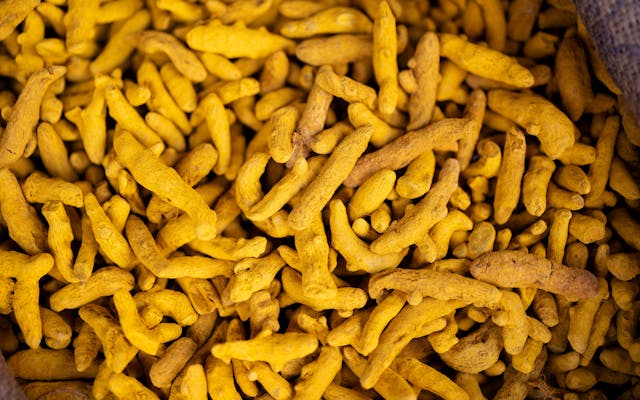
One recent example of e-NAM’s growing influence is seen in turmeric trading. India, the world’s largest producer of turmeric, has witnessed a rise in digital transactions for this “golden spice.”
Farmers from states like Maharashtra, Telangana, and Tamil Nadu have begun using e-NAM to connect directly with processors and exporters, achieving better prices and faster payments.
This trend complements the creation of the National Turmeric Board in 2024, which aims to promote value-addition and export growth. Together, e-NAM and the Turmeric Board are helping farmers transform a traditional crop into a global trade success story.
Challenges on the Road Ahead
While e-NAM has shown immense promise, a few challenges remain:
-
Digital divide: Many small farmers lack internet access or digital literacy to fully use the platform.
-
Infrastructure gaps: Some mandis lack the assaying, storage, or grading facilities needed for efficient trading.
-
State-level differences: Agricultural marketing regulations vary across states, sometimes slowing cross-border trading.
-
Awareness and training: Continuous education and capacity building are vital to ensure farmers understand and trust the system.
Addressing these issues through targeted training, mobile-based access, and state collaboration will be key to unlocking e-NAM’s full potential.
The Broader Impact: Empowering Farmers, Strengthening the Economy
e-NAM is more than a technological reform—it represents a paradigm shift in agricultural marketing.
By merging traditional mandis with modern technology, it allows farmers to negotiate prices on equal footing with buyers, transforming agriculture into a data-driven, transparent, and competitive marketplace.
It promotes economic inclusion, encourages innovation, and strengthens the farm-to-market value chain. Most importantly, it helps farmers—who are often the weakest link in the supply chain—gain both dignity and bargaining power.
Conclusion
The e-NAM initiative stands as a symbol of India’s digital transformation in agriculture. It bridges the gap between rural farms and urban markets, between local produce and global demand.
By integrating technology, transparency, and trust, e-NAM is helping to rewrite the story of Indian agriculture—from a system bound by geography and middlemen to one driven by efficiency, fairness, and opportunity.
As the platform continues to expand and evolve, its true success will be measured not just in numbers of mandis connected, but in the smiles of farmers who finally receive the value their hard work deserves.