
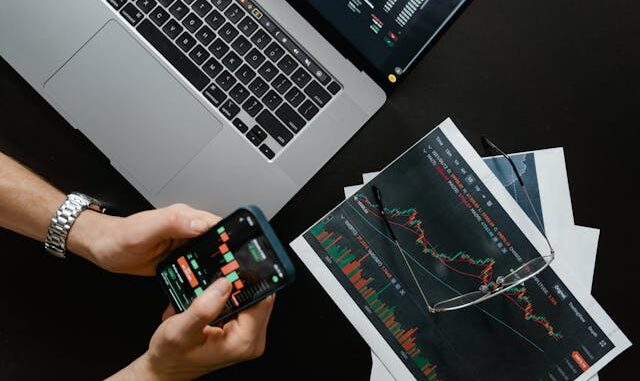

Proprietary trading, commonly known as prop trading, is a trading model where a firm trades financial markets using its own capital rather than clients’ funds. Instead of earning through commissions or brokerage fees, the firm’s revenue comes directly from market profits generated by its traders.
For individual traders, prop trading opens the door to trading larger capital amounts than they could typically afford on their own. In exchange, traders agree to follow strict risk rules and share a portion of their profits with the prop firms. This model has grown rapidly over the past decade, especially with the rise of online prop trading firms that allow remote participation worldwide.
In simple terms, prop trading is a partnership: the firm provides capital and infrastructure, while the trader provides skill and discipline. As interest in prop trading continues to grow, traders can explore a curated list of the best prop firms to compare options and choose a firm that aligns with their goals and experience level.
How Prop Trading Works
While details vary between firms, the core structure of prop trading is largely the same across the industry.
1. Evaluation or Challenge Phase
Most modern prop firms require traders to pass an evaluation before accessing real capital. This stage is designed to test consistency rather than luck. Common requirements include:
- Achieving a fixed profit target (usually 8–10%)
- Respecting a maximum total drawdown
- Staying within daily loss limits
- Following predefined risk management rules
This phase filters out undisciplined trading behavior and ensures the trader can manage risk under pressure.
2. Funded Trading Account
Once the evaluation is successfully completed, the trader receives access to a funded account. Account sizes typically range from $25,000 to $200,000, with some firms offering scaling plans that go even higher.
At this stage, the trader is trading the firm’s capital, not personal funds.
3. Trading Rules and Risk Management
Prop firms impose strict trading rules to protect their capital. These often include:
- Maximum risk per trade
- Daily and overall drawdown limits
- Restrictions on lot size or leverage
- Rules around news trading or holding positions overnight
Following these rules is mandatory. Violations usually result in account termination, even if the trader is profitable.
4. Profit Sharing
Profits are split between the trader and the firm. Typical profit splits range from 70/30 to 90/10 in favor of the trader.
Example:
If a trader earns $10,000 in profit on a funded account with an 80/20 split, the trader keeps $8,000, and the firm retains $2,000.
5. Scaling Opportunities
Many prop firms reward consistent traders by increasing their account size over time. Scaling plans allow traders to manage more capital without additional evaluations, increasing long-term earning potential.
Types of Prop Trading Firms
Not all prop firms operate the same way. The industry can be broadly divided into two main categories.
1. Traditional In-House Prop Firms
These firms are usually based in major financial hubs such as New York, London, or Chicago. Traders work on-site and often specialize in fast-paced markets like equities, futures, or options.
Key characteristics:
- Office-based trading
- Access to institutional-grade tools
- Often require prior experience
- May offer salaries plus performance bonuses
These firms are less accessible to beginners and typically involve a formal hiring process.
2. Online or Remote Prop Trading Firms
Online prop firms have reshaped the industry by allowing traders to participate remotely. Traders pay a one-time evaluation fee and can trade from anywhere in the world.
Key characteristics:
- Remote access
- Structured evaluation challenges
- Clear risk parameters
- Fast onboarding process
- Popular among retail and aspiring traders
This model has made prop trading accessible to a global audience, including beginners who are still developing their skills.
Markets Traded in Prop Trading
Prop traders can operate across a wide range of financial markets, depending on the firm:
- Forex (major, minor, and exotic pairs)
- Stock indices
- Commodities
- Cryptocurrencies
- Equities
- Futures
The choice of market depends on the trader’s strategy, experience, and the firm’s permitted instruments.
Advantages of Prop Trading
Prop trading offers several clear benefits compared to trading personal capital.
- Access to Large Capital – Traders can manage six-figure accounts without risking their own savings beyond the evaluation fee.
- Limited Personal Risk – Losses are capped by predefined drawdown rules, protecting traders from catastrophic financial damage.
- Structured Discipline – Strict risk rules force traders to develop consistency, discipline, and professional habits.
- Scalable Income – Successful traders can scale their account size and monthly payouts over time.
Risks and Challenges of Prop Trading
Despite its advantages, prop trading is not without risks.
- Rule Violations – Most account failures occur due to broken rules, not poor strategy. One mistake can end an account.
- Psychological Pressure – Trading someone else’s capital under strict conditions can increase emotional stress.
- Evaluation Fees – While relatively small, evaluation fees are non-refundable and can add up if challenges are repeatedly failed.
- No Guaranteed Income – Prop trading is performance-based. There are no guaranteed profits or salaries in most online models.
Who Is Prop Trading Suitable For?
Prop trading is best suited for traders who:
- Already understand basic trading concepts
- Can follow rules consistently
- Prioritize risk management over high-risk strategies
- Are comfortable with structured trading environments
It is less suitable for gamblers, impulsive traders, or those unwilling to adapt to firm rules.
Conclusion
Prop trading has become one of the most accessible paths for traders to work with significant capital without risking personal savings. By combining firm-provided funding with strict risk management, this model creates a balanced environment where both the trader and the firm benefit from consistent performance.
For beginners, prop trading offers a structured way to transition from demo or small personal accounts into professional-level trading. Success, however, depends less on aggressive strategies and more on discipline, patience, and long-term consistency.
When approached correctly, proprietary trading can serve as a powerful stepping stone toward a sustainable trading career.