
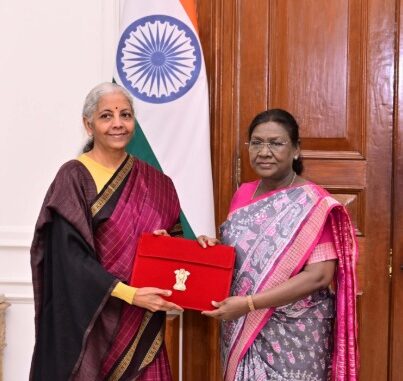

In a striking blend of tradition and technology, Finance Minister Nirmala Sitharaman carried the Union Budget 2026–27 documents on a digital tablet encased in a red ‘bahi-khata’ during her presentation in Parliament on Sunday.
The move continues the government’s push for a paperless Budget, a practice introduced under the Prime Minister Narendra Modi administration. The red bahi-khata, a traditional ledger used in India for centuries to maintain accounts, replaces the colonial-era leather briefcase, symbolising both a nod to Indian heritage and a step toward modernisation.
Since adopting this innovative format in 2019, FM Sitharaman has highlighted how the new approach aligns with the government’s efforts to embrace digital tools while preserving cultural symbolism. The digital bahi-khata allows for easier handling of Budget documents, reducing reliance on printed papers while retaining the aesthetic and cultural touch of the traditional ledger.
During the Budget presentation, the Finance Minister engaged with students and viewers across the country, emphasising that the approach reflects India’s transition from colonial-era symbols to a modern, technology-driven governance style. Analysts say the symbolic red bahi-khata reinforces the message that India is combining its rich traditions with digital innovation in its economic administration.
With this approach, the Union Budget not only conveys fiscal policies and allocations but also serves as a statement on India’s commitment to technology, sustainability, and cultural heritage. The digital bahi-khata has now become an iconic feature of Budget presentations, reflecting the country’s evolving approach to governance in the 21st century.