
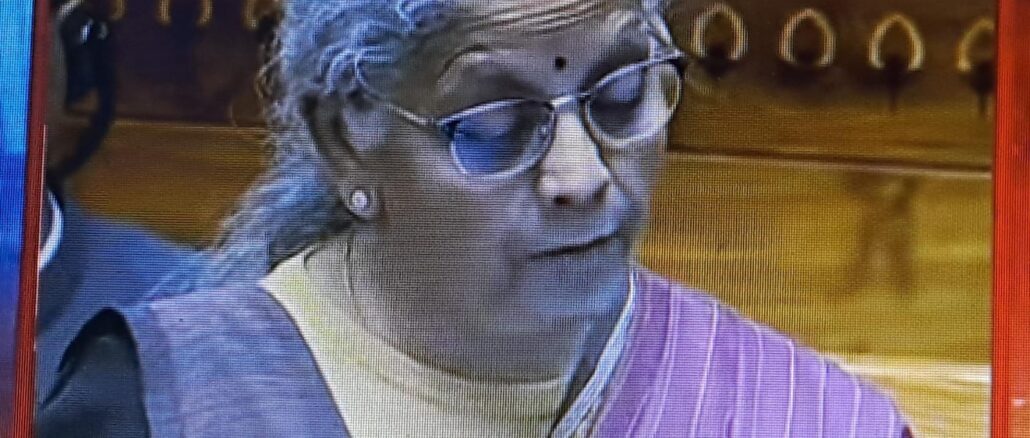

Union Finance Minister Nirmala Sitharaman unveiled the Union Budget 2026-27, marking a significant milestone as the first budget prepared in Kartavya Bhawan. This budget is shaped around three core principles, or kartavyas: accelerating economic growth, fulfilling citizens’ aspirations, and ensuring inclusive development through the government’s vision of Sabka Sath, Sabka Vikas.
Designed to be Yuva Shakti-driven, the budget places emphasis on empowering the underprivileged while promoting economic resilience, global integration, and innovation. It aims to streamline governance, simplify taxation, and foster investment across key sectors of the economy.

Economic Growth and Industrial Development
To strengthen India’s industrial and manufacturing base, the budget proposes initiatives in strategic sectors, MSMEs, infrastructure, and energy. The Biopharma SHAKTI initiative, with an allocation of ₹10,000 crore, will create a robust ecosystem for the domestic production of biologics and biosimilars, supported by new and upgraded National Institutes of Pharmaceutical Education and Research (NIPERs) and over 1,000 accredited clinical trial sites.
A dedicated SME Growth Fund, also worth ₹10,000 crore, aims to nurture “Champion MSMEs,” helping small enterprises scale and compete globally. Public capital expenditure has been raised to ₹12.2 lakh crore for 2026-27, reflecting the government’s commitment to infrastructure-led growth.
Textiles, Handlooms, and Artisans
Recognising the textile sector as a key employment generator, the budget introduces an integrated programme with five components. These include the National Fibre Scheme, the Textile Expansion and Employment Scheme, the National Handloom and Handicraft Programme, the Tex-ECON Initiative, and SAMARTH 2.0 for skill development. Together, these measures aim to modernize traditional clusters, boost global competitiveness, and provide targeted support to weavers and artisans.
Infrastructure and Connectivity
Seven high-speed rail corridors are planned to connect major cities as “growth connectors,” complemented by the development of 20 national waterways. The concept of City Economic Regions (CERs) has been introduced to leverage urban agglomerations as engines of growth, with ₹5,000 crore allocated per CER for a results-driven, challenge-mode implementation.
Education, Skills, and Healthcare
The budget promotes education and skill-building through initiatives such as AVGC (Animation, Visual Effects, Gaming, and Comics) labs in 15,000 schools and 500 colleges. Girls’ hostels will be established in every STEM-focused district institution to support female students in higher education. Tourism and hospitality receive a boost with training for 10,000 tourist guides and the creation of a National Institute of Hospitality.
Healthcare initiatives include Regional Medical Hubs to integrate medical, research, and educational services. Veterinary and para-veterinary facilities will also expand, ensuring professional capacity to meet growing demands in animal husbandry and allied sectors.
Agriculture, Rural Development, and Technology
The Bharat-VISTAAR initiative, a multilingual AI platform, will integrate AgriStack and ICAR packages to provide farmers with tailored advisory services, improving productivity and risk management. The Self-Help Entrepreneur (SHE) Marts will empower women-led community retail networks, strengthening grassroots entrepreneurship.
Taxation and Ease of Compliance
The New Income Tax Act, 2025, effective April 2026, introduces simpler tax rules and forms. Minor offences, including non-production of accounts where payment is made in kind, are decriminalized. TDS and TCS rates have been rationalized to ease compliance. Tax incentives are offered to IT services, foreign cloud providers, and non-resident investors, promoting India as a destination for global business and investment.
Customs and Trade Facilitation
Customs duties have been rationalized to support domestic manufacturing and exports. Duty on personal imports is halved from 20% to 10%, and exemptions are provided for critical sectors like lithium-ion batteries, essential medicines, and rare disease drugs. Customs processes are being digitized for faster cargo clearance through a single-window system.
Fiscal Consolidation
The fiscal deficit is projected at 4.3% of GDP, with the debt-to-GDP ratio expected to decline to 55.6%, freeing resources for priority sectors and reducing interest payments. Non-debt receipts are estimated at ₹36.5 lakh crore, while total expenditure is projected at ₹53.5 lakh crore for 2026-27.
Conclusion
The Union Budget 2026-27 presents a balanced vision for growth, inclusivity, and innovation. By supporting industries, empowering citizens, and integrating modern technology in governance and agriculture, the government aims to build a resilient and globally competitive economy. Through targeted interventions across healthcare, education, infrastructure, and rural development, the budget reflects a commitment to creating opportunities for all and steering India toward a Viksit Bharat.