
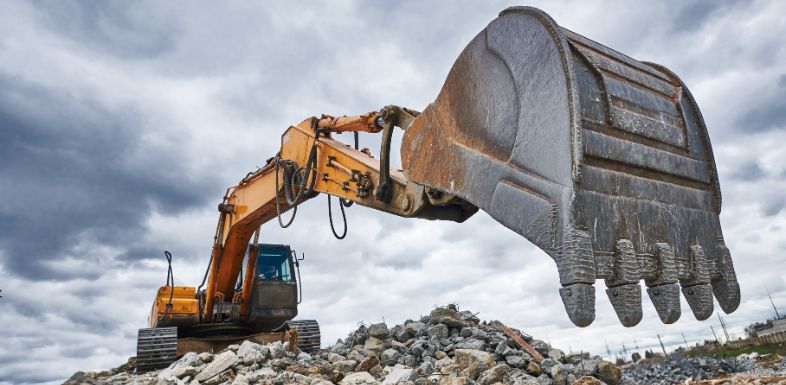

Excavation can be time-consuming on construction sites and push back deadlines. Here, we show you how to speed up excavation at your work site.
Excavation moves fastest when the crew isn’t stopping to solve surprises. Most slowdowns come from the same problems: unclear utility locations, poor staging, rework from over-digging, or waiting on the next decision. If you’re looking for ways to speed up the excavation process at your work site, keep reading, and we’ll offer you tips and strategies to optimize your excavation.
Start With a Better Pre-Dig Plan
Before the equipment shows up, take a short walk around the dig area with the foreman and operator. Look for the spots that commonly create delays: tie-in locations, utility corridors, pavement patches (frequently a sign of past repairs), and tight access zones. Then plan the “flow” of the site—where spoils go, where trucks stage, and how the crew will move without constantly repositioning.
Pre-stage what you’ll need so the team isn’t hunting down plates, hand tools, or shoring in the middle of the day. Small delays stack up fast when multiple people are waiting on one item.
Get Utility Info Early and Don’t Rely on One Source
Put utility coordination on the schedule—not as an afterthought. Submit 811 requests early enough to match your start date and keep track of ticket timing so you’re not caught with expired or weathered markings. If rain, traffic, or grading wipes out paint, re-marking is faster than guessing.
Remember that 811 will not mark everything underground, especially on private property or large facilities. If markings are missing, unclear, or don’t match what you see on site, treat that as a stop-and-verify moment instead of pushing forward and risking a strike.
Use The Right Locating Approach for The Site
To speed up the excavation process at your work site, basic markings may be enough for simple jobs. On congested sites or tight schedules, better information upfront can keep you from slow “creep mode” digging. When you need higher confidence, private locating support and advanced locating methods (like ground-penetrating radar) can help identify additional lines and reduce uncertainty.
Use Vacuum Excavation for Faster Daylighting
If you want to accelerate excavation without increasing risk, one of the benefits of utilizing vacuum excavation in construction is that it speeds up the excavation process. Vacuum excavation is a strong tool—especially for daylighting utilities. Instead of slow hand-digging near suspected lines, vacuum excavation can expose utilities with better control and less chance of damage.
It also keeps the area cleaner and more precise, which means less over-digging, less spoil handling, and less time spent on cleanup and restoration. In tight or congested areas, vacuum excavation can be the difference between steady progress and constant pauses.
Pothole Smarter to Confirm Depth and Alignment
Verification holes save time. Prioritize potholing at crossings, tie-ins, and anywhere the situation looks different from what you expect. Confirm depth and alignment early, then communicate those results to the operator before production digging starts. Make it a simple workflow: one person calls the shots, one measures/records, and the team documents key depths so the whole crew works from the same information.
Wrap-Up
Speed comes from fewer interruptions. Plan the site flow, get utility info early, verify smart, use vacuum excavation for daylighting, and keep communication clear. When the crew has confidence in what’s underground, excavation stays productive instead of stop-and-go.