
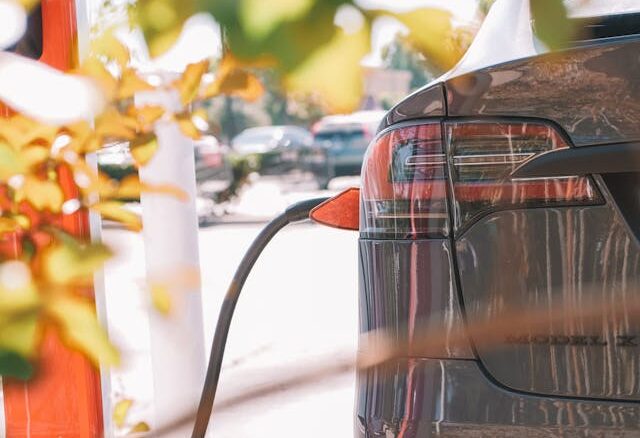

For more than a century, the internal combustion engine defined mobility. From assembly lines to highways, petrol and diesel powered economic growth, urban expansion, and personal freedom. Today, that dominance is being challenged by the most profound transformation the automotive industry has ever witnessed.
The global shift from traditional internal combustion engines (ICE) to electric powertrains is not merely a technological upgrade—it is a structural reset of the entire automotive ecosystem. Supply chains are being rebuilt, workforce skills are evolving, consumer expectations are shifting, and global trade agreements are reshaping competitive dynamics.
This is not just an energy transition. It is an industrial revolution on wheels.
From Mechanical Machines to Electric Intelligence
Electric vehicles (EVs) represent a fundamental departure from the engineering principles that governed automobiles for generations. Unlike ICE vehicles packed with thousands of moving mechanical parts, EVs operate with significantly fewer components. The complexity moves away from pistons and crankshafts toward batteries, power electronics, and intelligent software systems.
Battery efficiency improvements have dramatically increased vehicle range while reducing charging times. Solid-state battery research promises even faster charging and enhanced safety, potentially eliminating one of the most persistent consumer concerns—range anxiety.
At the same time, EVs are increasingly viewed as “computers on wheels.” Software updates, advanced driver assistance systems, and connected features are redefining the ownership experience. Vehicles are becoming digital platforms rather than purely mechanical machines.
The Forces Driving the Transition
Climate Commitments and Regulation
Governments worldwide are tightening emission norms and setting ambitious carbon reduction targets. Net-zero commitments have accelerated timelines for phasing out petrol-powered vehicles. Policy frameworks now favor electrification through incentives, subsidies, and stricter fuel efficiency standards.
In India, national goals envision significant EV penetration by 2030, supported by incentive schemes aimed at stimulating both demand and domestic manufacturing.
Consumer Sentiment and Fuel Economics
Rising fuel costs, growing environmental awareness, and preference for quieter, low-emission vehicles are reshaping buying decisions. Consumers are increasingly considering total cost of ownership rather than just upfront price.
In many markets, electric vehicles are no longer niche alternatives—they are becoming mainstream choices.
Technology Acceleration
Advances in battery chemistry, vehicle software, and charging networks are converging to make EV ownership more practical. Fast-charging corridors, urban charging stations, and home charging ecosystems are expanding rapidly, addressing infrastructure gaps.
Market Momentum: A Defining Decade
The past two years have marked record milestones for global EV sales. Electric vehicles now account for a significant and growing share of new car purchases worldwide. China continues to dominate in both production and adoption, with electric vehicles forming a large proportion of total sales.
Europe has witnessed a historic pivot driven by stringent emission regulations and strong policy backing. In some recent periods, battery electric vehicles have overtaken petrol-powered cars in new registrations—an unimaginable milestone just a decade ago.
India, while still in an early stage compared to global leaders, is experiencing rapid acceleration. Growth is particularly strong in two- and three-wheeler segments, while passenger EV penetration continues to climb steadily. Domestic manufacturers are expanding portfolios, especially in the SUV category, which has emerged as a key driver of premium EV demand.
Hybrids are also playing a transitional role. By improving fuel efficiency without requiring extensive charging infrastructure, hybrid electric vehicles (HEVs) are acting as a practical bridge between traditional and fully electric mobility.
The India–EU Free Trade Agreement: Redefining Competitive Landscapes
Amid electrification trends, global trade is introducing another layer of transformation. The proposed India–European Union Free Trade Agreement (FTA) could significantly impact India’s premium automotive segment.
Under the agreement, import duties on select European passenger vehicles are expected to reduce gradually—from historically high levels toward more moderate rates over time. This shift could make luxury European brands more price-competitive in India, particularly in the high-end segment.
For global manufacturers, this presents an opportunity to reassess pricing strategies, expand model offerings, and recalibrate launch plans. Premium and technologically advanced vehicles are likely to see the most visible impact.
However, the agreement has been structured carefully. Electric vehicles are excluded from initial tariff concessions, providing domestic manufacturers with valuable time to strengthen local EV supply chains and scale production capabilities. This protective window reflects a broader strategic balance—encouraging global integration while safeguarding national industrial growth.
Beyond finished vehicles, India’s auto component industry stands to benefit. Greater collaboration with European original equipment manufacturers (OEMs) could open new export channels and technology partnerships, boosting competitiveness in global markets.
Supply Chain Reinvention and Workforce Transition
Electrification is transforming automotive supply chains from mechanical to electronic ecosystems. Traditional engine component manufacturers—many of them small and medium enterprises—must adapt to survive.
Battery manufacturing, power electronics, semiconductor integration, and software development are becoming central to automotive production. This shift requires significant capital investment and workforce reskilling.
While EV manufacturing creates new opportunities in battery assembly and digital engineering, studies suggest it may require fewer labor hours compared to traditional engine production. The transition therefore demands large-scale reskilling initiatives to prevent structural job displacement.
Infrastructure: The Backbone of Adoption
Charging infrastructure remains one of the most critical enablers of mass EV adoption. Urban charging stations, highway fast-charging networks, and residential charging solutions must expand in parallel with vehicle sales.
India has ambitious plans to scale its charging network significantly in the coming years. Similar expansions are underway globally, as governments and private players invest in energy ecosystems to support electrification.
Without robust infrastructure, consumer hesitation will persist. With it, adoption could accelerate exponentially.
Persistent Challenges
Despite rapid progress, several hurdles remain:
-
High Upfront Costs: Although operating costs are lower, EV purchase prices remain higher in many markets.
-
Range Anxiety: While improving, driving range still influences buyer decisions, especially in regions with limited charging networks.
-
Raw Material Dependency: Battery production depends heavily on critical minerals such as lithium, cobalt, and nickel, raising geopolitical and sustainability concerns.
-
Regulatory Complexity: Aligning global safety, environmental, and trade standards requires coordinated policymaking.
The Bigger Picture: An Ecosystem Revolution
The transition from petrol to plug-in is not simply a fuel substitution—it is an ecosystem overhaul. Automakers are evolving into technology companies. Supply chains are becoming digitally integrated networks. Trade agreements are shaping competitive access to markets. Consumers are demanding sustainability alongside performance.
In many ways, the automotive industry is undergoing the same kind of transformation that telecommunications experienced with the shift from landlines to smartphones.
The road ahead will not be uniform across regions. China will continue to lead in scale, Europe in regulatory push, and India in high-growth potential. Meanwhile, global trade dynamics—like the India–EU FTA—will influence how and where vehicles are built, priced, and sold.
Driving Into a New Era
The global automotive market stands at a defining crossroads. Electrification is accelerating. Premiumization is rising. Trade policies are reshaping competitive boundaries. And consumers are more informed and sustainability-conscious than ever before.
For manufacturers, the challenge is clear: innovate quickly, invest wisely, and adapt to an industry where software and batteries carry as much importance as engines once did.
For policymakers, the task is to balance environmental ambition with economic stability.
For consumers, the transformation promises cleaner cities, smarter vehicles, and expanded mobility choices.
The shift from petrol to plug-in is no longer a future prediction—it is a present reality. And as this revolution gains speed, it is redefining not just what we drive, but how the world moves.