
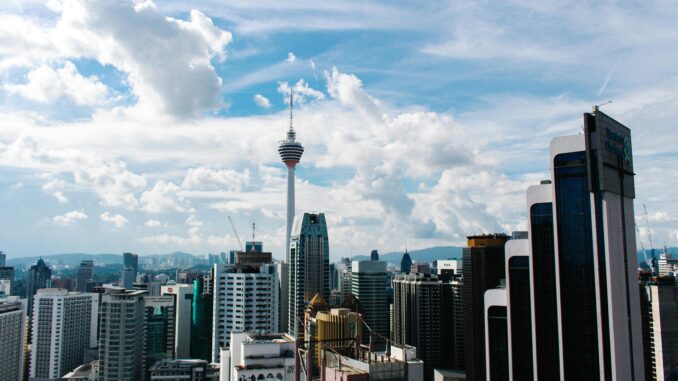

Feb 24: For decades, Kuala Lumpur has been known for its skyline dominated by the iconic Petronas Twin Towers, vibrant street markets, and multicultural charm. But in 2026, Malaysia’s capital is telling a different story — one of boardrooms, business summits, fintech accelerators, and multinational headquarters.
Kuala Lumpur is no longer just a tourism magnet. It is rapidly evolving into a strategic ASEAN trade center and a serious contender in the global corporate landscape.
Infrastructure Upgrades Fueling Business Travel Growth
At the heart of Kuala Lumpur’s transformation is infrastructure.
Kuala Lumpur International Airport (KLIA) continues to strengthen its position as one of Southeast Asia’s most connected aviation hubs, offering seamless connectivity between Asia, the Middle East, and Europe. Expanded flight routes and improved cargo capacity are supporting both corporate travel and regional trade logistics.
Within the city, MRT and LRT network expansions have enhanced urban mobility, reducing congestion and making business districts more accessible. For executives flying in for conferences or investor meetings, ease of movement matters — and Kuala Lumpur is delivering.
Meanwhile, the city’s convention capabilities are scaling rapidly. The Kuala Lumpur Convention Centre has become a focal point for global expos, fintech conferences, and ASEAN trade summits, strengthening the KL convention industry and attracting high-value corporate tourism.
Malaysia’s Digital Economy Push
Kuala Lumpur’s rise as a Malaysia corporate hub is closely tied to the country’s digital ambitions.
Through initiatives led by Malaysia Digital Economy Corporation (MDEC), the government is aggressively promoting digital investments, startup incubation, and tech ecosystem expansion.
The Malaysia Digital (MD) status program offers tax incentives and streamlined processes for tech companies establishing regional operations. This has drawn fintech firms, AI startups, and multinational digital service providers seeking a cost-effective yet well-regulated base in ASEAN.
With competitive corporate tax rates, strong English proficiency, and a highly skilled workforce, Kuala Lumpur is becoming a practical alternative to traditionally expensive business hubs like Singapore and Hong Kong.
Multinational Expansion and GCC Growth
Another defining trend in Kuala Lumpur business travel is the rise of Global Capability Centers (GCCs). Multinational corporations are increasingly setting up shared services, R&D centers, and regional headquarters in the city.
Industries seeing notable growth include:
Financial technology
Islamic finance
Semiconductor manufacturing
Digital services
Oil & gas engineering support
Malaysia’s political stability and investor-friendly policies further strengthen Kuala Lumpur’s appeal. For corporations seeking ASEAN exposure without high operational costs, KL offers a strategic balance of affordability and sophistication.
Positioning as an ASEAN Trade Center
Geographically, Kuala Lumpur sits at the heart of Southeast Asia — one of the world’s fastest-growing economic regions.
As intra-ASEAN trade deepens and supply chains diversify beyond China, Malaysia is positioning itself as a neutral and business-friendly gateway. Trade agreements such as RCEP and CPTPP have increased Malaysia’s strategic importance in global commerce.
Kuala Lumpur is leveraging this positioning by hosting regional economic forums, sustainability summits, and cross-border trade exhibitions. The city is no longer just a participant in ASEAN growth — it aims to be one of its coordinators.
Sustainable Urban Development and ESG Leadership
Global corporations are increasingly prioritizing ESG (Environmental, Social, Governance) compliance when choosing regional bases. Kuala Lumpur is responding with sustainability-driven urban planning.
Green-certified office towers, improved public transport systems, and smart-city initiatives are reshaping commercial districts like KLCC and Bangsar South. Developers are incorporating energy-efficient technologies and sustainable building materials into new projects.
Malaysia’s broader net-zero ambitions also enhance Kuala Lumpur’s credibility as a responsible corporate hub. This aligns with global investors seeking long-term sustainable destinations.
Hospitality and Premium Business Ecosystem
Corporate travel depends heavily on hospitality infrastructure. Kuala Lumpur has expanded its portfolio of premium hotels, serviced residences, and executive business lounges.
International brands such as Mandarin Oriental Hotel Group and Shangri-La Group continue to serve business travelers with integrated meeting facilities, while new luxury developments are targeting long-stay executives and digital professionals.
This ecosystem supports everything from board meetings to international product launches — further solidifying Kuala Lumpur business travel growth.
Competitive Advantage Over Regional Rivals
While Singapore remains ASEAN’s financial leader, Kuala Lumpur offers several competitive advantages:
Lower operational costs
Affordable commercial real estate
Growing talent pool
Strong regulatory framework
Multicultural workforce
For companies looking to diversify risk while maintaining regional access, Kuala Lumpur is increasingly attractive.
Moreover, as global companies reassess supply chain dependencies and geopolitical exposure, Malaysia’s balanced foreign policy strengthens its role as a stable business destination.
The Road Ahead: From Tourism Capital to Trade Catalyst
Kuala Lumpur’s reinvention is not accidental. It is strategic.
Tourism laid the foundation. Infrastructure amplified connectivity. Digital policy attracted innovation. Trade positioning expanded opportunity.
Today, the city stands at the intersection of tourism, technology, trade, and transformation.
For investors, corporate leaders, and business travelers, Kuala Lumpur is no longer just a stopover destination — it is a decision-making hub.
As ASEAN’s economic narrative evolves, Kuala Lumpur is ensuring it remains central to the conversation.