

The golden age of recommending other people’s products with a discount code is gone forever. Top digital creators YouTubers, podcasters, and influencers with multi-million reach have realized that real capital lies in building their own D2C (Direct-to-Consumer) brands. They have a loyal community and massive reach, so generating sales is not a challenge for them. Their biggest nightmare is operations and logistics.
For traditional wholesalers, fulfillment centers, and developed e-commerce platforms, this is a signal to attack a completely new, highly lucrative B2B services market. By becoming the technological and operational “back office” for an influencer, you gain a partner who guarantees massive traffic. In this article, we will break this model down and show you how to combine AI marketing lead generation with hard logistics and automated parcel packaging to dominate the influencer commerce market.
The New Wave of Sales: The Creator as an E-commerce Owner
The influencer commerce market is currently growing much faster than traditional retail. Digital creators are evolving from a purely affiliate model (where they gave up most of the margin to the brand owner) toward becoming full-fledged online store owners.
They know how to record a viral TikTok and gather a community, but they have no idea about negotiating courier rates, managing inventory levels, or handling returns. Creators desperately need merchandise, efficient logistics, and automation. Whoever provides this to them will capture the lion’s share of profits from their growing empires.
What is the “Creator Sourcing” Model?
Sourcing for influencers is a partnership model where competencies are strictly divided. The days of a creator packing t-shirts in a garage are over.
- The wholesaler as supplier and operator: You secure the goods (often in a private label model, with the creator’s logo), store them, and physically carry out the shipping.
- The creator as a sales channel: The influencer becomes a “walking billboard,” generating free, highly converting traffic straight to the store.
- The platform as a technology integrator: You provide software that connects the creator’s marketing funnel with your WMS system, creating an ecosystem that is invisible to the end customer.
Why Fulfillment Becomes the Core of the Model
When an influencer posts about a new product, sales don’t spread evenly over the month. Demand hits in waves. That is why professional fulfillment for influencers is the absolute foundation of this business.
- Order fulfillment speed: Fans expect the package from their idol to arrive instantly. Delays hit the creator’s image directly.
- Scalability during a viral peak: When a creator’s video hits the algorithm, tens of thousands of orders can drop in just a few hours. A traditional warehouse without technological preparation simply halts in such a situation.
- Returns management: E-commerce logistics for creators also means efficient reverse logistics. Returns must be processed quickly and restocked so as not to freeze capital.
The Role of Automated Packaging Machines in Scaling the Model
A lack of automation is the fastest route to disaster when it comes to handling sales peaks. Manual packing is slow, generates errors, and requires massive expenditures on temporary workers. The solution that drastically reduces unit costs and standardizes quality are innovative machines like the PackBee Easy500.
This device fully automates the parcel preparation process (both single and multi items)—from scanning the product, through packing it, to applying the courier label.
Manual vs. automated packing – the real numbers:
- Manual packing: 1 worker = 50–60 parcels / hour
- PackBee automated packing: 1 machine = 500–600 parcels / hour (real output)
| Volume (parcels per day) | Resources (Manual packing) | Resources (PackBee Easy500) | Return on Investment (ROI) |
| 200 | 1 packer – half time | 1 packer – 0.5 hrs daily | 22–24 months |
| 400 | 1 packer – full time | 1 packer – 1 hr daily | 8–10 months |
| 800 | 2 packers – full time | 1 packer – 2 hrs daily | 5–6 months |
| 1500 | 4 packers – full time | 1 packer – 3 hrs daily | 2–3 months |
What is more, the PackBee Easy500 offers simple WMS integration. The device is visible simply as a standard label printer. This means fast, safe implementation without costly IT work and stable communication.
AI as a Lead Generation Engine for Creators
However, logistical back-office alone is not enough to stand out in the B2B market. You must provide the creator with tools to maximize conversion. AI Marketing automation for influencers using artificial intelligence allows you to turn anonymous traffic into a hard customer database.
Collecting leads on creator pages
Leverage traffic potential using interactive elements:
- Forms and Pop-ups: Personalized invitations to the creator’s “secret club” with early access to drops.
- Product quizzes: AI-driven modules that select the ideal product (e.g., cosmetics) based on user answers, collecting their email in the process.
- Landing pages: Fast, high-converting pages created for specific social media campaigns.
Marketing automation
- E-mail: Automated sequences rescuing abandoned carts, sent in the creator’s tone and style.
- Remarketing: Dynamic ad campaigns reaching people who visited the store but didn’t make a purchase.
- Dynamic offers: Personalizing prices and product bundles based on user behavior history.
Data analysis and sales prediction
AI systems analyze engagement under influencer posts and historical conversion data, predicting the sales volume to expect in the next 48 hours.
How to Combine Marketing and Logistics into One Operating Model
The true power of your offer as an operator lies in the full synchronization of these two worlds.
- Sales data → inventory forecast: Information from AI lead generation e-commerce systems flows directly to the purchasing department. If 20,000 people signed up for a waitlist for a new product, you know exactly how much goods to manufacture or order in Asia.
- Campaign → packing plan: The publication date of key material on YouTube is a signal for the warehouse manager to increase the availability of packaging machines for the next shift.
- Viral → flexible fulfillment line: When an unforeseen spike in popularity (viral) occurs, machine capacity easily absorbs the wave of orders without paralyzing the entire company.
The Revenue Model for Wholesalers and Platforms
By acting as the logistical back office for creators, you turn your company into a machine that diversifies income on three levels:
- Product margin: You earn on supplying the goods themselves (often as a private label manufacturer for the influencer).
- Fulfillment fee: You charge a flat fee (e.g., a pay-as-you-go model) for receiving, storing, packing, and shipping every parcel, as well as handling returns.
- Technology and marketing fee: The final step is a commission (or a fixed SaaS subscription) for providing server infrastructure, AI mechanisms, and marketing automation that boost the creator’s conversion.
Why This Model Requires Infrastructure, Not Just Merchandise
The mistake of many traditional wholesalers is thinking: “We have the goods, let the influencer just sell them.” The problem is scale.
- A popular creator can generate 10,000 orders within 24 hours of launching a so-called drop.
- No automation = operational chaos: If the warehouse relies on manual packing and an outdated WMS, such a sales shot will completely clog processes, generating errors and delays that the creator will pay for with their image.
- In the new model, the advantage goes absolutely to operators with modern technology those able to absorb a sales peak without breaking a sweat.
Common Mistakes in Serving Digital Creators
Companies trying to enter this segment often stumble over basic operational gaps:
- Lack of demand forecasting: Ordering “by eye” instead of analyzing pre-sale data (leads).
- Lack of inventory: Stockouts (out of stock) at the peak moment of an influencer campaign.
- Lack of packaging automation: Attempting to handle massive peaks using only human hands.
- Lack of marketing + warehouse integration: Operating in silos where the warehouse is unaware of promotional campaigns planned by the creator.
KPIs of the “Influencer Infrastructure” Model
Managing this model requires strict monitoring of four performance indicators:
- Order lead time (SLA): The percentage of parcels leaving the warehouse on the same day (Next-Day Delivery).
- Cost Per Order (CPO): A juxtaposition of packaging material costs, machine depreciation, and labor time.
- Lead conversion: What percentage of fans subscribed to the newsletter (thanks to AI modules) made a purchase after the campaign launched.
- Scalability at peak: The warehouse’s ability to handle an x-fold increase in orders within 48 hours without a drop in quality.
2026 Trends – Infrastructure for Creators as a New Branch of E-commerce
The year 2026 clearly shows that e-commerce for influencers is not a passing fad, but a powerful branch of the economy. We are seeing the rise of Influencer fulfillment hubs dedicated logistics centers specialized in handling drops. AI forecasting viral potential days in advance is becoming the standard. The private label sector is booming, and the winners are those online platforms that can combine marketing with smart, hardware-based logistics into one cohesive “plug & play” ecosystem.
The Influencer Sells. The Winner is the One Who Can Supply Them and Ship the Parcel Faster Than the Competition
Digital creators can focus attention and generate massive demand, but to monetize this success, they need professional operational backing.
- Liquidity and trust: A dead stock product in an influencer’s warehouse is frozen cash. Fluid fulfillment builds business repeatability.
- Infrastructure is the future: The future of e-commerce is “infrastructure as a service” for creators who want to focus on content, not cardboard boxes.
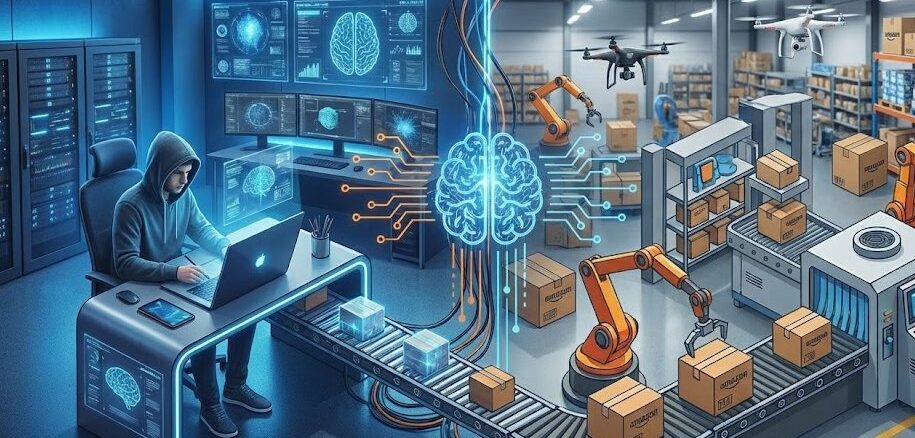
- Scale through machines and AI: The combination of artificial intelligence, which closes sales on the front-end (lead gen), with automated packaging, which handles logistics on the back-end, creates the perfect setup.
Check if your wholesaler or platform can become the operational back office for digital creators and ride the wave of influencer commerce before your competition does.