
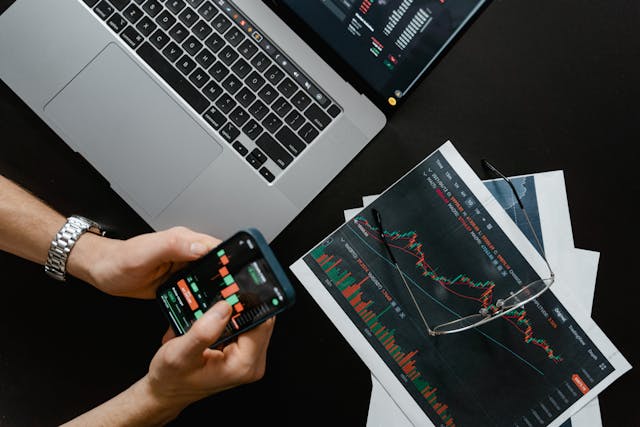

Financial education has undergone a profound transformation over the past decade. What was once limited to textbooks, university courses, or advice from traditional financial institutions has become far more accessible, practical, and technology-driven. As a result, the way people approach investing today is fundamentally different from how previous generations learned to manage and grow capital.
One of the most significant changes is the shift from theory-heavy learning to experience-based education. Modern learners are no longer satisfied with abstract explanations of financial concepts. They want to understand how markets behave in real time, how economic events affect asset prices, and how decisions play out under different conditions. This demand has pushed educational content toward practical examples, simulations, and data-driven insights rather than purely academic models.
Digital platforms have played a central role in this evolution. Online courses, interactive dashboards, webinars, and analytical tools allow individuals to learn at their own pace while staying connected to real market dynamics. Instead of memorizing definitions, learners can observe price movements, compare historical trends, and explore correlations across different asset classes. This hands-on exposure builds intuition and confidence far more effectively than passive learning.
Another important shift is the growing emphasis on diversification as an educational principle. Rather than focusing on a single market, many learning programs now encourage users to explore multiple instruments side by side. This approach helps learners understand risk distribution, market interdependencies, and the importance of portfolio balance. In this context, sites operated by a multi-asset broker often become a practical learning environment, as they allow users to observe and analyze different markets within a unified framework.
Financial education has also become more inclusive. Previously, access to high-quality financial knowledge was often restricted by geography, cost, or institutional barriers. Today, anyone with an internet connection can access professional-grade educational materials, analytical tools, and market data. This democratization has lowered the entry threshold and empowered a broader audience to engage with investing in a structured and informed way.
Equally important is the cultural shift in how people perceive financial learning. Investing is no longer viewed as a niche activity reserved for professionals. It is increasingly seen as a life skill—similar to budgeting, saving, or long-term planning. As a result, learners tend to adopt a more disciplined and strategic mindset, focusing on risk awareness, capital preservation, and continuous improvement rather than short-term outcomes.
Technology has further accelerated this change by enabling instant feedback. Learners can test ideas, observe results, adjust assumptions, and refine their understanding in near real time. This feedback loop shortens the learning curve and encourages critical thinking. Instead of asking whether a concept works in theory, learners can evaluate how it performs across different scenarios and market conditions.
Ultimately, financial education today is less about providing answers and more about developing analytical habits. The goal is to help individuals ask better questions, interpret information objectively, and make decisions based on evidence rather than emotion. Platforms that combine education with real-market observation reflect this modern approach, where learning and practice are closely connected.
As financial education continues to evolve, its impact on investing behavior will only deepen. Better-informed participants tend to approach markets with greater realism, patience, and structure. In the long run, this shift contributes to healthier decision-making and a more sustainable relationship with financial markets overall.