
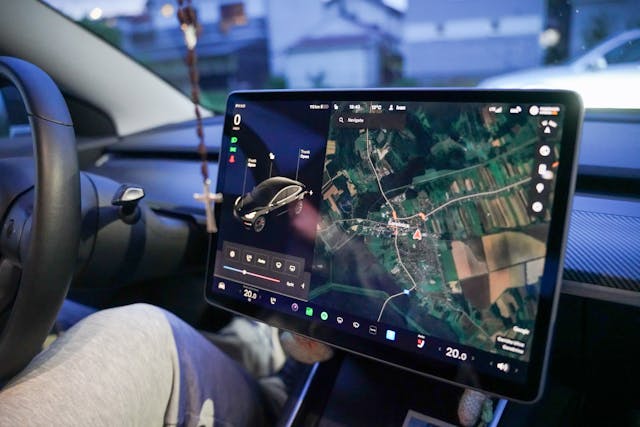

Imagine pulling into a drive-through and realizing you forgot your wallet—only to have your car handle the payment automatically. Or passing through a toll booth without slowing down because your vehicle processes the transaction in the background.
This isn’t science fiction. It’s the reality of connected vehicles—cars that are evolving into intelligent, data-driven systems capable of communicating with other vehicles (V2V), infrastructure (V2I), and cloud platforms in real time.
The automobile is no longer just a machine; it’s becoming a mobility hub on wheels.
More Than Transportation: Cars as Rolling Computers
Modern vehicles are equipped with high-performance processors, embedded SIM cards, advanced sensors, and increasingly sophisticated infotainment systems. While many drivers associate connectivity with features like smartphone integration, that’s only the beginning.
Today’s connected cars can:
-
Receive over-the-air (OTA) software updates
-
Provide remote diagnostics and predictive maintenance alerts
-
Enable app-based control for locking, climate settings, and tracking
-
Collect and analyze real-time traffic and hazard data
With the rise of 5G networks and IoT ecosystems, vehicles now exchange information instantly—improving safety, efficiency, and personalization.
Key Drivers Behind the Connected Vehicle Surge
1. Enhanced Safety and Traffic Efficiency
Real-time communication between vehicles helps reduce collisions by sharing data on sudden braking, road hazards, or poor visibility conditions. Smart traffic systems can adjust signals dynamically to ease congestion and improve traffic flow.
2. AI-Powered Features
Advanced Driver Assistance Systems (ADAS) rely on AI, radar, LiDAR, and 360-degree camera systems to power features such as:
-
Lane-keeping assist
-
Adaptive cruise control
-
Automated parking
-
Collision avoidance
These innovations are laying the groundwork for fully autonomous vehicles.
3. Smart City Integration
Connected cars are foundational to future smart cities. By interacting with traffic lights, parking systems, and road infrastructure, they help urban planners optimize transportation networks and reduce emissions.
4. Personalized Driver Experience
Vehicles are becoming more intuitive. From biometric monitoring for health and alertness to customized infotainment preferences, cars are adapting to individual drivers like smartphones once did.
The Data Question: Opportunity and Responsibility
As vehicles collect and transmit vast amounts of data, concerns about privacy, ownership, and cybersecurity are unavoidable.
Unlike smartphones, vehicle data involves multiple stakeholders—drivers, automakers, insurers, and service providers. Determining who controls this data and how it’s used remains a critical industry challenge.
Cybersecurity is equally vital. A connected car is, in essence, a networked computer. Protecting it from breaches is essential not only for privacy but also for passenger safety.
At the same time, consumer sentiment suggests readiness for innovation. Studies indicate that many drivers are willing to share driving data in exchange for benefits such as service discounts, enhanced navigation, or digital wallet features integrated into their vehicles.
The key lies in transparency, robust encryption standards, and clear regulations.
Infrastructure and Industry Challenges
To unlock the full potential of connected mobility, several barriers must be addressed:
-
Infrastructure Investment: Cities must upgrade systems to support vehicle-to-everything (V2X) communication.
-
Standardization: Automakers need interoperable platforms to avoid fragmented ecosystems.
-
Digital Divide: Ensuring older vehicles can access connected services through aftermarket solutions is critical.
-
Consumer Education: Drivers must understand both the advantages and responsibilities of connected features.
Collaboration between automotive manufacturers, tech firms, telecom providers, and policymakers will define how quickly this ecosystem matures.
Reinventing the Driving Experience
We are in the early chapters of a transportation transformation. The shift mirrors earlier technology revolutions—from mobile phones becoming smartphones to PCs evolving into cloud-connected productivity hubs.
Connected vehicles promise safer roads, smoother commutes, seamless payments, predictive maintenance, and eventually, autonomous mobility. But beyond the technology, this evolution is about enhancing everyday life—making journeys more efficient, personalized, and secure.
The future of mobility isn’t just about reaching a destination.
It’s about redefining the entire journey.