

Bhubaneswar, Mar 9: Birla Global University (BGU), in collaboration with Microsoft Research India, organized a leadership conclave on “Transformation of Higher Education in the Age of AI.” The event brought together representatives from 26 universities and colleges across Odisha, along with academic leaders and industry experts, to deliberate on how Artificial Intelligence (AI) is reshaping learning methods and teaching practices in higher education.
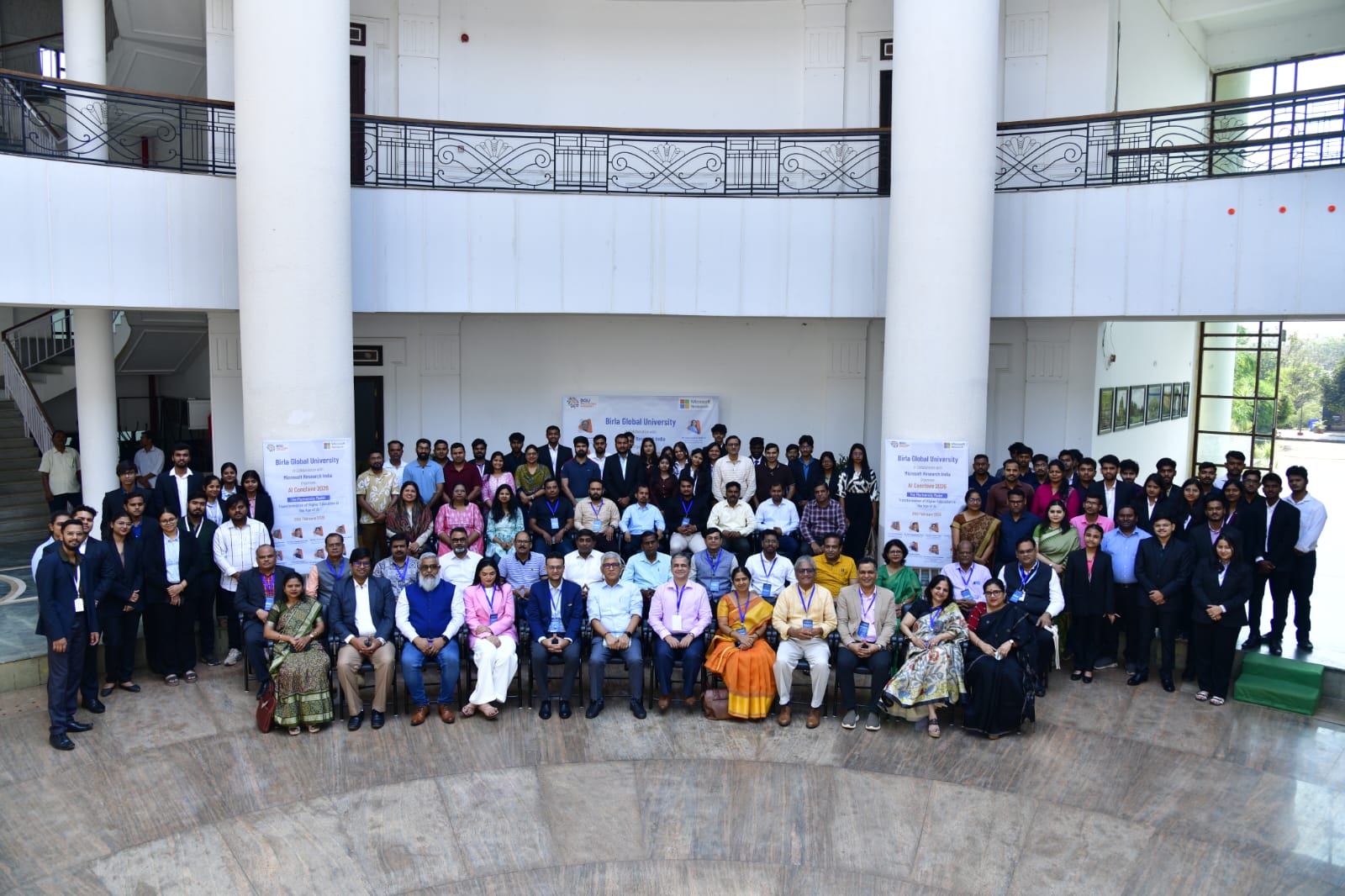
The conclave aimed to explore how AI is transforming the education ecosystem and addressing gaps in early education systems. Participants emphasized that the integration of AI in education must be guided by fairness, responsibility, interdisciplinary thinking, and collaborative learning.
A key highlight of the discussions was the concept of the Odisha University Compact, a collaborative framework that allows universities to work together while maintaining institutional independence. Under this model, universities can share infrastructure, facilitate faculty exchange programmes, and create interdisciplinary academic groups to promote flexible and collaborative education. The framework also enables students to choose courses across partner universities, making higher education more dynamic and accessible.
The concept aligns with the Ekalavya Model, which integrates Artificial Intelligence with innovative learning approaches such as project-based learning and portfolio-based learning. It also supports micro-learning achievements, enabling students to earn academic credits through small learning modules and academic tasks.
The initiative aims to modernize traditional education systems by encouraging collaborative learning, skill-based education, and academic development aligned with the AI-driven future.
The conclave featured prominent speakers from academia, research, and industry. Manohar Swaminathan, Senior Principal Researcher at Microsoft Research India, conducted technical workshops on the Pluriversity Compact and introduced participants to advanced agentic AI technologies, highlighting their potential impact on future curricula and adaptive learning environments.
Divakar Gupta from KPMG India shared insights on the regulatory environment surrounding AI in education and employment sectors.
Several academic leaders also participated in the discussions, including Rangin P. Tripathi, Registrar at National Law University Odisha; Sridevi Guda, Pro-Vice Chancellor at Centurion University of Technology and Management; and Sanjay Kuanar, Dean, School of Engineering at Birla Global University.
Industry representatives also shared their perspectives on evolving skill requirements. Pushpak Patro, CEO of DynamicWeb (Singapore), and Sai Prasanna Behera, CRO of Pharma Trendz, highlighted the growing need for strong collaboration between industry and academic institutions to prepare students for emerging job roles.
Another major highlight of the event was the “Agents for Academia” Hackathon Award Ceremony, where students presented innovative ideas on the use of Artificial Intelligence in education systems.
The conclave concluded with the announcement of a collaborative working group that will focus on driving systemic changes in higher education. The initiative aims to integrate AI into academic processes and strengthen Birla Global University’s vision of building a research-driven, competitive, and future-ready education ecosystem.
