
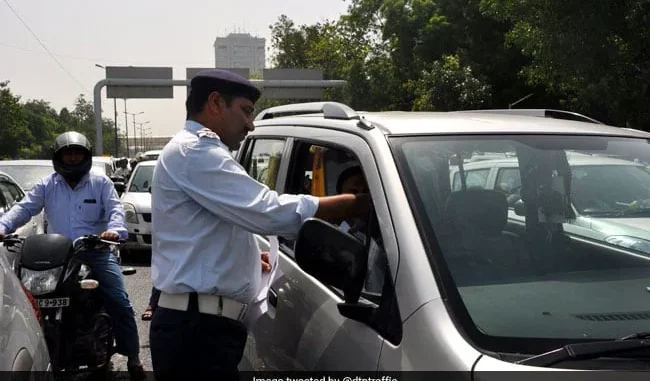

E-challan is a digital system for issuing traffic fines. It was introduced by the Ministry of Road Transport and Highways (MoRTH). It aims to streamline traffic law enforcement and enhance transparency.
In Andhra Pradesh, the e challan ap system was first launched in 2005 as a pilot project in Visakhapatnam. By 2016, regions such as Haryana, Himachal Pradesh, Odisha, and Tamil Nadu had implemented it.
As of 2024, the e-Challan system operates in 31 states and union territories across India, including Delhi, Maharashtra, Gujarat, Kerala, and Uttar Pradesh. Hence, we will discuss how the implementation of e-challans is building a smart traffic system.
How Does the E-Challan System Work in India?
The e-challan system first detects traffic violations using advanced CCTV cameras and reports the incidents to the command centre. The system works in this flow:
- Detection of Violations: Traffic violations are identified using CCTV cameras, speed guns, and other automated systems that capture the vehicle, registration number, and the incident.
- Challan Generation: The captured data is processed digitally, and an e-Challan is automatically generated with details of the violation and the applicable fine.
- Notification to the Vehicle Owner: The vehicle owner receives the e-challan details via SMS or email. It includes the date, time, and reason for the fine.
- Online Payment Facility: Owners can view and pay their e-challans online through government portals or mobile apps using debit/credit cards, net banking.
- Verification and Receipt: After payment, users can check the challan status online and download a digital receipt as proof of payment.
Delhi’s E-Challan Ecosystem
The delhi traffic challan system was officially launched in July 2019 by Delhi Police Commissioner Amulya Patnaik. During the rollout, the traffic team introduced 1,000 Android-based handheld devices to support the process.
National Informatics Centre (NIC) developed the system in partnership with Delhi Police and the State Bank of India (SBI). In the last five years (2019 to 2023), the Delhi traffic department issued a total of 90,22,711 e-challans worth Rs. 571.43 crores.
Key Features of Delhi’s E-Challan System
Delhi’s e-Challan system comes with several smart features, such as:
- Smart Handheld Devices: Officers use rugged 4G-enabled devices equipped with dual SIMs, fingerprint scanners, and GPS tracking for real-time accuracy.
- Instant Data Access: The system is linked to the VAHAN and SARATHI databases, enabling instant verification of vehicle and driver details.
- CCTV & ANPR Cameras: Around 350 cameras with Automatic Number Plate Recognition (ANPR) technology track violations like overspeeding and signal jumping.
- AI Integration: By 2024 – 2025, Delhi is upgrading 500 traffic junctions with AI-powered ANPR cameras to catch more complex violations automatically.
In March 2025, Delhi rolled out AI-driven 4D radar interceptors installed on police vehicles, equipped with 360-degree ANPR cameras and automatic e-challan generation linked to NIC systems.
Andhra Pradesh’s Smart Traffic Ecosystem
Andhra Pradesh was the first Indian state to implement the e-challan system. It set a benchmark for digital traffic management since 2005. In the last five years (2019 to 2023), Andhra Pradesh traffic police issued a total of 3,87,676 e-challans worth Rs. 77.49 lakh.
Its system efficiently combines advanced surveillance technology, real-time data analysis, and centralised enforcement to streamline traffic compliance across the state.
Key Features of Andhra Pradesh’s E-Challan System
The AP e-challan system has some advanced measures to ensure strict enforcement:
● 24/7 Digital Surveillance
The traffic department has installed Integrated CCTV cameras and Automatic Number Plate Recognition (ANPR) devices at major traffic junctions. This ensures a continuous monitoring of violations such as speeding, red-light jumping, and helmetless riding.
● Real-Time Violation Processing
The system enables instant detection and automatic generation of digital challans, directly accessing vehicle and driver information from VAHAN and regional databases to remove any scope for manual error or manipulation.
● Automated Violation Notifications
Offenders receive immediate SMS and email alerts detailing the nature of the violation, fine amount, and secure payment instructions.
Advantages of Using E-Challan Instead of the Paper Challan System
The old paper challan process was complex, time taking and corruption was common. The advantages of implementing e-challan are as follows:
- Greater Transparency: The e-Challan system provides photo and timestamp evidence of every violation, reducing disputes and the risk of manipulation.
- Convenient Online Payments: Offenders can pay fines anytime on the State Transport Department website, eliminating the need to visit offices.
- 24/7 Accessibility: The system is available round the clock, unlike physical counters that operate only during office hours.
- Eco-Friendly and Corruption-Free: By going paperless and reducing direct interactions with officials, the system supports transparent, corruption-free traffic enforcement.
Final Thoughts
India’s e-Challan integration, from Delhi to Andhra Pradesh, represents a significant step toward smarter and more transparent traffic enforcement. Over 38 crore challans have been issued across the country, and total revenue collections stand at ₹21,000 crore. However, about ₹37,000 crore in fines remain unpaid.
This highlights the importance of improving recovery processes and increasing public awareness to ensure better compliance and road safety.