

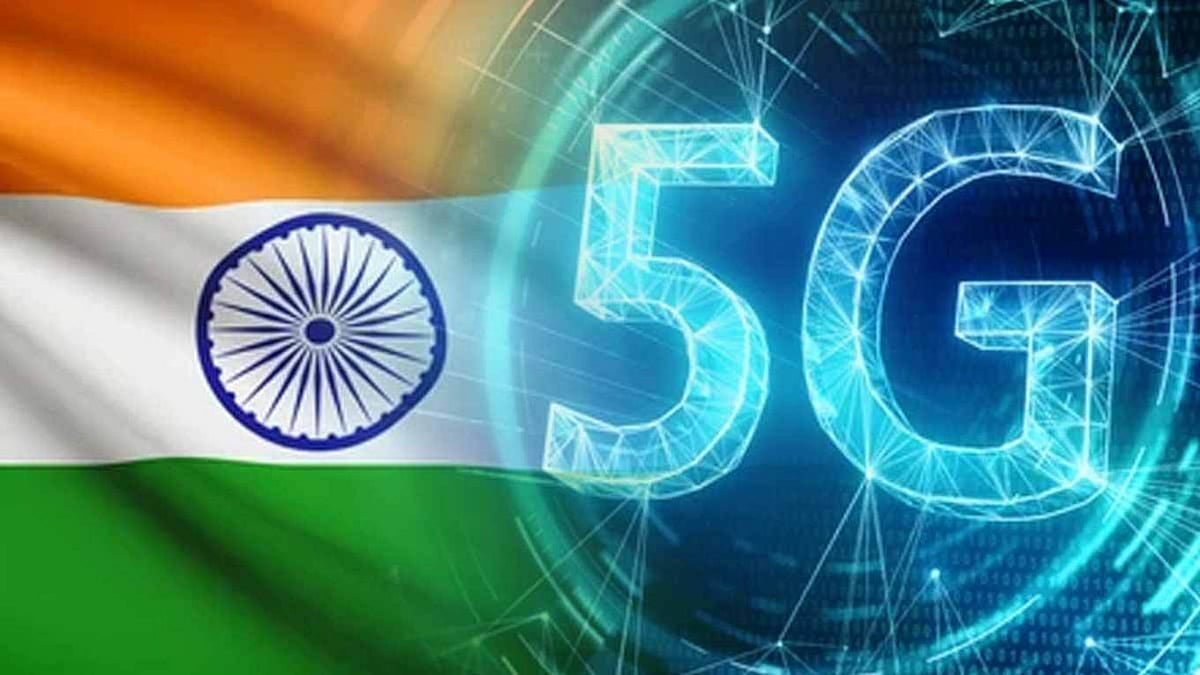
India’s large-scale transition to 5G is capable of transforming the global mobile communications market. Even today, the country is moving toward its goal — by 2031, more than a billion people should gain access to fifth-generation networks. What is driving this ambitious leap, what challenges await the industry, and will India become a global center of digital innovation?
India’s Prospects in the Global Transition to the Fifth Generation Standard
5G technology is a next-generation mobile communications standard that provides significantly higher data transfer speeds, minimal latency, and support for a million devices per square kilometer. For rapidly growing economies such as India, 5G is becoming a key driver of digital transformation, industrial development, and education.
With a population of over 1.4 billion, India holds one of the leading positions in the world in terms of the number of mobile network users. According to reports, by 2031, the number of 5G users in the country will reach 1 billion, ensuring a penetration rate of this technology at 79% of the total number of subscribers. The question arises: what technological, economic, and social barriers need to be overcome to realize these plans?
Scale and Pace of 5G Deployment in India
Comparing the development of 5G in India with global leaders, one can note the impressive rollout speed. According to official data, since October 2022, operators have installed about 500,000 base stations, which has made it possible to provide access to 5G in 99.9% of the country’s districts. For comparison, in some other countries, achieving such coverage took significantly more time.
The deployment of the fifth-generation network in 22 months became possible due to a combination of several factors. Among them are state support, intense competition between operators, and a rapid increase in demand for fast and stable internet. Experts point out that such a rapid pace of bringing technology to market creates a unique situation in the global telecommunications market.
Key Market Players and Their Strategies
The largest Indian operators, Bharti Airtel and Reliance Jio, became the first companies to launch commercial 5G services in major cities. In the first year of operation, each of them attracted about 50 million users to the new networks. The strategy of these companies is based on rapid network expansion and affordable pricing, which encourages subscribers to switch to the new standard.
In 2025, Vodafone Idea will join the list of players, and the state-owned company BSNL plans to launch its own 5G networks, relying exclusively on domestic technological solutions. The national telecommunications ecosystem is being shaped with the participation of developers such as C-DOT, Tejas Networks, and Tata Consultancy Services. Differences in approaches between private and state operators are a subject of discussion among analysts and experts.
Market Transformation: Decline of 4G and Rise of 5G
According to Ericsson, by 2024 there will already be about 394 million 5G users in India, accounting for 32% of all mobile subscribers. Forecasts for the coming years show a sharp decline in the number of 4G users: from 600 million in 2025 to 190 million in 2031. The reason for this migration is not only the expansion of coverage but also the increased availability of new devices, emergence of high-speed services, and lower connection costs.
The expansion of 5G creates new opportunities for subscribers but also requires large-scale investments in infrastructure and equipment modernization. In addition, operators will have to address issues of network compatibility and ensure stable quality of service in the regions.
Economic, Social, and Technological Effects
5G adoption is seen as a stimulus for India’s economy. It is expected that the upgraded networks will open new prospects for the development of startups, industry, healthcare, and education. According to the Minister of Communications, there is already an influx of investment in digital infrastructure and related industries.
The emergence of 5G makes it possible to launch smart city projects, production automation, and remote education. The new mobile communication standard is also necessary to improve the quality of access for the country’s residents to various online services and applications.
Stores, social networks, service ordering, video services, and mobile games — all these require high connection speeds. In addition, the requirements for speed and quality of connection are also relevant for the rapidly growing iGaming industry. Some games, such as slots, Plinko, or Aviator, have become real hits among Indian users. This is evident from the data of specialized review websites. According to their information, the list of top Aviator apps in India is constantly being updated with new platforms, all of which also require high-quality mobile internet.
However, experts emphasize that the mass transition may exacerbate digital inequality between regions and segments of society. Device availability, connection costs, and coverage quality remain the subject of discussion among specialists.
What to Expect for the Industry and Users
Forecasts for 2031 paint a picture of India’s almost complete transition to fifth-generation networks. On the horizon are projects involving the implementation of artificial intelligence, Internet of Things, and transportation automation. Analysts believe that the country’s experience may serve as an example for other developing nations seeking ways to accelerate digitalization.
Will India be able to set a new global standard in the pace of 5G adoption? The answer to this question depends on many factors — economic, technological, and social. However, it is already clear that the country demonstrates unique experience in overcoming the challenges of the digital era and is shaping new rules of the game for the global telecommunications industry.