

“Shrinkflation” usually makes you think of a smaller chocolate bar in the same-size wrapper. But the same idea can show up in digital entertainment too: a product looks familiar, the user journey feels unchanged, yet the value has quietly shifted.
Casino games are a perfect example. A tiny-looking tweak to a classic game mechanic can materially change what players are paying for – not in pounds and pence upfront, but in the long-run cost of play. That’s why so many regulators, consumer advocates, and responsible operators focus on transparency: if the product has changed, customers should be able to see that clearly.
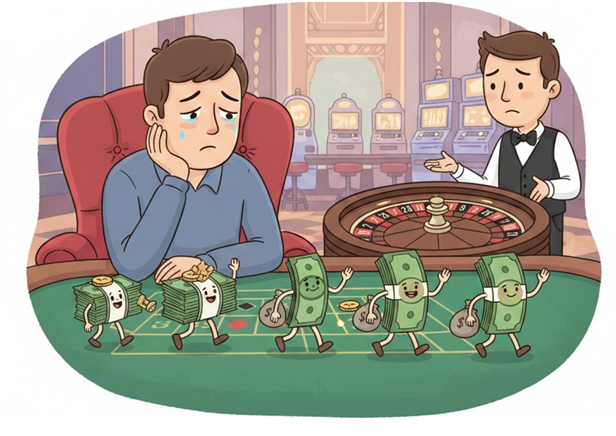
For anyone trying to understand how online casinos differ – in game formats, rules and even payment rails – comparison resources like this online casino comparison guide can be useful as a starting point, because “casino” can mean very different things depending on the site, the games, and the jurisdiction.
What is triple-zero roulette, in plain English?
Roulette’s core concept is simple: you bet on where the ball will land. The detail that matters is the wheel layout.
- European roulette has numbers 1–36 plus a single 0 (37 pockets total).
- American roulette adds a 00 (38 pockets total).
- Triple-zero roulette adds a 000 (39 pockets total).
Those extra green pockets don’t look like a big deal – but mathematically they are. In roulette, the casino’s advantage (the “house edge”) is created by the gap between the true odds and the payout odds. Add more “house” pockets, and the edge increases.
The “invisible price rise”: house edge, explained without the jargon
A useful way to think about house edge is: the expected cost of entertainment over time. It doesn’t predict any single session, but it does describe the average outcome over many bets.
For an even-money bet (like red/black), the casino pays 1:1 when you win. But you don’t win half the time because the green zeroes exist.
Here’s what changes as zeros are added:
- European (37 pockets): house edge is 1/37 ≈ 2.70%
- American (38 pockets): house edge is 2/38 ≈ 5.26%
- Triple-zero (39 pockets): house edge is 3/39 ≈ 7.69%
A quick way to visualise it:
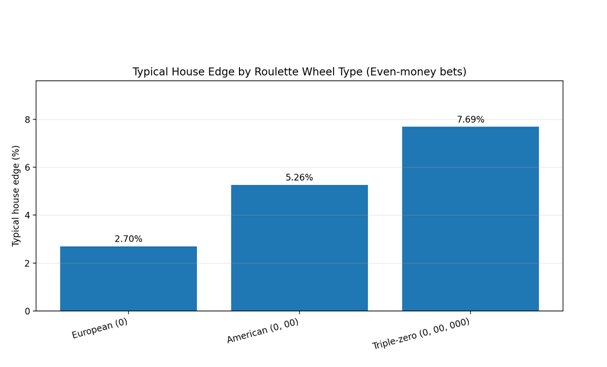
That’s the “invisible price rise”: the game still looks like roulette, but the long-run cost per £1 staked is higher.
Why would operators introduce it?
From an operator’s perspective, adding a zero can be framed as a commercial decision, not a “gotcha” – but it still raises important questions about clarity.
Common motivations include:
- Margin and revenue stability: A higher edge can make outcomes more predictable at scale.
- Product differentiation: Online casinos have huge game libraries; “new” roulette variants give marketing teams something to talk about.
- Game portfolio management: Operators often balance low-edge and higher-edge games across different audiences and risk profiles.
- Volatility preferences: Some users prefer higher-variance entertainment; operators may bundle variants to cater to different segments.
None of these are inherently illegitimate – but they put pressure on presentation and disclosure. The moment a change becomes hard to notice, it becomes a trust issue.
The trust problem: “It looks the same”
Triple-zero roulette triggers debate for the same reason “hidden fees” do in any consumer product: most people don’t examine the fine print every time they engage with a familiar interface.
In digital products, trust can erode when:
- a name implies familiarity but the mechanics shift
- the key “value” variables (odds, RTP, house edge) are buried
- default choices funnel users into higher-cost options without clear labelling
This is why transparency isn’t just a compliance topic – it’s a retention topic. If users feel misled, they churn. If they feel informed, they’re more likely to stay engaged within healthy boundaries.
What scrutiny looks like in the UK (and why it matters globally)
Even if a site’s readership is global, the UK is a useful case study because gambling is tightly regulated and expectations around fairness and marketing are explicit.
For UK-licensed online gambling, the regulator sets technical and consumer-facing requirements designed to keep games fair, information clear, and customer journeys safer. The UK Gambling Commission outlines how it expects online games to be tested and monitored for fairness, including requirements around systems and gameplay verification.
And because “value” is tied to consumer understanding, the UKGC also points licensees toward consumer protection principles around fairness and transparency in terms and practices: fair and transparent terms and practices.
Marketing adds another layer. In the UK, gambling ads must be socially responsible and must not mislead – rules that can become relevant when product differences are not made clear.
The practical takeaway: if the product changes value, the product page, game info, and marketing should make that legible.
The wider pattern: “value drift” in digital entertainment
Triple-zero roulette isn’t the only example of value changing through design.
Across digital entertainment, value drift can happen when:
- odds, mechanics or return profiles change behind a familiar UI
- “new” variants are introduced without clear explanations
- complexity increases (more features, more rules, more payment methods), raising the cognitive load on users
That last point is increasingly relevant as payments diversify, including in some markets where crypto rails are offered. Even if roulette is the headline, the broader consumer challenge is the same: people need clear information to understand what they’re choosing. If you’re researching how different crypto casino setups work – including what it can mean to pay via specific rails – overviews like how Bitcoin Cash casino payments work can help demystify terminology without turning the topic into hype.
A practical checklist for readers (consumer-first, not “how to win”)
If you’re choosing where to play, the safest, most responsible advice is about clarity and limits, not outcomes:
- Check the wheel type (0 vs 00 vs 000) before you place a bet.
- Look for clear game information: rules, payouts, and any stated return/odds disclosures.
- Prefer licensed, regulated operators in your jurisdiction, with visible company and licensing details.
- Treat gambling as paid entertainment: set a budget and time limit you’re comfortable losing, and stop when it stops being fun.
- Be wary of anything that feels deliberately confusing – that’s often where poor consumer experiences begin.
The business lesson: price changes must be legible
For operators, affiliates, and product teams, triple-zero roulette is a reminder that “small” changes can carry outsized reputational risk. You might gain margin, but lose trust – and trust is the real long-term asset in a regulated entertainment category.
For everyone else, it’s a neat example of a wider truth in digital markets: the interface can stay the same while the economics shift. That’s exactly why scrutiny follows, and why transparent design is increasingly the competitive advantage.