

Sports watches are becoming more and more popular with the rise of healthy living and many people picking up sports as their hobbies, but how accurate are they at measuring one of the most important metrics?
Most of the watches from Garmin, Coros, Polar and other brands have the ability to measure heart rate on our wrist with an optical sensor but it has been long debated how well they are able to do this.
Many tests show that the technology used often gives us misleading numbers, therefore hindering our athletic progress in some capacity.
How Do Watches Measure Heart Rate?
Photoplethysmography (PPG), a technique used by optical sensors, tracks variations in blood flow by shining an LED sensor through the skin. Are you familiar with the green light on your watch’s underside? Yes, that is the process of monitoring blood flow and estimating heart rate from it.
“HR is determined based on the theory that blood flow through the artery is inversely related to the amount of light refracted,” according to Stahl et al. Because of this, this technique cannot be used to assess HR directly, which is where its limits start.
Limitations of The Technology
Our wrist-based optical sensors may occasionally be correct, but research has shown that they are not always as dependable for a variety of reasons. Each type of gadget has a different level of precision and dependability.
Some are more or less dependable than others for particular populations and movement types.
So you can’t really put all of the brands like GGBet Casino, Polar, or Analiza CasinoEuro under the same blanket either.
The Apple Watch was found to perform better than alternative optical choices in multiple examinations, despite not being favoured by many athletes.
Physiological Limiting Factors
The fact that optical sensors have been shown to be significantly less accurate for darker skin tones is likely one of their most difficult problems. Skin colour variations will affect the accuracy of the LED sensor due to its nature. It’s crucial to remember that this error is observed whether or not the study participants were moving or at rest.
According to some research, older athletes find these devices less dependable than younger athletes. Variations in circulation and movement patterns are the working explanation for why this might be the case.
Errors On The User’s End
The location of optical monitors can enhance their accuracy. Limiting the wrist or arm-based optical monitor’s movement can enhance results. Additionally, the readings become more accurate the less arm movement there is. This makes it difficult to run or swim, as you might expect.
This might be user error, but companies such GGBet Casino, Polar, or Analiza CasinoEuro aren’t very explicit in the placement of the devices either.
Therefore, using a wrist monitor requires it to be somewhat snug, which can be problematic, particularly for lengthy events. For this reason, arm-based monitors typically perform better.
They Are Not Very Accurate For Rigorous Activities
The body of studies indicates that lighter-skinned individuals benefit most from these sensors when they are at rest. Therefore, the data is far more trustworthy if you use a wrist-based sensor to monitor resting heart rate or HRV (heart rate variability).
However, these technologies of companies like GGBet Casino, Garmin, or Analiza CasinoEuro become less reliable the more we move. We are also less trustworthy if we have darker complexions.
Depending on the specific gadget, you can discover that HR tracks more consistently for some actions than others. For instance, depending on the arm swing’s velocity and the ensuing shift in blood flow, some of these devices may confuse running cadence with heart rate.
What Should You Use Instead
The Polar chest strap is the gold standard for research projects. Therefore, this is the best choice if you’re searching for the most accurate one. It’s crucial to remember to remove the monitor from the strap while not in use.
This will improve accuracy and battery life. Additionally, it might occasionally be affected by Bluetooth interference.
We also understand that straps on the chest can be bothersome. My scar will never go away! The arm-based optical sensors are more dependable than the wrist-based ones, according to athletes who have tested them. This is probably because of the limitations on movement and the ease with which the strap may be tightened compared to the wrist.
Why Is Heart Rate So Important, Even For Amateurs
Understanding the energy costs of any given output (power or speed) requires appropriate heart rate monitoring. It can assist you in comprehending how your body reacts to various variables, like altitude, humidity, and temperature.
It also offers crucial hints about recuperation and general well-being. With this knowledge, you may decide more wisely how to implement a sustained effort regardless of what happens on race day.
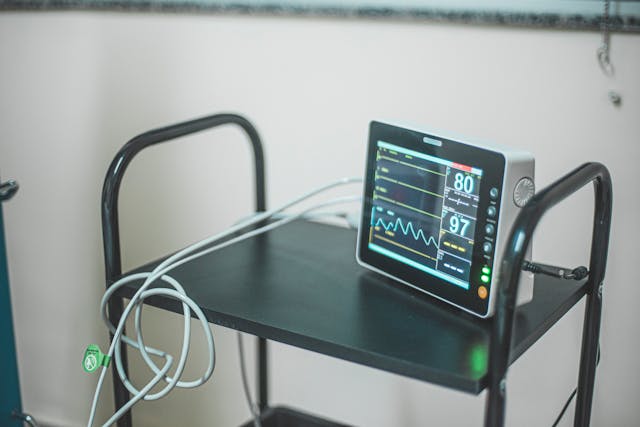
Photo by Dalila Dalprat :