

Bengaluru, Feb 13: Fortis Hospital Bannerghatta Road has achieved a major medical milestone by successfully performing Karnataka’s first navigation-based bronchoscopy and lung biopsy, enabling early detection of suspected lung cancer in a 65-year-old woman. The procedure was carried out by the hospital’s Interventional Pulmonology team, led by Dr. Srivatsa Lokeshwaran, Director – Interventional Pulmonology and Lung Transplantation, using the Synapse 3D Navigation System by Fujifilm.
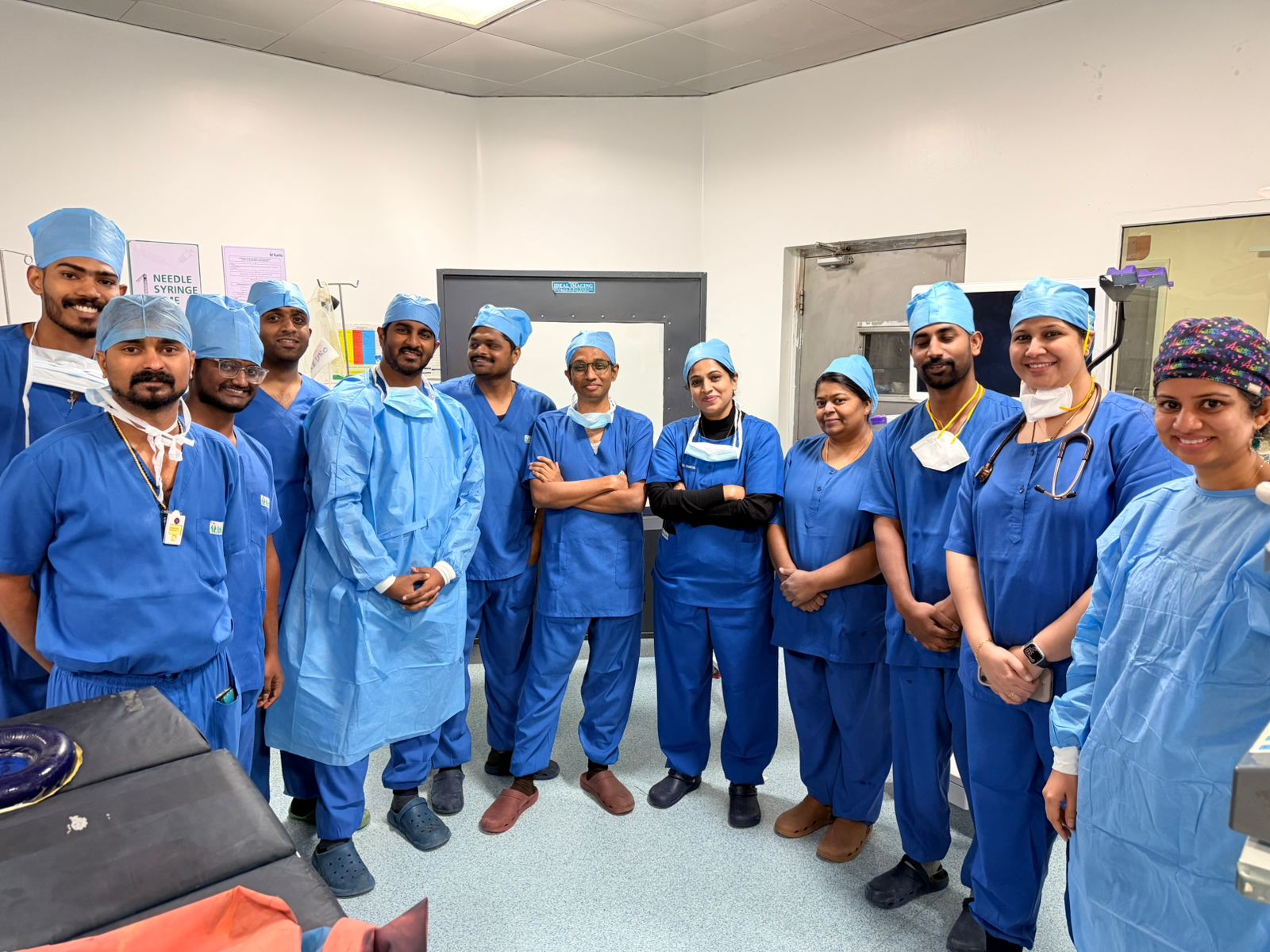
The patient initially presented with cough and fever, and a routine chest X-ray revealed an abnormal shadow. A subsequent CT scan identified a 2-cm nodule in the right middle lobe, prompting the need for a precise biopsy. Unlike traditional CT-guided transthoracic biopsies, which involve puncturing through the chest wall and carry risks such as pneumothorax, bleeding, and rare tumor seeding, the navigation-based bronchoscopy allows the biopsy to be performed via the natural airway. This approach reduces complications, improves precision, and enables day-care recovery.
Dr. Lokeshwaran explained, “Approaching the lung nodule through the airway is like entering a house through the front door rather than breaking in from behind. It allows us to obtain multiple high-quality tissue samples safely and efficiently. In this case, we reached the lesion in less than 2 minutes, compared to over 30 minutes with conventional methods, while significantly reducing radiation exposure. The procedure was successful, and the patient was discharged with clear post-procedure guidance.”
Dr. Ananth Rao, VP & Business Head, Fortis Hospitals Bengaluru, added,
“Introducing navigation-based bronchoscopy in Karnataka demonstrates our commitment to early cancer detection, precision diagnosis, and patient safety. Fortis Hospitals continues to invest in advanced technologies that enhance outcomes and provide compassionate care to patients across the region.”
Navigation-based bronchoscopy represents a significant advancement in lung cancer diagnostics, offering safer, faster, and more accurate tissue sampling. The procedure complements low-dose CT screening programs, which have been shown globally to reduce lung cancer mortality, while addressing unique challenges in India, such as differentiating cancerous nodules from tuberculosis-related benign nodules.