

Hyderabad, Mar 6: In a significant milestone for cardiac care in India, doctors at Gleneagles Hospitals (Fortis Network) in Hyderabad have successfully performed South India’s first Transcatheter Tricuspid Valve Edge-to-Edge Repair (T-TEER) on a 75-year-old patient suffering from severe tricuspid regurgitation and advanced heart failure.
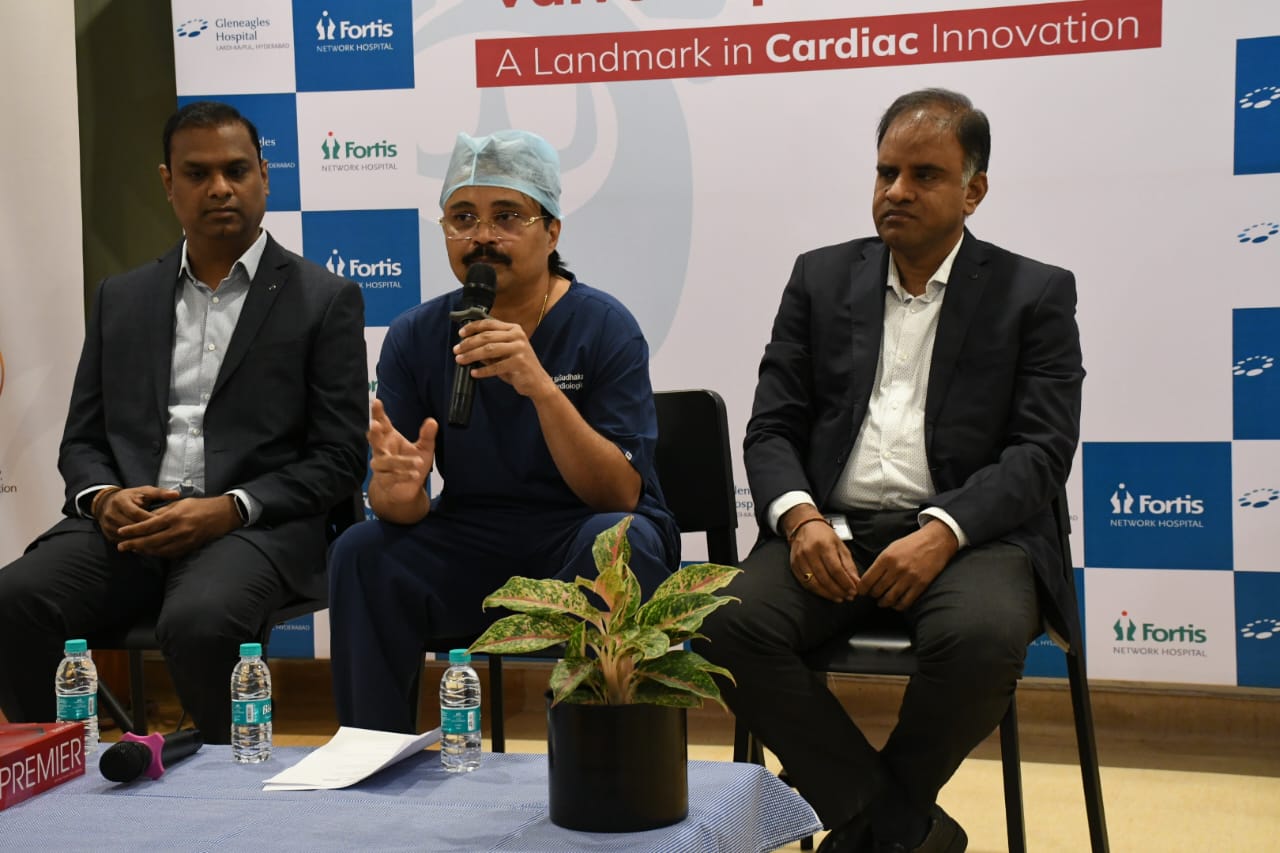
The procedure was led by renowned cardiologist Dr. M. Sai Sudhakar and also marks the first implantation of India’s indigenously developed TEER system, “MyClip.” The breakthrough offers a minimally invasive and more accessible treatment option for high-risk patients who are not suitable candidates for open-heart surgery.
The patient had been experiencing severe breathlessness, persistent fatigue, and fluid accumulation even at rest, significantly affecting his quality of life. Following a comprehensive clinical evaluation, the hospital’s multidisciplinary heart team recommended a catheter-based repair procedure to address the leaking tricuspid valve.
Understanding the Condition
Tricuspid regurgitation occurs when the tricuspid valve on the right side of the heart fails to close properly, allowing blood to leak backward within the heart. Over time, this can cause swelling in the legs and abdomen, worsening fatigue, and progressive heart failure. Historically, the condition has remained under-recognised and primarily managed through medications aimed at symptom relief rather than correcting the valve defect.
A Minimally Invasive Solution
The Tricuspid Clip therapy provides a minimally invasive alternative. Through a small puncture in a vein in the leg, doctors guide a catheter to the heart using advanced imaging techniques. A small clip device is then placed on the leaking valve to help it close more effectively, reducing backward blood flow and improving heart function.
Speaking about the milestone, Dr. M. Sai Sudhakar said:
“This procedure represents an important step forward in the treatment of tricuspid valve disease, which has historically remained underdiagnosed and undertreated, particularly in elderly and high-risk patients. In many cases, patients continue to suffer from severe breathlessness, swelling, and fatigue because treatment options were limited, especially when they were not suitable candidates for open-heart surgery. With Transcatheter Tricuspid Valve Edge-to-Edge Repair (T-TEER), we can repair the leaking valve through a minimally invasive catheter-based approach using a small clip device that helps the valve leaflets come together and reduce the backward flow of blood.”
He further added:
“What makes this milestone even more significant is the use of an indigenously developed device, MyClip, manufactured in India. The availability of such home-grown structural heart technology has the potential to substantially reduce treatment costs and expand access to advanced valve therapies for a much larger number of patients who previously had very limited options.”
Because the therapy avoids opening the chest, recovery is typically faster and the overall procedural stress is significantly lower compared to conventional surgery—an important advantage for elderly patients and those with multiple medical conditions.
Dr. Sudhakar also acknowledged the coordinated efforts of the cath lab, imaging, anesthesia, nursing, and critical care teams, emphasizing that multidisciplinary collaboration remains essential for the success of complex structural heart interventions.
This milestone further highlights the growing role of innovative, minimally invasive cardiac technologies in India, while reinforcing the country’s progress in indigenous medical device development and advanced heart care.