

Benz Intersect 7m at 223g/t Gold Under Hibernian Gold Mine
HIGHLIGHTS:
- New ultra-high grade Kilkenny discovery offset beneath the historic Hibernian Gold Mine validates Benz structural model.
- 7m at 223 g/t gold from 270m26EGN013
- within 11m at 144 g/t gold
- 7m at 223 g/t gold from 270m26EGN013
- High-grade satellite opportunity for Glenburgh – Mt Egerton located ~170km from the Glenburgh Gold Project with potential to provide additional high-grade satellite ore. Previous intercepts from Hibernian include:1
- 9m at 107 g/t gold
- 5m at 96 g/t gold
- 4m at 92 g/t gold
- Kilkenny Discovery interpreted as structural repeat of the Hibernian ore position – Supporting Benz’s structural model and highlighting the potential for multiple stacked high-grade shoots along the controlling structural corridor.
- Classic structural framework for high-grade gold in orogenic setting- mineralisation controlled by dilation caused by oblique shear zones interacting with a folded gabbro sill.
- More untested structural targets identified – Several additional undrilled sheared/dilational positions identified along this structural corridor including the Galway Prospect.
- Emerging eastern gold camp at Mt Egerton – Benz’s regional work highlights the camp-scale cluster of prospects around the Mako, Gift (previous intersection 17m at 6.8g/t gold 1) and Trading Post, ~2km east of the Hibernian Mine. Extensive gold and base-metal anomalism; ca. 1811 Ma granodiorite intrusions; exciting potential for significant and largely untested gold system.
Vancouver, British Columbia–(Newsfile Corp. – March 16, 2026) – Benz Mining Corp (TSXV: BZ) (ASX: BNZ) (“Benz” or the “Company“) is pleased to announce the discovery of the Kilkenny Zone, a new ultra-high-grade gold discovery located beneath the historic Hibernian Gold Mine at the Company’s Mt Egerton Gold Project in Western Australia.
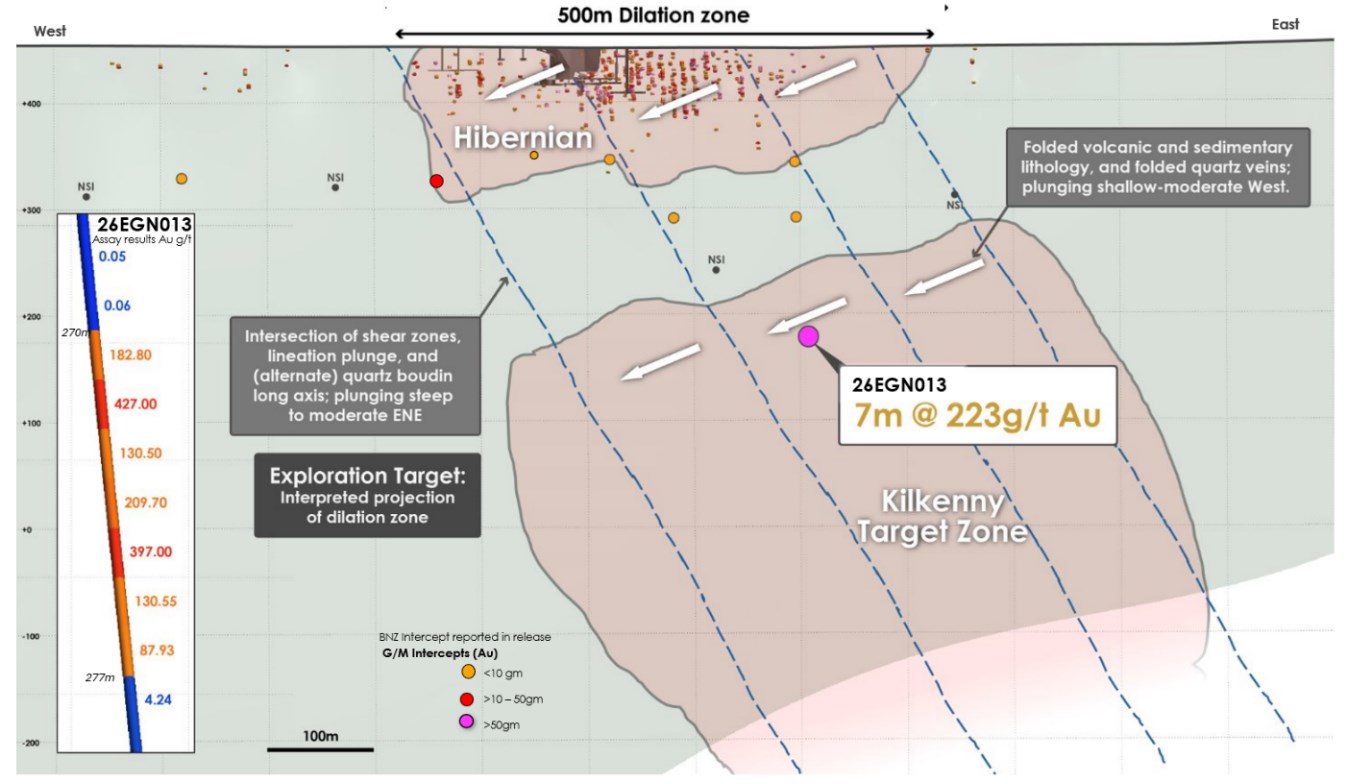
Figure 1. Long section of Kilkenny Discovery zone, showing structural controls. (note Kilkenny discovery offset out of the page below Hibernian).
To view an enhanced version of this graphic, please visit:
https://images.newsfilecorp.com/files/1818/288772_16c67e031460ab56_002full.jpg
Benz CEO, Mark Lynch-Staunton, commented:
“What is most encouraging about the Kilkenny discovery is that it confirms the structural framework our team has been developing at the Mt Egerton Goldfield. The mineralisation occurs within the predicted dilation position beneath the Hibernian Mine, which gives us confidence that the geological model is working.
“The same geological team that unlocked the exploration potential at our flagship Glenburgh Project is now applying that approach at Mt Egerton. While Glenburgh remains our primary focus, we see the Mt Egerton Goldfield as a highly underexplored gold district where modern structural interpretation is beginning to reveal new opportunities.
“From a strategic perspective, we view Mt Egerton as a complementary high-grade satellite opportunity to Glenburgh. Importantly, large parts of the Mt Egerton Goldfield remain effectively untested, with more than 20km of prospective strike identified across the district, which means the discovery potential across the district remains significant.”
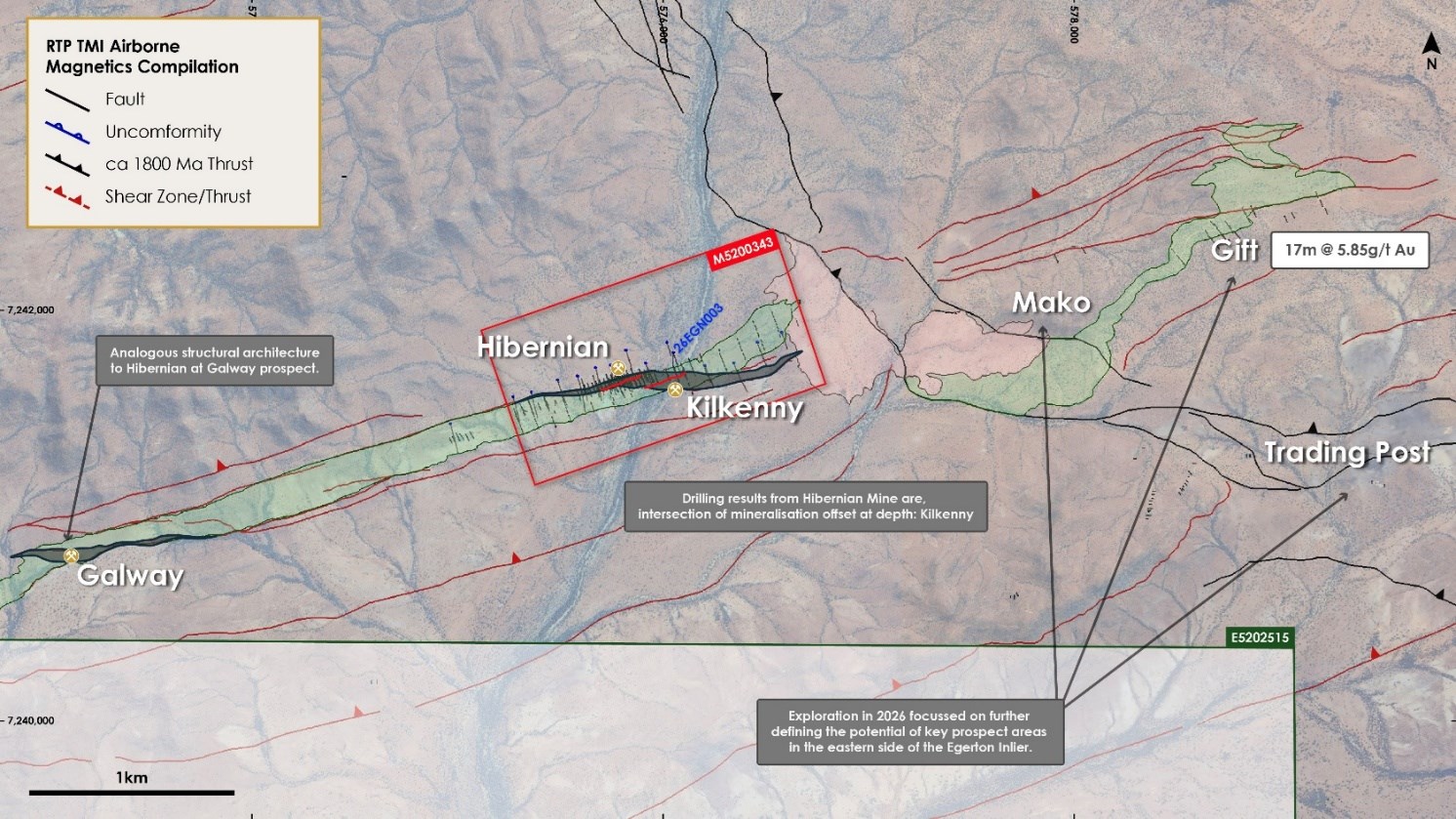
Figure 2. Plan view of Mt Egerton Goldfields geology and structural interpretation with collar map.
To view an enhanced version of this graphic, please visit:
https://images.newsfilecorp.com/files/1818/288772_16c67e031460ab56_004full.jpg
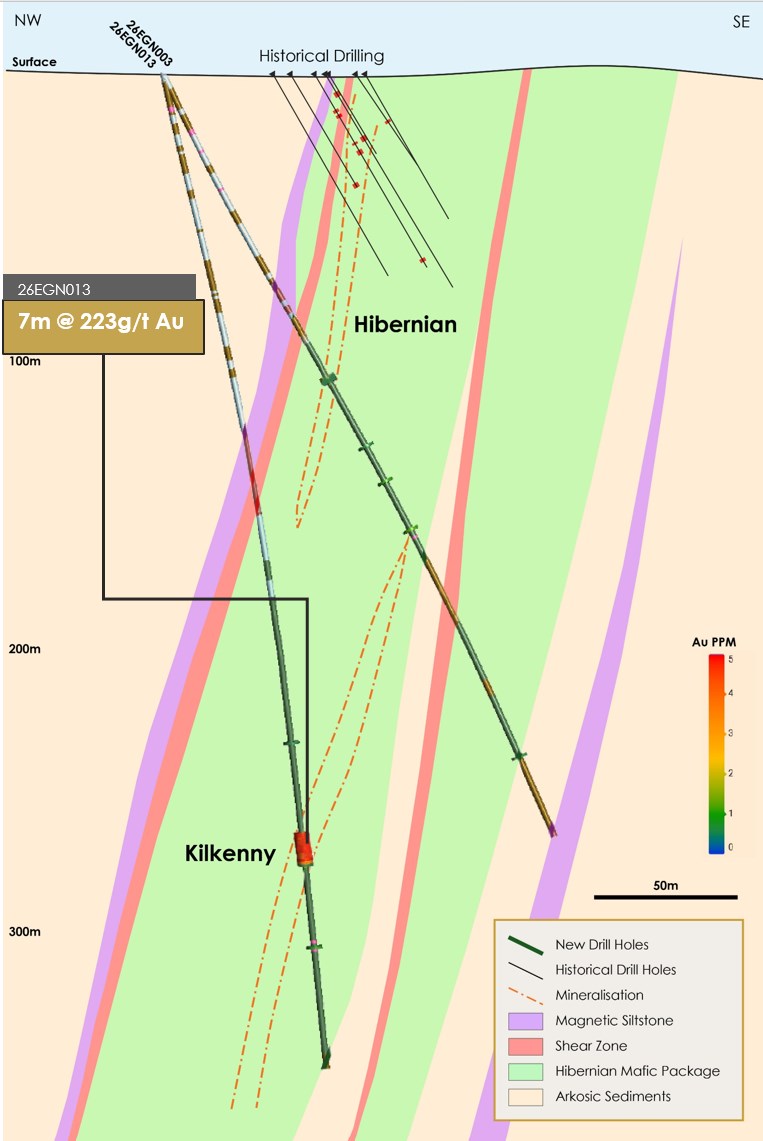
Figure 3. Section View of hole 26EGR_013 with new Kilkenny discovery shown. Open at depth. Historical results released in announcement dated 6th Nov 2024.
To view an enhanced version of this graphic, please visit:
https://images.newsfilecorp.com/files/1818/288772_16c67e031460ab56_005full.jpg
Kilkenny Discovery Validates Structural Model
The Kilkenny discovery forms part of Benz’s ongoing work to re-think the geological and structural model of the Mt Egerton Goldfield; a district that was discovered in early gold-rush times but remained underexplored by modern techniques.
RC drilling at Mt Egerton in 2025-2026 was designed to provide better stratigraphic understanding and geometric context to the mineral system at the Hibernian Mine.
During the program, Benz geologists recognised that the best mineralisation was occurring by dilation of mafic host rocks between oblique shear zones at Hibernian, and at several other similar structural positions along the same mafic belt. The revised structural model presented a new target position beneath the Hibernian mine and further to the East, where mapped shear zones interact with a folded gabbro sill, that was likely offset and separated from known mineralisation.
Additional drillholes were added to test this, and hole 26EGN013 intersected an exceptional high-grade gold interval associated with quartz veining and pyrite in the gabbro sill, validating the structural model and discovering Kilkenny.
The Kilkenny target is interpreted to represent a structural repeat of mineralisation closer to the surface at Hibernian, suggesting the possibility of multiple stacked high-grade shoots along the same structural corridor.
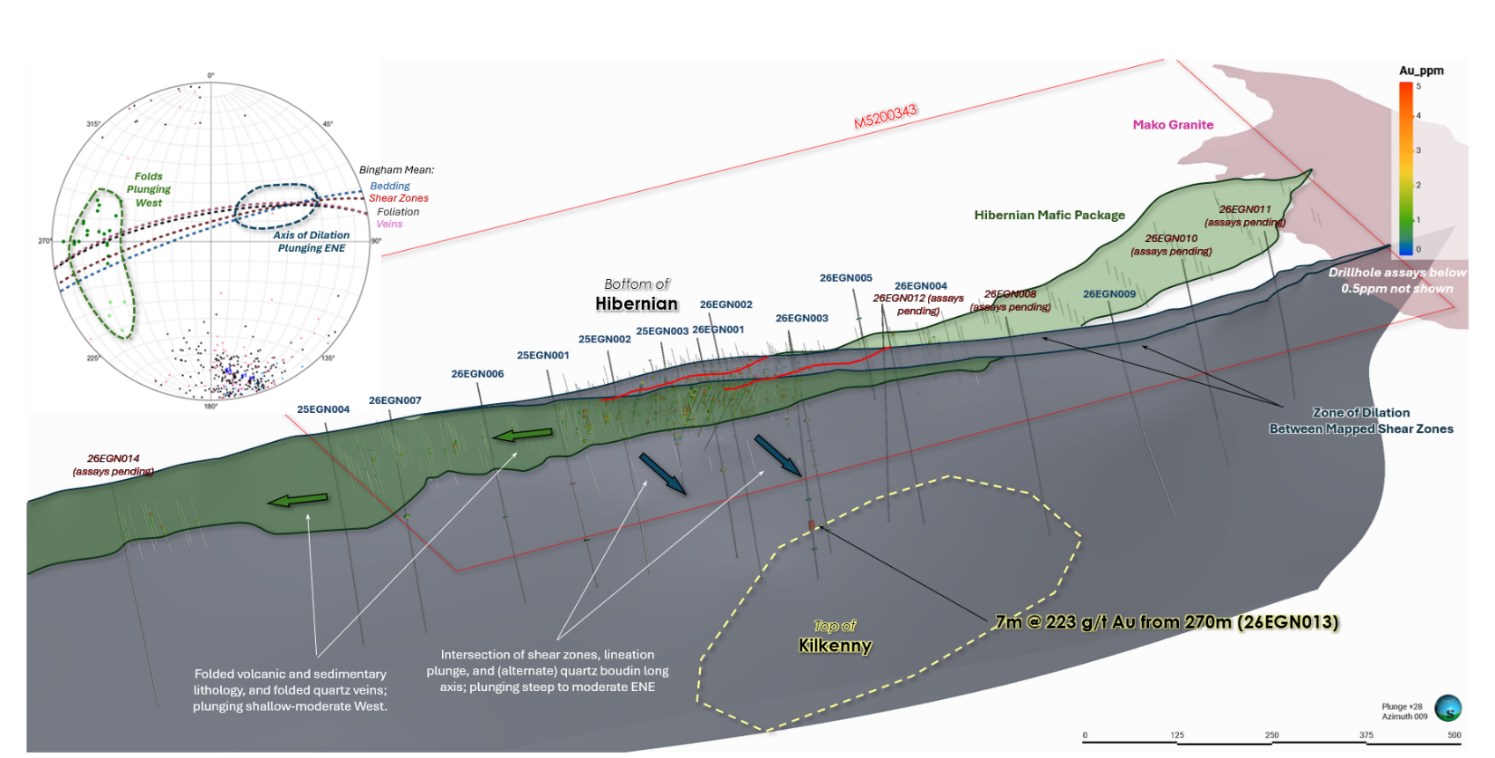
Figure 4. 3D oblique view of the of Mt Egerton Goldfields geology and structural interpretation with collar map.
To view an enhanced version of this graphic, please visit:
https://images.newsfilecorp.com/files/1818/288772_16c67e031460ab56_012full.jpg
Classic Structural Setting for High-Grade Gold
This geological setting at Hibernian, where oblique shear zones cause dilation and veining within a favourable (mafic) host rock represents a classic structural trap for high-grade gold in orogenic settings.
Benz’s wider structural interpretation of the Mt Egerton project indicates that analogous structural positions (to Hibernian) remain untested along the main mafic corridor. Prospects such as Galway represent potential repeat positions analogous to the Hibernian and Kilkenny zones.
Historical drilling at the Hibernian Mine demonstrates the exceptional grades present in the system, including:
-
9m at 107.2 g/t Au
-
5m at 96.7 g/t Au
-
4m at 91.9 g/t Au
Emerging Eastern Gold Camp
In addition to the immediate Hibernian-Kilkenny prospects, Benz’s regional interpretation has identified a potential camp-scale cluster of prospects approximately 2km east of the Hibernian Mine, where the usual pattern of ductile foliation and shearing is disrupted by a more-brittle NW-SE oriented thrust fault zone.
The Mako-Gift-Trading Post cluster shows extensive gold and base-metal anomalism in soils, rock chips and shallow drilling, and the intrusion of ca. 1811Ma granodiorite interpreted to be emplaced soon after gold mineralisation.
- Previous drilling at Gift returned an intersection of 17m at 6.8 g/t Au
This cluster of prospects presents a significantly larger exploration target than the Hibernian Mine alone and may represent a different style of mineralisation to the Hibernian-Kilkenny system.
This potential for a larger-scale emerging eastern gold camp within the Mt Egerton Goldfield has been followed up by Benz geologists with a program of systematic multi-element soils with further planned mapping work in 2026.
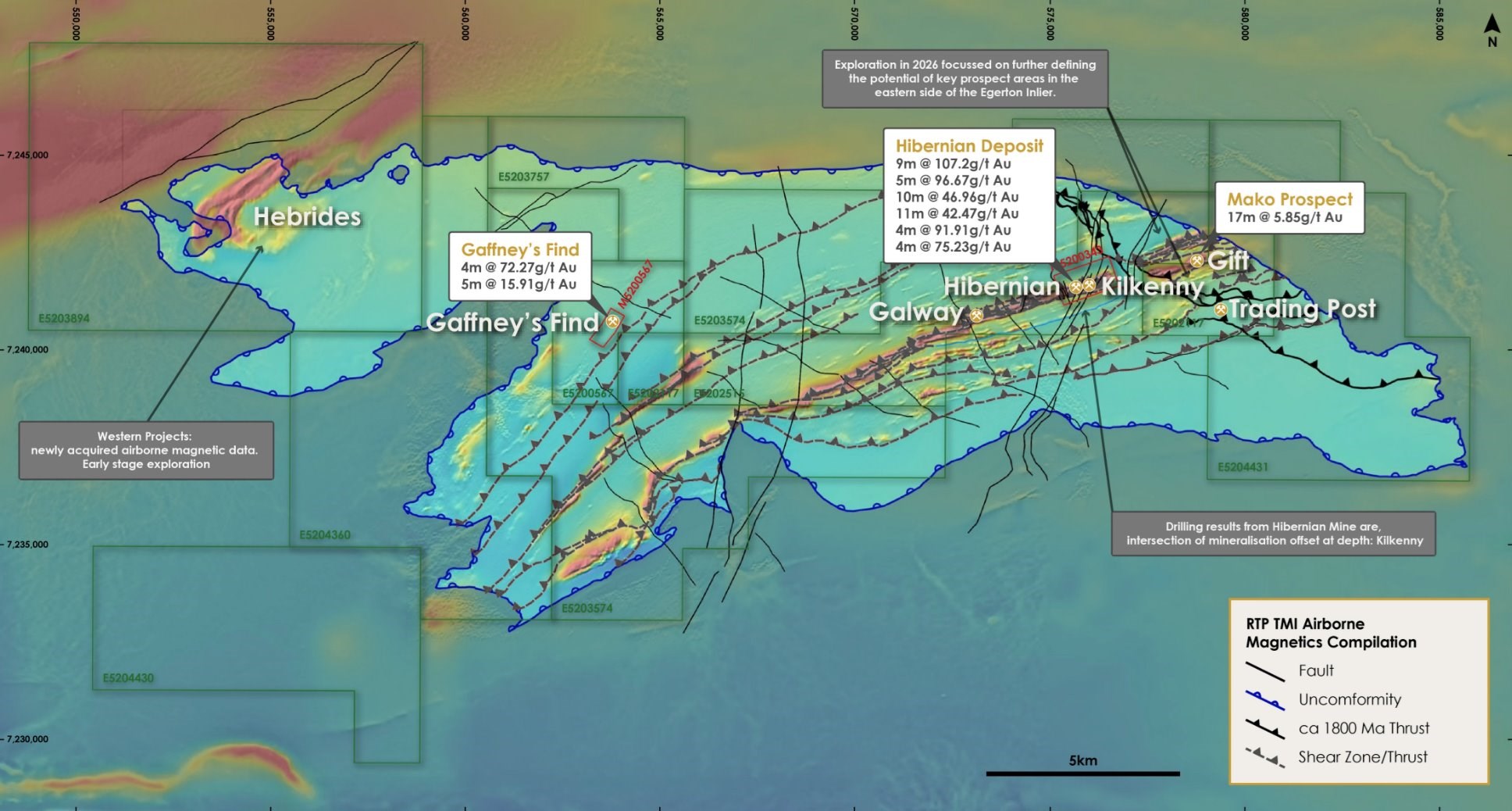
Figure 5. Regional geological overview of the Mt Egerton Goldfield.
To view an enhanced version of this graphic, please visit:
https://images.newsfilecorp.com/files/1818/288772_16c67e031460ab56_013full.jpg
Strategic Fit within the Benz Portfolio
Glenburgh firmly remains Benz Mining’s flagship project, where the Company is focused on building a large-scale gold resource.
However, the same geological team responsible for unlocking the exploration potential at Glenburgh, applying the same structural re-think to the Mt Egerton Goldfield, now view this underexplored district as a potential high-grade satellite opportunity to a mine at Glenburgh.
The exceptional grades encountered at Hibernian and now Kilkenny demonstrate the potential for to provide additional high-grade ore sources that could complement the future development of Glenburgh, around 170km to the Southwest.
The geology and gold mineralisation at Mt Egerton shares similarities with the Fortnum-Starlight Goldfield operated by Westgold 75km to the Southeast.
Benz believes a similar exploration model may emerge at Mt Egerton, where multiple high-grade deposits across the district could ultimately develop as satellite ore sources supporting the future development of the Company’s flagship Glenburgh Project.
Next Steps at Mt Egerton
Benz plans to:
-
Advance gold exploration across the Mako-Gift-Trading Post prospect cluster to the east of Hibernian.
-
Drill test further extensions of Kilkenny.
-
Map and test additional targets along the Hibernian structural corridor such as the Galway prospect.
Further assay results from the current drilling program are pending.
Glenburgh – A New Frontier Gold District
The 100%-owned Glenburgh Gold Project is rapidly emerging as a new frontier gold district with multi-million-ounce potential. Located in Western Australia’s Gascoyne region, Glenburgh hosts an 18-20 kilometre mineralised corridor anchored by the large-scale Icon-Apollo trend and the high-grade Zone 126 system.
Glenburgh’s unique combination of thick, bulk-style gold mineralisation (Icon-Apollo) and multiple high-grade underground lenses (Zone 126) positions it as a rare opportunity in the Australian gold sector. With gold prices at record levels, the ability to develop both large-scale open pit and underground operations offers exceptional leverage and growth potential.
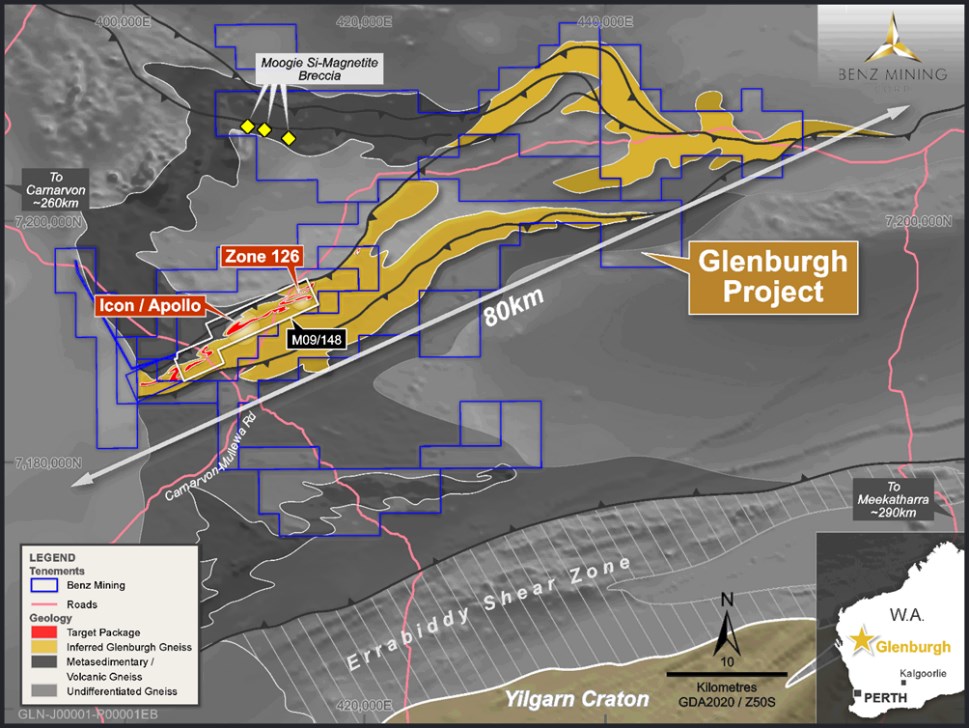
Figure 6. Geological overview of the Glenburgh Gold Project.
To view an enhanced version of this graphic, please visit:
https://images.newsfilecorp.com/files/1818/288772_16c67e031460ab56_014full.jpg
– END –
This announcement has been approved for release by the Board of Benz Mining Corp.
For more information please contact:
Mark Lynch-Staunton
Chief Executive Officer Benz Mining Corp.
E: mstaunton@benzmining.com
T: +61 8 6143 6702
About Benz Mining Corp.
Benz Mining Corp. (TSXV: BZ) (ASX: BNZ) is a pure-play gold exploration company dual-listed on the TSX Venture Exchange and Australian Securities Exchange. The Company owns the Eastmain Gold Project in Quebec, and the recently acquired Glenburgh and Mt Egerton Gold Projects in Western Australia.
Benz’s key point of difference lies in its team’s deep geological expertise and the use of advanced geological techniques, particularly in high-metamorphic terrane exploration. The Company aims to rapidly grow its global resource base and solidify its position as a leading gold explorer across two of the world’s most prolific gold regions.
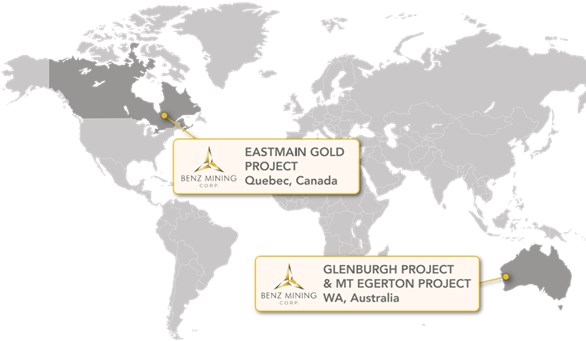
To view an enhanced version of this graphic, please visit:
https://images.newsfilecorp.com/files/1818/288772_16c67e031460ab56_015full.jpg
For more information, please visit: https://benzmining.com/.
Qualified Person’s Statement (NI 43-101)
The disclosure of scientific or technical information in this news release is based on, and fairly represents, information compiled by Mr Mark Lynch-Staunton, who is a Qualified Person as defined by NI 43-101 and a Member of Australian Institute of Geoscientists (AIG) (Membership ID: 6918). Mr Lynch-Staunton has reviewed and approved the technical information in this news release. Mr Lynch-Staunton owns securities in Benz Mining Corp.
Forward-Looking Statements
Statements contained in this news release that are not historical facts are “forward-looking information” or “forward looking statements” (collectively Forward-Looking Information) as such term is used in applicable Canadian securities laws. Forward-Looking Information includes, but is not limited to, disclosure regarding the exploration potential of the Glenburgh Gold Project and Egerton Gold Project and the anticipated benefits thereof, planned exploration and related activities on the Projects. In certain cases, Forward-Looking Information can be identified by the use of words and phrases or variations of such words and phrases or statements such as “anticipates”, “complete”, “become”, “expects”, “next steps”, “commitments” and “potential”, in relation to certain actions, events or results “could”, “may”, “will”, “would”, be achieved. In preparing the Forward-Looking Information in this news release, the Company has applied several material assumptions, including, but not limited to, that the accuracy and reliability of the Company’s exploration thesis in respect of additional drilling at the Glenburgh Gold Project and Egerton Gold Project will be consistent with the Company’s expectations based on available information; the Company will be able to raise additional capital as necessary; the current exploration, development, environmental and other objectives concerning the Company’s Projects (including Glenburgh and Mt Egerton Gold Projects) can be achieved; and the continuity of the price of gold and other metals, economic and political conditions, and operations.
Forward-looking information is subject to a variety of risks and uncertainties and other factors that could cause plans, estimates and actual results to vary materially from those projected in such forward-looking information. Factors that could cause the forward-looking information in this news release to change or to be inaccurate include, but are not limited to, the early stage nature of the Company’s exploration of the Glenburgh Gold Project and Egerton Gold Project, the risk that any of the assumptions referred to prove not to be valid or reliable, that occurrences such as those referred to above are realized and result in delays, or cessation in planned work, that the Company’s financial condition and development plans change, and delays in regulatory approval, as well as the other risks and uncertainties applicable to the Company as set forth in the Company’s continuous disclosure filings filed under the Company’s profile at www.sedarplus.ca and www.asx.com.au. Accordingly, readers should not place undue reliance on Forward-Looking Information. The Forward-looking information in this news release is based on plans, expectations, and estimates of management at the date the information is provided and the Company undertakes no obligation to update these forward-looking statements, other than as required by applicable law.
NEITHER THE TSX VENTURE EXCHANGE NOR ITS REGULATION SERVICES PROVIDER (AS THAT TERM IS DEFINED IN THE POLICIES OF THE TSX VENTURE EXCHANGE) ACCEPTS RESPONSIBILITY FOR THE ACCURACY OR ADEQUACY OF THIS RELEASE.
Appendix 1: Collar Table. Coordinates system: GDA94/MGA Zone 50
| Hole number | Easting | Northing | Elevation | Dip | Azimuth | End Depth |
| 26EGN013 | 575917 | 7241743 | 450 | 78 | 160 | 350 |
| 26EGN009 | 576345 | 7241744 | 457 | 65 | 160 | 300 |
| 26EGN007 | 575361 | 7241603 | 454 | 65 | 167 | 300 |
| 26EGN006 | 575487 | 7241662 | 453 | 65 | 160 | 300 |
| 26EGN004 | 576051 | 7241795 | 451 | 64 | 160 | 300 |
| 26EGN003 | 575917 | 7241743 | 450 | 65 | 161 | 300 |
| 26EGN002 | 575821 | 7241806 | 451 | 64 | 160 | 400 |
| 26EGN001 | 575795 | 7241741 | 451 | 65 | 160 | 300 |
| 25EGN004 | 575271 | 7241579 | 455 | 65 | 160 | 300 |
| 25EGN003 | 575745 | 7241734 | 453 | 64 | 168 | 400 |
| 25EGN002 | 575672 | 7241722 | 452 | 65 | 162 | 300 |
| 25EGN001 | 575584 | 7241681 | 453 | 65 | 160 | 300 |
Appendix 2: Significant Intercepts Tables.
High Grade Intercepts: A nominal 1 g/t Au lower cut-off has been applied, with no internal dilution included unless otherwise stated
| holeid | from | to | Au_ppm | length | Comment |
| 26EGN013 | 270 | 281 | 144.2 | 11 | Including 7m@223g/t |
| 26EGN007 | 142 | 144 | 1.2 | 2 | |
| 26EGN003 | 120 | 122 | 1.5 | 2 | |
| 26EGN003 | 181 | 182 | 1.1 | 1 | |
| 26EGN001 | 177 | 180 | 1.7 | 3 | |
| 25EGN003 | 122 | 126 | 1.7 | 4 | |
| 25EGN003 | 136 | 137 | 4.7 | 1 | |
| 25EGN002 | 115 | 116 | 3.2 | 1 | |
| 25EGN001 | 154 | 155 | 13.8 | 1 |
Appendix 3: JORC Tables
JORC Code, 2012 Edition – Table 1 report template
Section 1 Sampling Techniques and Data
(Criteria in this section apply to all succeeding sections.)
| Criteria | Commentary |
| Sampling techniques |
|
| Drilling techniques |
|
| Drill sample recovery |
|
| Logging |
|
| Sub-sampling techniques and sample preparation |
|
| Quality of assay data and laboratory test |
|
| Verification of sampling and assaying |
|
| Location of data points |
|
| Data spacing and distribution |
|
| Orientation of data in relation to geological structure |
|
| Sample security |
|
| Audits or reviews |
|
Section 2 Reporting of Exploration Results
(Criteria listed in the preceding section also apply to this section.)
| Criteria | Commentary |
| Mineral tenement and land tenure status |
|
| Exploration done by other parties |
|
| Geology |
|
| Drill hole Information |
|
| Data aggregation methods |
|
| Relationship between mineralisation widths and intercept lengths |
|
| Diagrams |
|
| Balanced reporting |
|
| Other substantive exploration data |
|
| Further work |
|
1 Previous results were released in an announcement dated 6 November 2024.

To view the source version of this press release, please visit https://www.newsfilecorp.com/release/288772