

In a major push for space science and astrophysics, Union Finance Minister Nirmala Sitharaman announced in the Union Budget 2026-27 the setting up and upgrading of four key telescope and astronomy facilities across India. The move aims to enhance observational capabilities, support cutting-edge research, and inspire the next generation of scientists.
The four facilities identified under the plan include:
-
National Large Solar Telescope (NLST) – Designed for high-resolution solar observations, this facility will allow scientists to study solar activity, magnetic fields, and space weather events that can affect satellites, power grids, and communication networks on Earth. Once operational, it is expected to rank among the world’s most advanced solar observatories.
-
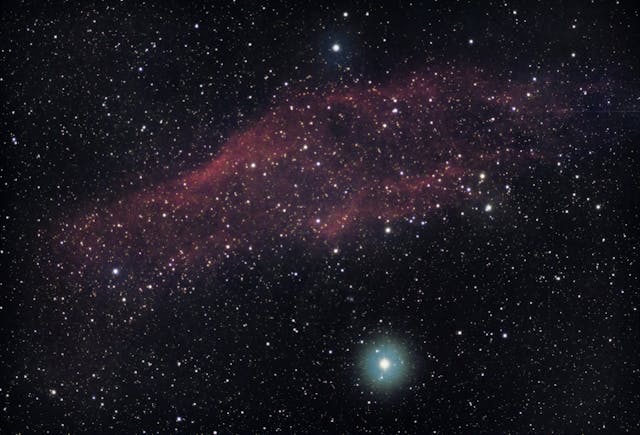
National Large Optical Infrared Telescope (NLOT) – This telescope will enable India to observe faint and distant celestial objects, such as exoplanets, nebulae, and galaxies, in optical and infrared wavelengths, supporting frontier research in cosmology and stellar evolution.
-
Himalayan Chandra Telescope (HCT) Upgrade – Located in Ladakh, one of the highest astronomical observatories in the world, the upgraded facility will have improved instrumentation and sensitivity, allowing for more precise observations under exceptional atmospheric conditions.
-
COSMOS 2 Planetarium – Set to become a modern public outreach and education centre, COSMOS 2 will play a key role in popularising astronomy and space science among students and the general public.
Speaking in Parliament, FM Sitharaman emphasized that these investments are part of the government’s broader vision to advance fundamental science, strengthen research infrastructure, and position India as a global leader in space science.
Experts believe that these projects will not only deepen India’s understanding of the Sun, stars, and galaxies but also encourage young minds to pursue careers in astrophysics, space research, and related technologies.
With this initiative, India moves a step closer to building world-class facilities for astronomical research while fostering education and public engagement in space science.