
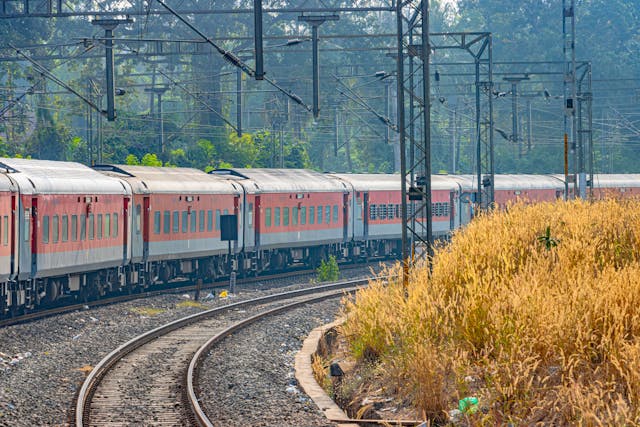

In a bold push for infrastructure-led development, the Union Budget 2026-27, presented by Finance Minister Nirmala Sitharaman on February 1, unveiled plans for seven high-speed rail corridors aimed at linking India’s fast-growing metropolitan and industrial hubs. The initiative is designed to promote faster, greener, and more sustainable passenger travel, while easing pressure on existing road and conventional rail networks.
“The government proposes to develop environmentally sustainable passenger transport systems through seven high-speed rail corridors,” Sitharaman said during her Budget speech, highlighting the dual focus on economic growth and carbon reduction.
Key High-Speed Rail Routes
The proposed corridors are set to connect major cities and emerging industrial centres:
-
Mumbai–Pune
-
Pune–Hyderabad
-
Hyderabad–Bengaluru
-
Bengaluru–Chennai
-
Hyderabad–Chennai
-
Delhi–Varanasi
-
Varanasi–Siliguri
These routes are expected to cut travel time significantly and strengthen the connectivity of cultural and economic hubs across India.
Infrastructure Push: Public Capital Expenditure & Risk Mitigation
The high-speed rail plan forms part of a larger infrastructure strategy in Budget 2026-27, which sees public capital expenditure rise to Rs 12.2 lakh crore, up from Rs 11.2 lakh crore in FY26. Public spending on infrastructure has surged from Rs 2 lakh crore in 2014–15, reflecting the government’s sustained focus on economic growth through infrastructure development.
To attract private investment and bolster lender confidence during construction, the Budget announced an Infrastructure Risk Guarantee Fund, providing calibrated public credit guarantees for major projects.
Freight & Multimodal Transport Expansion
The Budget also emphasized logistics and freight efficiency:
-
New East–West Dedicated Freight Corridor: Connecting Dankuni in the east to Surat in the west.
-
National Waterways Expansion: Operationalisation of 22 new inland waterways over the next five years to promote multimodal transport and reduce logistics costs.
These measures aim to streamline cargo movement, reduce transportation costs, and strengthen India’s supply chain resilience.
Focus on Tier-2 and Tier-3 Cities
Acknowledging the pressure on major metropolitan areas, the Budget allocates Rs 5,000 crore annually for five years to upgrade urban infrastructure in tier-2 and tier-3 cities, including temple towns. The funds will be directed towards transport facilities, civic amenities, and smart urban planning, fostering balanced regional development and easing migration to major metros.
With these ambitious plans, the Union Budget 2026-27 underscores India’s commitment to modern, sustainable, and inclusive infrastructure growth, positioning high-speed rail and multimodal transport as key drivers of the nation’s economic transformation.