

Bengaluru, Mar 16: India’s technology ecosystem is undergoing a major transformation—from a global software services hub to a centre for deeptech innovation and semiconductor manufacturing. This shift was the focus of a recent discussion featuring BV Naidu, Chairman of the Karnataka Digital Economy Mission (KDEM) and Founder and Managing Partner of StartupXseed Ventures, on the podcast “What India Needs!” hosted by media entrepreneur Shutapa Paul.
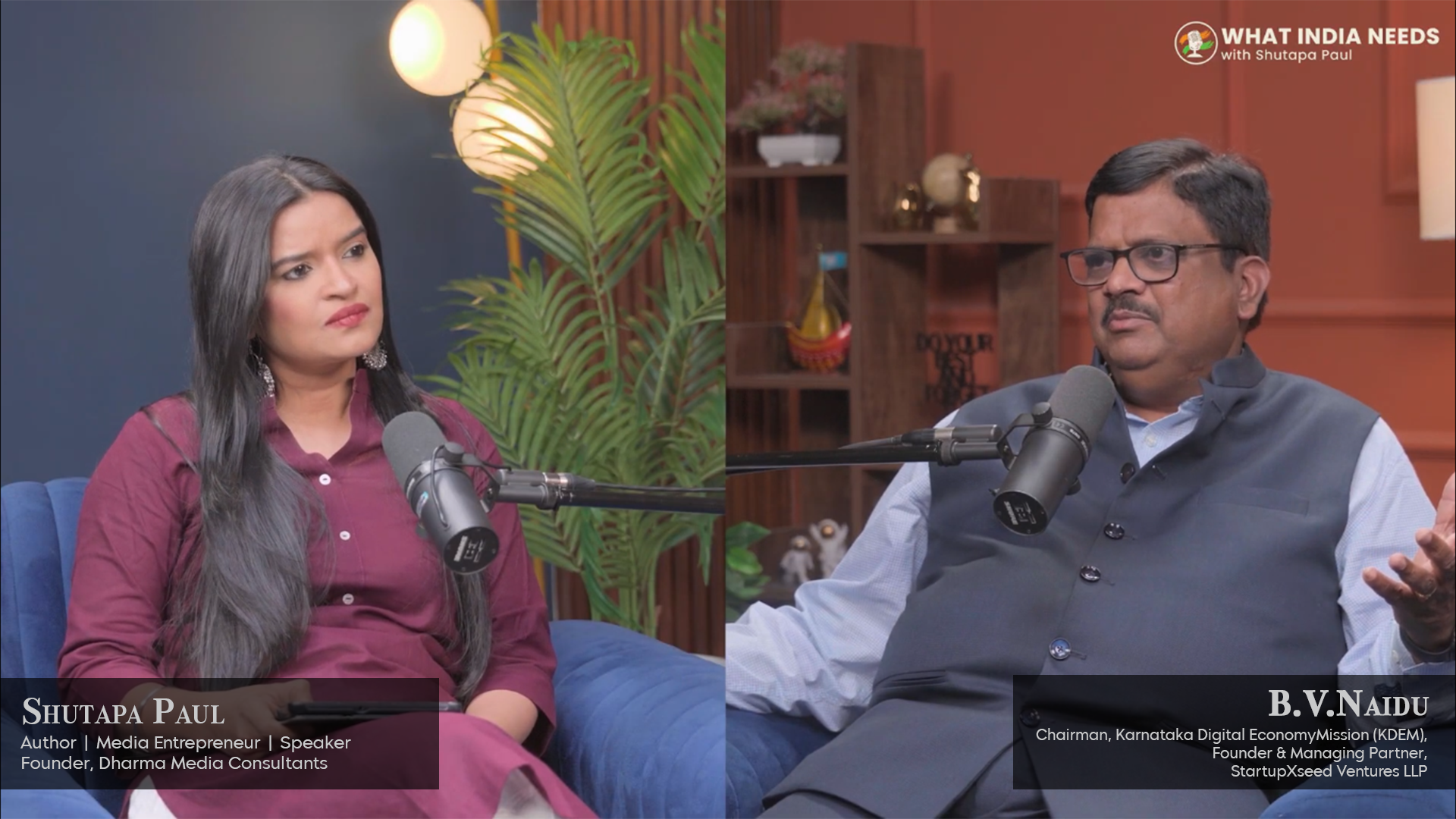
During the conversation, Naidu highlighted India’s growing potential in the semiconductor industry as the country aims to build a $110 billion semiconductor market by 2030. He noted that India already plays a significant role in global chip design, with Bengaluru hosting the world’s second-largest semiconductor design cluster, home to more than 350 design houses.
India’s Growing Semiconductor Ambition
Naidu emphasized that India’s shift toward semiconductor manufacturing is being driven by strong government support and investment. The Semicon India Programme, backed by a government commitment of ₹76,000 crore, along with an additional ₹40,000 crore for electronics component manufacturing, is helping create the infrastructure needed to strengthen India’s position in the global semiconductor supply chain.
“Manufacturing has traditionally been a challenge due to logistics and capital intensity,” Naidu explained. “However, the government’s proactive stance and strategic investments are enabling India to move forward rapidly in this space.”
Host Shutapa Paul noted that India’s technology agenda is now moving beyond assembly-driven operations toward a more robust manufacturing ecosystem. She pointed out that this shift represents a critical step in building a self-reliant and globally competitive electronics industry.
Taking the Tech Economy “Beyond Bengaluru”
Another major theme discussed during the podcast was the need to decentralise India’s technology ecosystem. Naidu highlighted the mission to take the state’s digital economy “Beyond Bengaluru,” ensuring that technological growth spreads to other cities and regions.
Currently, nearly 85–90 percent of Karnataka’s technology industry output is concentrated in Bengaluru. To address this imbalance, initiatives led by the Karnataka Digital Economy Mission aim to create new regional technology clusters.
Naidu cited Mangaluru as an example of a city that could emerge as a future technology hub. Describing it as a “15-minute city,” he explained that such cities allow professionals to live close to their workplaces while maintaining a better quality of life.
“Our goal is to take industry to where the talent exists,” Naidu said. “By building regional clusters, we can ensure continuous talent availability while also improving quality of life and regional economic growth.”
Reflecting on India’s Technology Journey
Reflecting on his long career in India’s technology sector, Naidu shared a milestone moment from 1987 when he sent India’s first email—an event that symbolized the early stages of the country’s digital transformation.
Shutapa Paul noted that many younger professionals may not realize how India’s technology ecosystem was built through early infrastructure initiatives and government support.
Naidu recalled his tenure as Director of the Software Technology Parks of India (STPI), where he played a key role in building the infrastructure needed for India’s software exports to grow. During that period, Bengaluru’s software exports expanded from less than $8 million in 1991 to more than $12 billion by 2007, helping establish India as a global technology powerhouse.
“The idea of India as a ‘back office’ has disappeared,” Naidu said. “Today there are more than 1,500 Global Capability Centres (GCCs) operating in the country. For many multinational companies, India has become a primary or secondary hub for global innovation.”
Advice for the Next Generation of Deeptech Founders
As the founder of StartupXseed Ventures, an early-stage venture capital firm focused on B2B deeptech sectors such as cybersecurity, drones, and space technology, Naidu also shared advice for emerging entrepreneurs.
Over the past eight years, more than $80 billion in startup investment has flowed into companies based in Bengaluru, strengthening the city’s reputation as a global startup hub. However, Naidu believes that the next phase of innovation will depend on founders who combine technological expertise with commercial discipline.
He advised entrepreneurs to maintain integrity, stay focused on solving real-world problems, and remain flexible when building new technologies.
“Many technical founders become deeply attached to their technology,” Naidu said. “Conviction is important, but founders must also remain practical and ensure their innovations have strong commercial potential.”
India’s Path to Global Hardware Leadership
As India works toward its 2030 semiconductor goals, the discussion underscored the importance of combining the country’s established strengths in chip design with a robust manufacturing ecosystem.
By expanding technology clusters beyond major metros, strengthening infrastructure, and nurturing a new generation of deeptech entrepreneurs, India is positioning itself to become a global leader in hardware innovation.
The conversation between Shutapa Paul and BV Naidu highlighted a clear message: India is no longer just a global back office—it is rapidly emerging as a centre for world-class innovation and technological leadership.
