
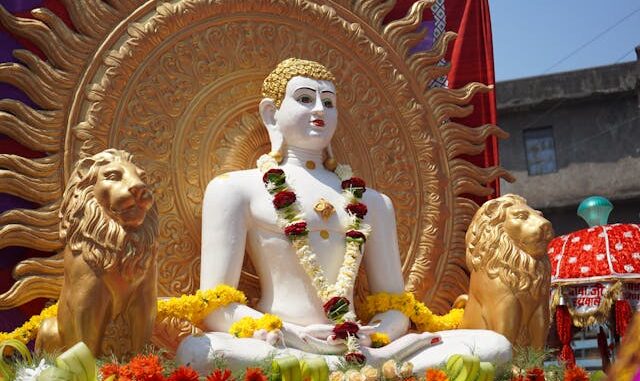

March 31, 2026 marks the sacred occasion of Mahavir Jayanti, one of the most important and widely observed festivals in Jainism. This day commemorates the birth anniversary of Lord Mahavira, a spiritual luminary whose teachings on non-violence, truth, and self-discipline continue to inspire millions around the globe. Beyond ritualistic celebrations, Mahavir Jayanti is a time for introspection, reflection, and reaffirmation of the values that Mahavira championed.
The Life and Legacy of Lord Mahavira
Born as Vardhamana in the 6th century BCE in Kundagrama, Mahavira grew up in a royal family under the care of King Siddhartha and Queen Trishala. Despite a life of comfort and privilege, he displayed a remarkable inclination toward spiritual wisdom and compassion from an early age.
At the age of 30, Vardhamana renounced worldly life in pursuit of spiritual truth. For twelve years, he embraced rigorous meditation, self-discipline, and austerity, gradually detaching himself from worldly attachments. His perseverance culminated in attaining Kevala Jnana, or absolute knowledge, earning him the name Mahavira, meaning “Great Hero.”
For the next thirty years, Mahavira traveled extensively, spreading his teachings across regions, guiding followers on the path of ethical living, spiritual awakening, and inner peace. He attained nirvana at the age of 72 in Pawapuri, leaving behind a legacy that continues to shape moral and spiritual thought.
Core Teachings and Their Relevance Today
At the heart of Mahavir Jayanti lies the reflection on the five great vows (Mahavratas) that form the ethical foundation of Jainism:
- Ahimsa (Non-violence): Avoid harm to any living being, in thought, word, or action.
- Satya (Truth): Practice honesty and avoid falsehoods.
- Asteya (Non-stealing): Take only what is willingly offered.
- Brahmacharya (Self-discipline): Exercise control over desires and impulses.
- Aparigraha (Non-attachment): Detach from material possessions and worldly greed.
In today’s fast-paced, material-driven world, these principles remain profoundly relevant. They remind individuals that inner contentment, ethical living, and compassionate action are more enduring than temporary gains.
Celebrating Mahavir Jayanti
Mahavir Jayanti is a festival that beautifully blends devotion, spirituality, and community service. The celebrations are marked by vibrant yet meaningful activities:
- Processions and Prabhat Pheri: Early morning processions through city streets showcase idols of Lord Mahavira on elaborately decorated chariots, accompanied by chants, devotional songs, and cultural performances.
- Temple Ceremonies: Jain temples, or Derasaars, become centers of devotion, hosting prayers and rituals such as abhishekam, the ceremonial bathing of Mahavira’s idol. Temples are adorned with flowers, lights, and flags, creating an atmosphere of spiritual energy and celebration.
- Religious Discourses: Scholars and spiritual leaders speak on Mahavira’s life and philosophy, offering insights into how his teachings can be integrated into modern life.
- Charity and Social Service: Devotees engage in acts of kindness, including donating food, clothes, medicines, and organizing blood donation camps. The day embodies the spirit of compassion extended beyond religious boundaries.
- Fasting and Meditation: Many Jains choose to fast or follow a restricted diet as a form of spiritual discipline. Meditation sessions help followers reflect on their actions, practice mindfulness, and strengthen self-control.
- Protection of Animals: A significant practice is the rescue and release of animals, reflecting the Jain commitment to Ahimsa and respect for all living beings.
The Timeless Message of Mahavir Jayanti
Mahavir Jayanti is more than a festival—it is a call to introspection and conscious living. In a world often dominated by competition, conflict, and excess, the teachings of Lord Mahavira offer a timeless framework for ethical and spiritual balance. By embracing non-violence, truth, simplicity, and detachment, individuals can cultivate peace, harmony, and inner fulfillment.
This day reminds us that true progress lies not only in material achievements but in nurturing compassion, discipline, and moral clarity. Mahavir Jayanti encourages people to pause, reflect, and realign their lives with values that promote coexistence, empathy, and mindfulness.
Conclusion
On March 31, 2026, as Jain communities across India and the world gather to celebrate Mahavir Jayanti, the festival serves as both a spiritual journey and a reminder of the enduring relevance of Mahavira’s teachings. From processions to meditation, from charity to personal reflection, the day offers an opportunity to reconnect with the principles of non-violence, truth, and self-discipline, paving the way for a more compassionate and harmonious world.
Mahavir Jayanti is not just a celebration of a historical figure—it is a celebration of values that inspire humanity to live better, kinder, and more conscious lives.