

You likely have thousands of them stored away. They sit in the cloud or in dusty physical albums—snapshots of birthdays, quiet sunrises, and chaotic family dinners. We are a generation obsessed with capturing the “now,” yet we often leave these memories frozen in time.
Here is the friction point: A photograph is a pause button, but life is a continuous stream.
When you look back at a photo of a beach trip from five years ago, you see the water, but you don’t hear the crash of the waves. You see the smile, but you miss the laughter that followed. The emotional disconnect grows with every passing year. We crave immersion, but we are stuck with static pixels.
For a long time, bridging this gap required expensive software and professional animation skills. But the landscape has shifted dramatically. We are entering an era where artificial intelligence doesn’t just edit our past; it reanimates it. This is the core promise of Image to Video AI, a platform that has evolved from a simple tool into a gateway for the world’s most powerful generative models.
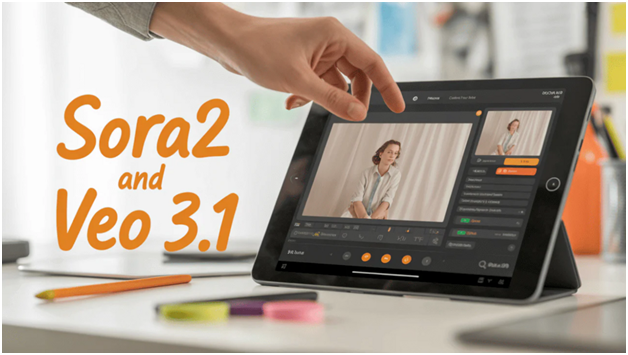
The Generational Leap: Enter Sora 2 and Veo 3.1
My Personal Observation of the “New Physics”
I have been tracking the evolution of AI video for years. Early models were interesting but flawed—often resulting in “wobbly” backgrounds or faces that morphed unnaturally. They felt like dream sequences.
However, my recent tests with the new integrations of Sora 2 and Veo 3.1 on the platform suggest we have crossed a threshold. We are no longer just “animating” images; we are simulating reality.
When I uploaded a complex image of a rainy city street to test the Sora 2 integration, I didn’t just get movement; I got *physics*. The reflections in the puddles didn’t just slide across the surface; they distorted correctly as the simulated rain hit them. The AI understood that water has weight and that light behaves differently on wet asphalt.
Similarly, testing Veo 3.1 revealed a mastery of cinematic language. It didn’t just move the subject; it seemed to understand camera logic—panning, tilting, and focusing as a human cinematographer would.
The Narrative Engine: How It Works
Think of this technology not as a camera, but as a predictive dream weaver.
When you provide a static image to these advanced models, they don’t just “see” colors. They analyze context. They recognize that “smoke” should billow, “fabric” should fold, and “hair” should react to wind.
- Sora 2 excels at complex object permanence and physical interactions.
- Veo 3.1 shines in maintaining high-definition visual consistency and cinematic flow.
It’s the difference between a painter and a choreographer. The painter gives you the pose; these models give you the dance.
Visualizing the Upgrade: The Power of SOTA Models
To understand why this specific moment in tech history is important, we need to look at the functional differences between the “old” AI and what is now available.
Below is a breakdown of how the integration of these top-tier models changes the user experience.
| Feature | Legacy AI Video Models | Sora 2 & Veo 3.1 (Current Standard) |
| Physics Understanding | Often warped; liquids behaved like solids. | Newtonian-level simulation; fluids flow, gravity applies. |
| Video Duration | Short, looping clips (1-2 seconds). | Extended narratives; longer, coherent sequences. |
| Coherence | Subjects often morphed or lost identity. | High Fidelity; the person in frame 1 looks like the person in frame 100. |
| Camera Control | Static or simple zoom. | Cinematic direction; pans, tilts, and tracking shots. |
| Emotional Depth | Artificial movement (the “puppet” effect). | Nuanced micro-expressions and natural posture shifts. |
The “Before and After” Bridge
- Before: You have a product shot of a coffee cup. You apply an effect, and the steam moves, but the cup looks like a cardboard cutout. It relies on the viewer’s imagination to fill in the gaps.
- After: With Image to Video AI leveraging Veo 3.1, the steam rises chaotically, the light shifts across the ceramic surface, and a shadow passes by, implying a bustling morning environment. The viewer isn’t just looking at a product; they are witnessing a *moment*.
Navigating the Limitations: A Reality Check
Despite the incredible power of Sora 2 and Veo 3.1, it is crucial to approach this technology with managed expectations. While the results can be magical, they are not yet infallible.
- The “Dice Roll” of Creativity
In my experience, even the best models can occasionally misinterpret a prompt. You might ask for a “hand wave” and get a movement that looks slightly too fast or unnatural. This is inherent to generative AI—it is probabilistic, not deterministic.
- Processing Intensity
Realism takes computing power. Unlike simple filters that apply instantly, generating video with Sora 2 requires heavy processing. You are asking a server to hallucinate a reality frame by frame. Patience is a necessary part of the workflow; high-quality rendering is not instantaneous.
- The “Uncanny Valley”
While the gap is closing, there are still moments—especially with very specific human facial expressions—where the AI might feel slightly “too perfect” or miss a subtle micro-expression. It is a tool for augmentation, not a replacement for reality.
Practical Applications: Who Is This For?
You don’t need to be a Hollywood director to find value here. The utility of these high-end models spans several archetypes:
1. The Memory Keeper
For those holding onto scanned Polaroids of ancestors. Using Image to Video AI to animate old photos can be a profound way to reconnect with family history. Seeing a great-grandparent “smile” again—with the realism provided by Sora 2—is a unique emotional experience that goes beyond simple animation.
2. The Digital Storyteller
Social media algorithms heavily favor video content. For creators, turning a travel photo into a 4-second looping ambient video can significantly increase dwell time. The cinematic quality of Veo 3.1 ensures that these videos look professional, not gimmicky.
3. The E-commerce Visionary
Movement catches the eye. A subtle animation on a product listing can differentiate a brand in a crowded marketplace. It allows customers to visualize the texture and weight of a product without touching it.
How to Start Your Journey
If you are curious to try this yourself, the barrier to entry is lower than ever. You generally don’t need high-end graphics cards, as the heavy lifting is done in the cloud.
- Select a High-Contrast Image: Even Sora 2 works best when the subject is clearly defined.
- Leverage the Models: When using Image to Video AI, understand that you are tapping into the same tech used by industry pros.
- Iterate and Refine: Treat the first result as a draft. Tweak your text prompt. Instead of “make it move,” try “camera pans slowly to the right, leaves blowing in the wind, cinematic lighting.”
The Future of Digital Expression
We are standing on the precipice of a new medium. Just as photography replaced painting for documenting reality, AI video is poised to augment photography.
It is not about replacing the photograph—there will always be beauty in stillness. It is about unlocking the potential energy stored within that stillness. Whether you are a marketer looking to stop the scroll, or a grandchild looking to see a loved one move one last time, the tools are now in your hands.
The technology behind Sora 2 and Veo 3.1 is complex, but the result is simple: it brings your imagination closer to reality. It feels less like computing, and more like remembering.