
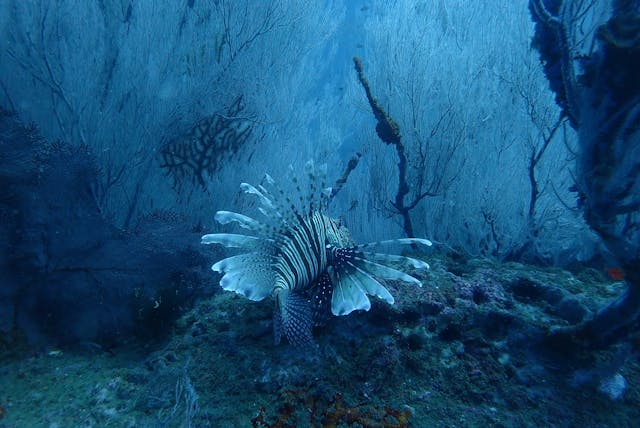

New Delhi, Jan 19: Andaman & Nicobar Islands are a ‘living laboratory of biodiversity’ and are crucial for the environmental and economic security of India, said Union Minister of State (Independent Charge) for Science & Technology, Earth Sciences, Dr. Jitendra Singh.
During his recent visit to the union territory, the Minister interacted with the scientists and officials at the Regional Centre of the Zoological Survey of India (ZSI) at Sri Vijaya Puram.
“Andaman & Nicobar Islands represent a ‘living laboratory of biodiversity’, where cutting-edge science must go hand in hand with conservation and sustainable livelihoods,” Singh said. He emphasised the need for greater integration of scientific research with public policy, conservation planning, and community awareness.
“Robust scientific institutions are central to achieving India’s environmental goals and realising the full potential of the Blue Economy in a sustainable manner,” the Minister added.
He noted that institutions like ZSI play a critical role in generating authentic scientific data that guides national policies on biodiversity conservation, climate resilience, and ocean-based economic growth.
Established in 1977, the Andaman & Nicobar Regional Centre of ZSI has completed five decades of sustained scientific service. It has emerged as a nodal institution for tropical island biodiversity research, having completed nearly 90 research programmes across multiple faunal groups.
Scientists of the Centre have published 85 books and over 850 research papers in reputed national and international journals, significantly enriching India’s biodiversity knowledge base.
Singh also visited the ZSI Museum, one of the prominent tourist and educational destinations in the islands, which houses around 3,500 specimens representing 22 faunal groups.
He was apprised of the museum’s role in public outreach, awareness generation, and education, with annual footfall ranging between 75,000 and 1,00,000 visitors, including students, researchers, and tourists. The Minister showed keen interest in the curated reference collections, type specimens, and exhibits showcasing endemic, endangered, and threatened fauna of the archipelago.
Singh was also briefed on the role of ZSI, Port Blair, as the nodal centre for India’s first National Coral Reef Research Institute (NCRRI), aimed at strengthening coral reef research and monitoring in Indian waters. He noted that such focused institutions are vital for safeguarding fragile marine ecosystems and supporting evidence-based marine governance.
–IANS