

Feb 23: For decades, Dubai has dominated conversations around business travel in the United Arab Emirates. But in 2026, another emirate is rapidly reshaping the country’s corporate tourism landscape — Ras Al Khaimah. Strategically located, investment-driven, and sustainability-focused, Ras Al Khaimah is emerging as a serious contender in the UAE’s business tourism ecosystem.
What makes this rise even more compelling is the long-term vision that began nearly two decades ago. Since 2006, when structured tourism strategies and free zone expansions began gaining momentum, Ras Al Khaimah has steadily laid the foundation for becoming a diversified economic hub. Today, those efforts are translating into measurable growth in MICE tourism, foreign investment, and luxury hospitality.
From 2006 Foundations to 2026 Transformation
The transformation of Ras Al Khaimah did not happen overnight. Around 2006, the emirate began focusing on infrastructure development, industrial free zones, and tourism diversification. The establishment and expansion of the Ras Al Khaimah Economic Zone (RAKEZ) and tourism authorities marked a turning point in positioning the emirate as a business-friendly destination.
Fast forward to 2026, and the strategy has matured into a thriving ecosystem that blends industrial growth with corporate tourism and leisure experiences.
Strategic Location with Competitive Advantage
Located just under an hour from Dubai International Airport, Ras Al Khaimah offers accessibility without the congestion and premium pricing often associated with Dubai and Abu Dhabi.
Key advantages include:
- Business-friendly regulations
- Expanding free trade zones
- Competitive operational costs
- Government-backed tourism diversification
This balance of affordability and infrastructure has made Ras Al Khaimah particularly attractive to SMEs, multinational companies, and event organizers.
The Rise of MICE Tourism in Ras Al Khaimah
Meetings, Incentives, Conferences, and Exhibitions (MICE) are becoming a major growth driver. Ras Al Khaimah’s hospitality sector has invested heavily in world-class conference facilities and corporate retreat venues.
Leading properties contributing to business tourism include:
- Waldorf Astoria Ras Al Khaimah
- Rixos Bab Al Bahr
- The Ritz-Carlton Ras Al Khaimah, Al Wadi Desert
These properties offer state-of-the-art meeting rooms, executive suites, and customized corporate experiences — from desert strategy retreats to beachfront leadership summits.
Compared to Dubai’s premium conference costs, Ras Al Khaimah provides high-end facilities with better ROI for businesses.
Bleisure Travel: The New Corporate Trend
The global shift toward “bleisure” — blending business with leisure — has significantly benefited Ras Al Khaimah. Corporate travelers increasingly prefer destinations where business commitments can seamlessly transition into relaxation or adventure.
The emirate offers unique experiences such as:
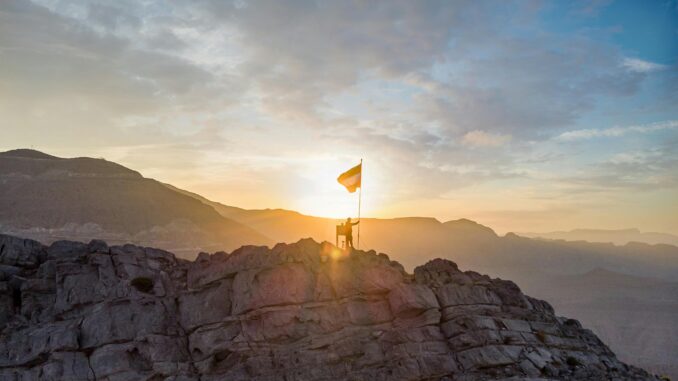
- Jebel Jais, the UAE’s highest peak
- Jais Flight, one of the world’s longest ziplines
- Luxury desert escapes and coastal resorts
This natural diversity creates opportunities for team-building programs, incentive travel, and executive wellness retreats.
Sustainability and Smart Tourism Vision
Unlike purely urban business hubs, Ras Al Khaimah has integrated sustainability into its tourism growth strategy. From eco-resorts to conservation-focused desert properties, the emirate is aligning with global ESG expectations — a factor increasingly important to multinational corporations hosting events abroad.
Technology integration, digital visitor services, and smart infrastructure further strengthen its appeal as a modern business destination.
Investment Outlook and Economic Diversification
Ras Al Khaimah’s growth is part of the UAE’s broader strategy to diversify beyond oil revenues. Tourism, manufacturing, logistics, and real estate are key pillars.
Since the early groundwork laid in 2006, the emirate has:
- Expanded industrial zones
- Attracted international hotel brands
- Increased foreign direct investment
- Strengthened global connectivity
By 2026, Ras Al Khaimah is not merely complementing Dubai — it is carving its own identity as a cost-effective, experience-rich business tourism destination.
Why Businesses Are Looking Beyond Dubai
Dubai remains a global powerhouse, but rising costs and saturation are pushing event planners and corporate travel managers to explore alternatives. Ras Al Khaimah offers:
- Premium hospitality at competitive rates
- Unique experiential venues
- Scenic landscapes for corporate branding events
- Lower operational overhead
For businesses seeking differentiation, exclusivity, and value, Ras Al Khaimah presents a compelling proposition.
The Future of Business Tourism in the UAE
The evolution of Ras Al Khaimah from its 2006 strategic groundwork to its 2026 business tourism momentum demonstrates the power of long-term planning. With continuous investment in infrastructure, hospitality, and sustainability, the emirate is positioning itself as a core pillar of the UAE’s future-ready tourism strategy.
Beyond Dubai lies an opportunity — one that combines corporate efficiency with natural grandeur.
Ras Al Khaimah is no longer just an alternative. It is becoming a destination of choice for the next generation of business travel.