


India’s tourism industry emerged as one of the strongest contributors to economic momentum in 2025, driven by a sharp rise in domestic travel, a steady recovery in foreign tourist arrivals, and targeted government initiatives aimed at positioning the country as a year-round, high-value destination.
The sector not only regained pre-pandemic scale but also expanded in depth and diversity, with spiritual tourism, eco-tourism, adventure travel and experiential stays gaining prominence alongside traditional leisure and business travel.
Domestic tourism powers sector growth
Domestic travel remained the backbone of India’s tourism growth in 2025. Improved road connectivity, expanding rail networks, increased air routes under regional connectivity schemes, and rising disposable incomes fuelled year-round travel across states.
Religious and spiritual destinations saw record footfalls, while hill stations, beaches, wildlife circuits and heritage towns experienced strong seasonal and off-season demand. Industry estimates indicate that domestic tourist visits crossed pre-pandemic levels comfortably, making India one of the fastest-recovering tourism markets globally.
Major infrastructure upgrades—especially highways, airports and railway station redevelopment—played a critical role in dispersing tourist traffic beyond traditional hotspots.
Foreign tourist arrivals recover gradually
International tourism showed a measured but consistent recovery in 2025. Arrivals from the US, Europe, Southeast Asia and the Middle East increased, supported by improved air connectivity, visa facilitation, and growing global interest in India’s culture, wellness and heritage offerings.
While foreign tourist numbers have not yet matched the growth pace of domestic travel, average spending per international visitor improved, benefiting hospitality, luxury travel, wellness resorts and experiential tourism operators.
Government push reshapes tourism landscape
Policy support remained a key driver. Initiatives such as destination development, heritage conservation, and infrastructure-led tourism clusters strengthened India’s tourism ecosystem.
Programs under the Ministry of Tourism focused on:
-
Developing theme-based circuits (spiritual, coastal, desert, Himalayan)
-
Improving last-mile connectivity to tourist destinations
-
Promoting lesser-known destinations to reduce congestion
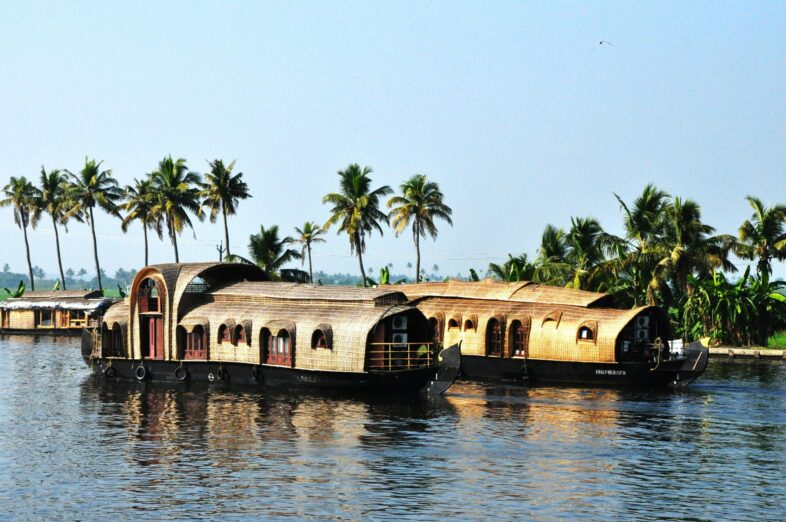
At the state level, tourism policies became more investment-friendly, encouraging private participation in hotels, homestays, adventure tourism and cruise infrastructure.
Spiritual, wellness and medical tourism gain traction
Spiritual tourism continued to be a standout segment, with large-scale pilgrimages and festivals driving local economies. Ayodhya, Varanasi, Ujjain, Puri and other religious centres saw sustained inflows throughout the year.
India also strengthened its position in wellness and medical tourism, leveraging traditional practices such as Ayurveda and Yoga, alongside cost-effective, high-quality medical care. Wellness retreats, yoga centres and medical travel packages attracted visitors from Europe, West Asia and Africa.

Hospitality and aviation benefit from demand surge
The tourism upcycle translated into strong performance for hotels, airlines and travel services. Hotel occupancy levels improved across metros and leisure destinations, with average room rates trending higher due to demand-supply imbalances in key locations.
Airlines expanded domestic and international routes, while regional airports recorded higher passenger traffic. Ancillary sectors—tour operators, transport providers, food services and handicrafts—also benefited from the multiplier effect of tourism spending.

Sustainability and experiential travel move to the forefront
Sustainability emerged as a defining theme in 2025. Eco-friendly stays, community-led tourism, low-impact travel and conservation-focused experiences gained popularity, particularly among younger and international travellers.
States promoted homestays and rural tourism to ensure inclusive growth, allowing local communities to participate directly in tourism-led development.

Challenges remain despite strong momentum
Despite robust growth, the sector faced structural challenges:
-
Overcrowding at peak destinations
-
Seasonal concentration of tourist flows
-
Skill shortages in hospitality services
-
Environmental stress in ecologically sensitive areas
Industry stakeholders stressed the need for better destination management, digital infrastructure, and capacity building to ensure long-term sustainability.

Outlook: Tourism as a growth pillar for India
Looking ahead, tourism is expected to remain a key pillar of India’s economic expansion, contributing significantly to employment generation, foreign exchange earnings and regional development.
With sustained infrastructure investment, digital enablement, and a shift towards high-value and sustainable tourism, India is positioning itself not just as a volume-driven destination, but as a diverse, experiential and globally competitive tourism economy.
Bottom line:
India’s tourism industry in 2025 reflects a sector that has moved beyond recovery into expansion. Anchored by domestic demand and supported by policy reforms, the industry is evolving into a more resilient, inclusive and value-driven contributor to the country’s growth story.