

Why Silk Road Travel in Uzbekistan Is Emerging as a Global Favorite Among Culture and Heritage Enthusiasts
Introduction: The Revival of the Ancient Route
Steeped in mystery, culture, and centuries-old trade stories, Silk Road Travel in Uzbekistan transports modern explorers into one of history’s most influential civilizations. At the crossroads of East and West, Uzbekistan is home to legendary Silk Road cities including Samarkand, Bukhara, and Khiva, each showcasing mesmerizing architecture, scientific achievements, and artisan traditions that shaped global trade for more than a millennium. As interest in cultural tourism grows, Uzbekistan stands out as a destination where travelers can relive the legacy of ancient merchants, scholars, and explorers.
Why Uzbekistan Is the Heart of the Silk Road
Uzbekistan rises as the central anchor of the ancient Silk Road due to its strategic location between Persia, China, and the Middle East. The country played a defining role in facilitating trade routes where silk, spices, gemstones, sciences, and philosophies flowed freely.
Key reasons that make Uzbekistan the cultural core of Silk Road history:
Geographical centrality connecting major empires
Architectural treasures that remain intact
Centuries-old handicrafts passed down through generations
A fusion of Persian, Turkic, and Islamic influences
Vibrant bazaars that still echo ancient trade traditions
With renewed government focus on tourism infrastructure, improved connectivity, and visa-friendly policies for many countries, interest in Silk Road Travel in Uzbekistan is witnessing a global rise.
Samarkand: The Crown Jewel of the Silk Road
For anyone embarking on authentic Silk Road Travel in Uzbekistan, Samarkand remains the most iconic stop. One of the world’s oldest continuously inhabited cities, Samarkand thrives as a historical masterpiece blending ancient science, trade, and architectural brilliance.
Highlights of Samarkand
Registan Square
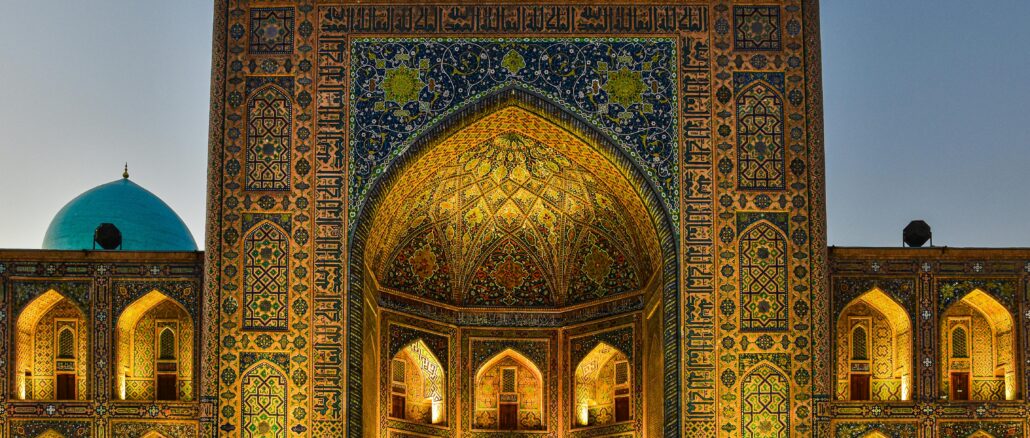
A monumental complex framed by three grand madrasas, Registan is the visual symbol of Uzbekistan. With its blue domes, intricate mosaics, and astronomical symbols, it once served as a hub for scholars and merchants.
Gur-e-Amir Mausoleum
The resting place of the legendary conqueror Timur, this structure stands as a masterpiece of Timurid architecture.
Shah-i-Zinda Necropolis
A sacred collection of mausoleums decorated with turquoise tilework, offering visitors a spiritual and artistic experience.
Samarkand beautifully reflects the enduring charm and cultural depth of ancient Silk Road society.
Bukhara: A Living Museum of Central Asia
Often called the city-museum, Bukhara has preserved its medieval urban layout for over two thousand years. It represents a complete Silk Road ecosystem with caravanserais, Islamic learning centers, palaces, and bustling bazaars.
Highlights of Bukhara
Po-i-Kalan Complex
A grand ensemble dominating the skyline with its towering minaret built in 1127.
Ark of Bukhara
A fortified royal residence that served as the seat of emirs for centuries.
Lyabi Hauz
A tranquil square surrounded by centuries-old architecture and traditional chaikhanas (tea houses).
Bukhara stands as a living chronicle of culture, scholarship, and trade.
Khiva: A City Frozen in Time
Khiva’s inner city, Itchan Kala, is the first site in Uzbekistan to become a UNESCO World Heritage Site. Surrounded by clay walls and dotted with minarets, mosques, and palaces, Khiva feels like a preserved open-air museum.
Highlights of Khiva
Kalta Minor Minaret, known for its unfinished yet striking turquoise tiles
Kunya Ark, the royal fortress of ancient Khiva’s rulers
Tash Khauli Palace, famous for its exceptional wood carvings and mosaic artistry
The city offers an authentic glimpse of the Silk Road’s caravan culture.
Traditional Crafts and Handicrafts of the Silk Road
Uzbekistan is a treasure trove for lovers of traditional craftsmanship. Many artisans continue age-old skills taught by ancestors along the Silk Road.
Renowned Craft Traditions
Silk weaving in Margilan
Ceramics in Rishtan
Handwoven carpets in Khiva
Metal engraving in Bukhara
Miniature painting in Samarkand
These crafts not only preserve cultural identity but also provide sustainable livelihoods for local communities.
Modern Travel Trends: Why Uzbekistan Is Booming
Travelers today seek destinations that offer authentic culture, history, and immersive storytelling. Uzbekistan meets all three.
Drivers of Tourism Growth
Visa-free entry for citizens of many countries
Improved rail and road networks
Luxury boutique hotels blending tradition and comfort
Documentary exposure and increased global curiosity
Government support for heritage preservation and sustainable tourism
As a result, Silk Road Travel in Uzbekistan has emerged as a compelling travel trend among culture seekers, historians, backpackers, and experiential travelers.
Experiences Not to Miss
Sunset reflections on Registan Square
A ride on the Afrosiyob high-speed train
Shopping for silk scarves and ceramics in ancient bazaars
Savoring plov, samsa, lagman, and traditional breads
Watching cultural performances in centuries-old courtyards
These experiences allow visitors to connect deeply with Uzbekistan’s vibrant heritage.
Conclusion
Silk Road Travel in Uzbekistan offers far more than a typical vacation. It is an unforgettable journey into an ancient world shaped by trade, innovation, and cultural exchange. With its majestic architecture, living traditions, and welcoming hospitality, Uzbekistan stands as one of the world’s most captivating cultural destinations. Whether exploring historic cities or discovering local crafts, travelers encounter an unparalleled tapestry of history and heritage that continues to inspire generations.