
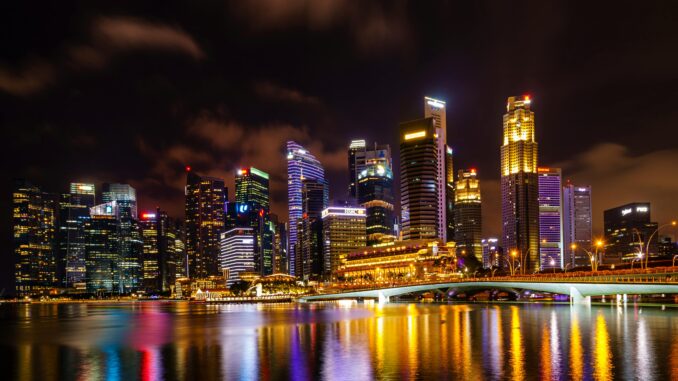

Feb 13: In 2026, Singapore stands firmly at the forefront of Asia’s business landscape. Strategically located at the crossroads of global trade routes, Singapore has evolved into a premier hub for corporate travel, foreign direct investment (FDI), and multinational expansion.
With its transparent governance, pro-business policies, advanced infrastructure, and innovation-driven economy, Singapore offers a compelling value proposition for global enterprises. As companies increasingly seek stability, efficiency, and connectivity in Asia, Singapore continues to emerge as the preferred destination.
A Resilient and Diversified Economic Landscape
Singapore’s economic model is built on diversification and resilience. By 2026, the nation continues to record steady GDP growth driven by high-performing sectors such as:
Financial services
Fintech and digital banking
Advanced manufacturing
Biotechnology
Logistics and global trade
As one of Asia’s leading financial centers, Singapore attracts global banks, asset managers, and fintech startups. The country’s regulatory strength and innovation-friendly policies position it as a safe yet progressive investment environment.
Strategic Location and Global Connectivity
Singapore’s geographic advantage remains one of its strongest assets.
World-Class Aviation Hub
Singapore Changi Airport consistently ranks among the world’s best airports, connecting Singapore to over 380 cities globally. For business travelers, this ensures seamless access to major economic centers across Asia, Europe, and the Americas.
Maritime and Trade Leadership
Singapore also operates one of the world’s busiest ports, reinforcing its role as a gateway to ASEAN markets and global supply chains.
Efficient Public Infrastructure
The city’s MRT network, digital infrastructure, and smart urban planning provide unmatched ease of mobility, making it highly convenient for executives and investors.
Business-Friendly Policies and Tax Advantages
Singapore consistently ranks among the top countries in global ease-of-doing-business indices. Key advantages include:
Competitive corporate tax rate (17%)
Tax exemptions for startups
Strong intellectual property protection
Transparent legal framework
Efficient company registration processes
Government agencies like Enterprise Singapore actively support entrepreneurship, international expansion, and innovation.
This structured yet flexible regulatory environment continues to attract multinational corporations and emerging startups alike.
Innovation, Technology, and Smart Nation Vision
Singapore’s transformation into a technology-driven economy is guided by the Smart Nation initiative. The government has heavily invested in:
Artificial Intelligence
Blockchain technology
Cybersecurity
Digital payments
Green technology
This commitment to digital transformation strengthens Singapore’s position as Asia’s fintech capital and innovation hub.
The startup ecosystem continues to flourish, supported by venture capital inflows, incubators, and strong university-industry collaboration.
Political Stability and Regulatory Transparency
Political stability remains one of Singapore’s defining strengths. Its governance model prioritizes:
Rule of law
Regulatory clarity
Low corruption levels
Investor protection
For global businesses, this reduces risk exposure and enhances long-term confidence.
Cultural Diversity and Global Workforce
Singapore’s multicultural society is a strategic advantage. English serves as the primary business language, supported by Mandarin, Malay, and Tamil.
The city attracts a highly skilled global workforce, enabling multinational firms to recruit top talent across industries. Its cosmopolitan culture fosters collaboration and seamless cross-border business relationships.
Safety, Quality of Life, and Executive Lifestyle
Singapore consistently ranks among the safest cities globally. Business travelers benefit from:
Low crime rates
High-quality healthcare
Efficient public transport
World-class education
Luxury hotels, fine dining, integrated resorts, and premium business districts such as Marina Bay enhance the overall corporate travel experience.
This balance of work and lifestyle makes Singapore particularly attractive for expatriates and senior executives.
Sustainability and ESG Leadership
Singapore is advancing toward a green economy through initiatives like the Singapore Green Plan 2030. The plan emphasizes:
Carbon reduction
Clean energy
Sustainable urban development
Responsible business practices
For corporations prioritizing ESG (Environmental, Social, Governance) frameworks, Singapore offers a compliant and forward-thinking environment.
Networking, Conferences, and Global Business Events
Singapore remains a major MICE (Meetings, Incentives, Conferences, Exhibitions) destination in Asia.
Major events such as:
Singapore FinTech Festival
Asia Tech x Singapore
draw global executives, investors, policymakers, and entrepreneurs.
These events generate unmatched networking opportunities and foster cross-border partnerships.
The Road Ahead: Singapore’s Business Outlook Beyond 2026
While regional competition continues to grow, Singapore’s adaptability and innovation ensure it remains ahead. The focus on:
Digital transformation
Talent development
Sustainable growth
Financial innovation
positions the nation as Asia’s long-term business epicenter.
Companies seeking stability, connectivity, and global integration will continue to view Singapore as the strategic base for Asian expansion.
Conclusion
In 2026, Singapore is more than just a business destination—it is a strategic advantage.
With its strong economy, world-class infrastructure, investor-friendly policies, technological leadership, and high quality of life, Singapore remains Asia’s top hub for business travel and investment.
For corporations planning regional expansion, multinational headquarters, or fintech innovation, Singapore offers the perfect balance of opportunity, security, and growth.