
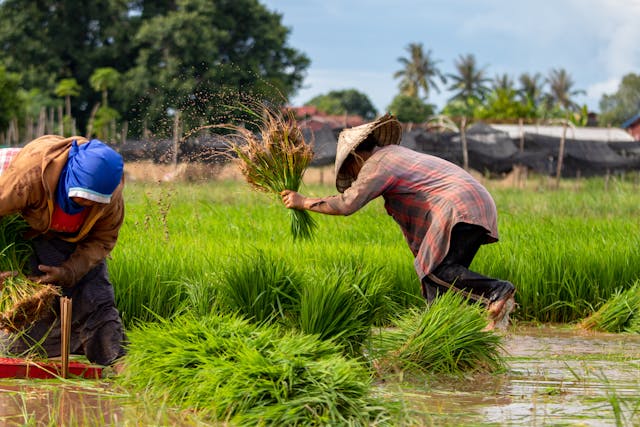

From Farms to Global Tables: How India’s Agri-Food Ecosystem Is Taking Shape at Gulfood 2026
At a time when the world is rethinking how food is grown, traded, and secured, India’s expanding presence in the global agri-food economy is becoming increasingly visible. This shift is on full display at Gulfood 2026, where India participates as the Partner Country, signalling its growing role as a dependable supplier, an innovation hub, and a long-term contributor to global food security.
Led by the Agricultural and Processed Food Products Export Development Authority (APEDA), India’s participation reflects more than export ambition—it reveals how the country’s agri-food ecosystem is evolving from a fragmented supply chain into an integrated, future-ready food economy.
A Pavilion That Mirrors a Transformation
India’s footprint at Gulfood 2026 is notably larger than in previous years. The Indian Pavilion, now doubled in size, brings together over 160 exhibitors across a wide spectrum of food and agricultural categories—from staples such as pulses and grains to processed foods, beverages, horticulture produce, and value-added products.
This expansion is not merely physical. It mirrors the growing confidence of Indian exporters, the rising participation of farmer collectives and cooperatives, and the increasing demand for Indian food products in global markets. Together, they present a unified narrative: Indian agriculture is moving beyond volume to focus on quality, traceability, and value addition.
India’s Strength Lies in Its Regions
What gives India’s agri-food story its depth is regional diversity. Participation from 25 states and regions ensures that the Pavilion is not dominated by a single product or geography. Instead, it showcases India’s varied agricultural landscapes—rice from the eastern plains, spices from the south, dairy from the north, horticulture from hill states, and organic produce from the northeast.
For many small producers, Farmer Producer Organisations (FPOs), and state cooperatives, platforms like Gulfood represent a rare opportunity to connect directly with international buyers. This linkage helps move agricultural growth from local markets to global value chains, improving farmer incomes and regional economic resilience.
Innovation Enters the Food Chain
One of the most telling signs of change is the growing presence of startups. The BHARATI Pavilion, APEDA’s flagship initiative for agri-food and agri-tech startups, places innovation at the heart of India’s participation. Selected from a competitive national process, these startups present solutions that range from smart processing and packaging to traceability, sustainability, and export-ready food products.
Their presence reflects a broader transition underway in Indian agriculture—where technology and entrepreneurship are reshaping how food moves from farms to foreign markets.
Food, Culture, and Connection
Trade, however, is only one part of the story. India’s Pavilion also invites visitors to experience food as culture. A dedicated culinary zone brings Indian cuisine to life through live demonstrations, showcasing the diversity of regional flavours and the versatility of Indian ingredients.
These experiences help build trust and familiarity—two factors increasingly important in global food trade. When buyers understand where food comes from and how it is used, products move beyond commodities to become part of long-term sourcing relationships.
Staples That Sustain the World
A strong focus on pulses, grains, and cereals reinforces India’s role as a key supplier of staple foods. As concerns around food availability and affordability grow worldwide, India’s ability to provide consistent, quality-assured staples positions it as a stabilising force in global food markets.
The emphasis on sustainability, compliance with international standards, and transparent sourcing reflects how Indian exports are adapting to the expectations of modern global consumers.
Aligned with a Changing Global Order
India’s engagement at Gulfood 2026 also aligns with larger economic and geopolitical shifts. The India–UAE Comprehensive Economic Partnership Agreement (CEPA) has opened new pathways for agri-food trade, particularly in the Gulf region, where food security is a strategic priority.
Adding further depth to the event is the launch of the Gulfood World Economy Summit, a high-level platform focused on food security, trade diplomacy, and economic resilience. As food systems become central to global climate and development conversations, India’s active role reflects its readiness to participate in shaping future frameworks.
Building a Stronger Food Economy
Through its expanded presence, APEDA aims to strengthen buyer–seller connections, support startups and farmer groups, promote Indian brands, and position the country as a reliable, innovation-driven food partner.
More importantly, it highlights a larger transformation underway. Indian agriculture is no longer confined to feeding the domestic population alone. It is becoming a strategic sector—one that links farmers to global markets, supports rural livelihoods, drives exports, and contributes to international food security.
A Future Rooted in the Soil
India’s story at Gulfood 2026 is ultimately a story of transition—from traditional farming to a modern agri-food economy that values resilience, inclusivity, and sustainability. As farms connect to global tables, India is shaping a food ecosystem that is not only competitive, but also responsible and future-focused.
For a world searching for reliable food partners, India’s growing presence offers both nourishment and confidence.