

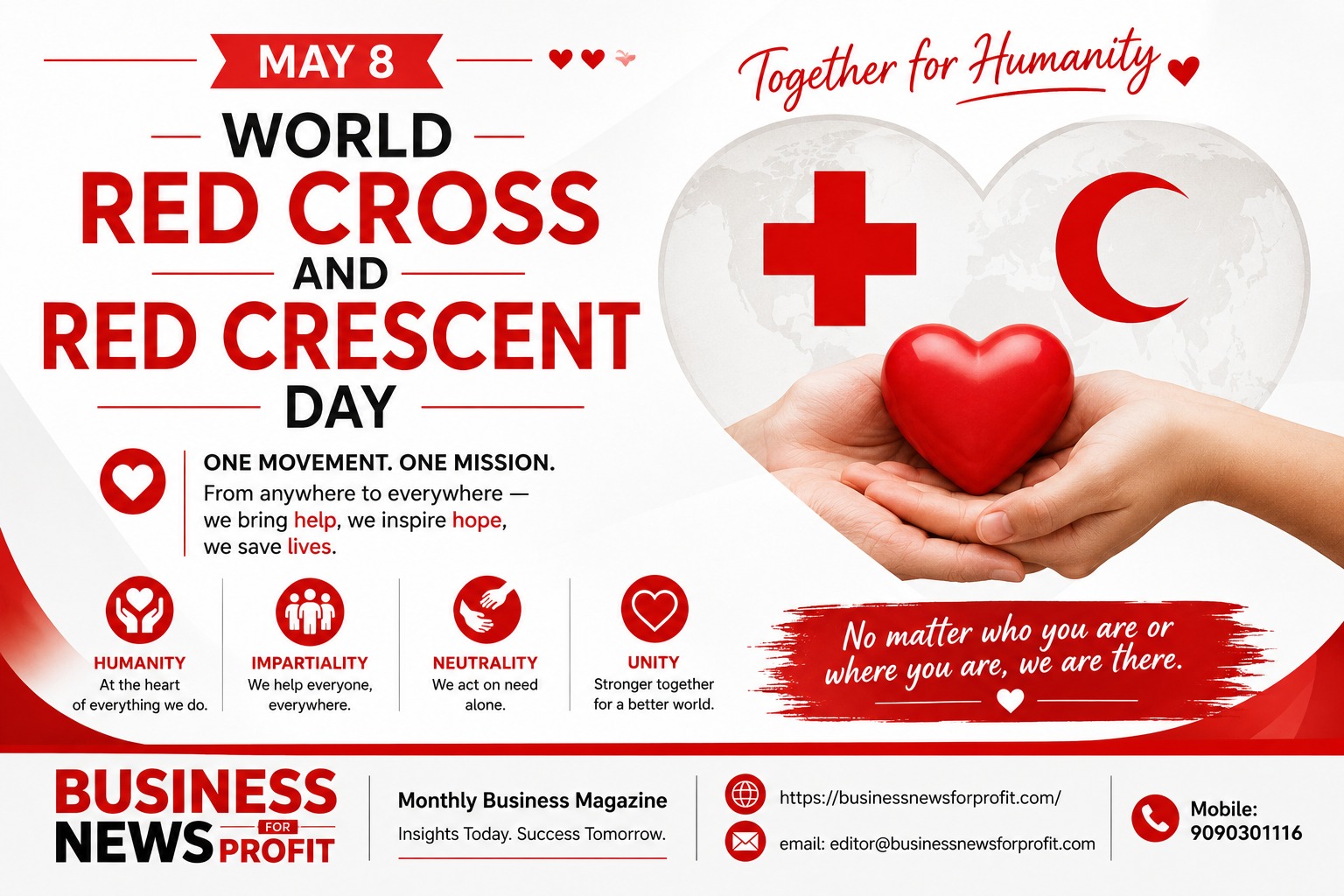
When disaster strikes, there is often a brief moment before the world fully understands the scale of devastation. Homes disappear beneath floodwaters. Cities fall silent after earthquakes. Families search for loved ones in the chaos of war. In those moments of uncertainty, help frequently arrives wearing a simple red emblem recognised across the globe.
Not for power. Not for politics. But for humanity.
For more than a century, the Red Cross and Red Crescent Movement has stood at the intersection of crisis and compassion, responding to emergencies that test the limits of human endurance. From conflict zones and refugee camps to disaster-hit villages and overcrowded hospitals, its volunteers continue to serve as lifelines for millions of people navigating unimaginable hardship.
Every year on May 8, the world marks World Red Cross and Red Crescent Day — a global observance that honours the humanitarian spirit driving one of the largest volunteer networks on Earth. But beyond ceremonies and awareness campaigns lies a far deeper story: the story of ordinary individuals choosing empathy over indifference.
In 2026, the theme “United in Humanity” captures that spirit with renewed urgency.
The Moment That Sparked a Movement
Long before the movement became a global institution, it began with one deeply human response to suffering.
In the summer of 1859, Swiss businessman Henry Dunant travelled to northern Italy and arrived near the battlefield of Solferino, where tens of thousands of wounded soldiers had been left without treatment after a brutal clash. The horrifying scenes of pain and abandonment changed him forever.
Rather than looking away, Dunant mobilised nearby villagers to care for the injured — regardless of nationality or allegiance. His belief was radical in a time shaped by war: every life deserved dignity.
That experience inspired a humanitarian revolution.
Dunant would later establish the foundation for what became the International Committee of the Red Cross (ICRC), introducing principles that still guide humanitarian action today. His extraordinary contribution earned him the first Nobel Peace Prize in 1901, but perhaps his greatest achievement was proving that compassion could transcend borders, politics, and conflict.
More Than Emergency Relief
To many people, the Red Cross and Red Crescent symbols represent immediate rescue during moments of crisis. Yet the movement’s impact extends far beyond emergency response.
Its volunteers organise blood donation drives, provide healthcare in remote regions, support displaced families, educate communities during disease outbreaks, and help survivors rebuild their lives long after the cameras leave.
What makes the movement extraordinary is that its strength comes not from institutions alone, but from ordinary citizens.
A college student volunteering at a relief camp. A nurse travelling into disaster zones. A local resident distributing food after a cyclone. These are the people quietly shaping the movement every day.
In many cases, volunteers themselves are survivors of the very disasters they respond to.
That shared humanity is what makes the movement unique.
Why “United in Humanity” Matters in 2026
The world today faces a growing list of humanitarian challenges. Climate disasters are intensifying. Armed conflicts continue to displace millions. Economic instability and public health emergencies are widening inequalities across societies.
Against this backdrop, the 2026 theme “United in Humanity” feels less like a slogan and more like a necessity.
The campaign celebrates the volunteers and humanitarian workers who continue to stand beside vulnerable communities despite increasingly dangerous and demanding conditions. It also honours aid workers who lost their lives while serving others — a sobering reminder that compassion often requires extraordinary courage.
But perhaps the theme’s strongest message is its insistence on human connection.
In an era shaped by division, the Red Cross and Red Crescent Movement continues to remind the world that empathy remains universal. Human suffering does not recognise borders, religion, race, or politics — and neither should compassion.
The Quiet Heroes Among Us
Humanitarian work rarely unfolds under bright lights.
It happens quietly — in overcrowded shelters, makeshift medical camps, refugee settlements, and isolated villages cut off by disaster. It is found in the steady hands of a volunteer comforting a frightened child, or in the resilience of rescue workers searching for survivors through the night.
These moments may never dominate headlines, yet they reveal the best of humanity.
World Red Cross and Red Crescent Day is ultimately not just about honouring an organisation. It is about recognising the millions of people who continue to show up for others in times of fear, grief, and uncertainty.
Because in a fractured world, humanity itself remains an act of courage.
And perhaps that is the movement’s most enduring lesson — even in the darkest moments, hope survives through people willing to help one another.