

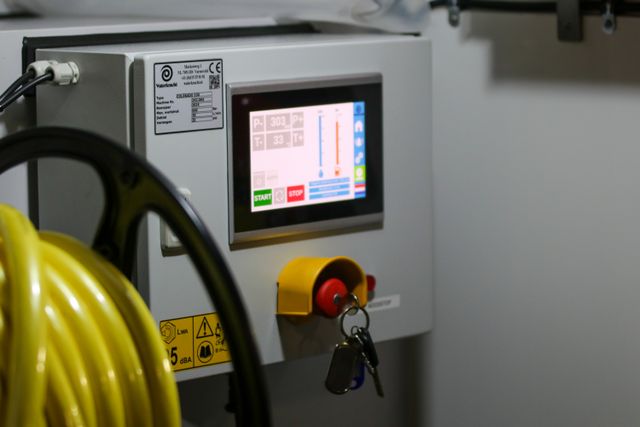
Siemens’ 2024 True Cost of Downtime study finally put a number on something plant managers have felt for years. Unscheduled downtime now costs the world’s 500 largest companies roughly $1.4 trillion a year, up from about $864 billion five years earlier. Automotive plants, per the same report, lose the most per idle hour of any sector. Ask any maintenance lead where those hours come from and the answer rarely starts with the big rotating equipment. It starts inside a gray steel box on the wall.
The control panel is where an expansion goes sideways. A new skid gets bolted in, a few more I/O points get landed, and the existing panel, sized for the plant that was rather than the plant that will be, starts running hot, tripping supplies, and dropping communications.
What follows is a stage-by-stage audit for the weeks before you cut steel on the next expansion.
Start With the Load Sheet You Probably Don’t Have
Before anything else, pull the panel drawings and try to reconstruct the actual 24VDC load. Not the load the panel was designed for a decade ago. The load it’s carrying today, after every field change, every added sensor, every migrated I/O card that nobody updated on the schedule.
This is the single most common finding in a pre-expansion audit: the current draw on paper and the current draw on a clamp meter don’t match, and nobody knows by how much. A useful primer on PLC power supply sizing walks through the pieces that need to be on that sheet: the CPU, communication cards, digital and analog I/O, and any field devices sharing the 24VDC bus. An undersized supply rarely announces itself. It shows up as intermittent module faults that get blamed on the network, or on the weather, for months.
The working rule of thumb from panel-builder guidance is to size the 24VDC supply with meaningful headroom above continuous load, enough to absorb inrush and leave room for the next round of additions. If your current headroom is thin, the expansion is already over budget and you haven’t ordered a thing.
Audit the Panel Against the Standards That Actually Apply
The second stage is a compliance pass, and it has to happen before design work on the expansion, not after. Two documents govern most industrial panels in North America, and expansions are where their requirements slip:
- UL 508A. The standard for industrial control panels. Adding loads changes your Short-Circuit Current Rating calculation, and the SCCR label on the door is a legal document. If the number no longer reflects what’s inside, the panel is out of compliance the moment the new components energize.
- NFPA 79. The electrical standard for industrial machinery. The 2024 edition tightened disconnect labeling and multi-panel SCCR marking, and added cybersecurity language most existing panels weren’t built around. An NFPA overview is worth reading before the design review, not during the AHJ walk-through.
- Disconnect and marking updates. If the expansion touches the machine supply circuit, the labeling requirements may well have changed since the panel was built. Assume nothing is grandfathered.
Model the Thermal Load Before You Add a Single Component
Heat is where undersized panels do their most expensive damage, and it’s the stage of the audit most teams skip. Every watt drawn inside the enclosure is a watt of heat that has to leave it. Add drives, add I/O, add a bigger supply, and the thermal budget shifts before anyone runs the numbers. A few things to check while the panel is still cool:
- Internal temperature ceiling. Most components are specified against an internal ambient in the low 100s Fahrenheit. Above that, component life falls off fast. Electrolytic capacitors, contactor coils, and the PLC power supply itself all age quicker than the datasheet suggests.
- Surface area you’ve lost. Panels mounted flush to a wall, or racked in a row, lose convective surface area the original sizing assumed was available. A single wall mount can be enough to invalidate a natural-convection design.
- Filter and fan condition. Clogged filters double as insulation. If the CMMS has no record of the last filter change, treat the cooling system as suspect until you have confirmed otherwise.
Decide Whether to Extend, Replace, or Split the Panel
By this stage you have three real numbers: current 24VDC load with headroom, an honest SCCR, and a thermal budget. Now the decision. Extending an existing panel is the cheapest option on the quote and often the most expensive over the life of the plant.
Replacing gives you a clean SCCR, a right-sized supply, and a modern layout, but it means a longer outage. Splitting the controls across a second enclosure keeps the outage short and the thermal load manageable, at the cost of more conduit and a more complex network drawing.
No one answer fits every plant. What matters is that the decision is made against measured data, not against whichever option the panel shop quotes fastest.
Plan the Cutover Like the Outage It Is
Even a well-sized new panel will cost you production if the cutover gets handled as an afterthought. Sequence the work so the plant loses one system at a time, not the whole line. Pre-terminate what you can in the shop. Have the AHJ’s requirements in writing before the enclosure ships, not the week of energization.
The plants that come out of an expansion without a downtime hangover are the ones that put the control panel first on the audit list rather than last. Steel is cheap compared to the hours the line spends idle.