
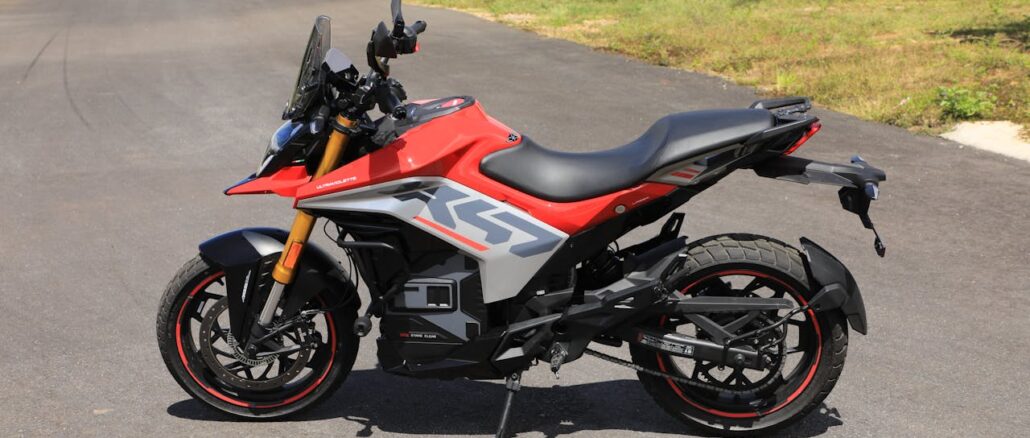

Most people walk into an electric bike showroom the same way they would walk into any bike showroom: look at the colours, check the price, sit on the seat.
There are things about an electric bike that a brochure will not tell you and a salesperson will not bring up unless you ask. The five questions below will help you figure out which one is actually the best electric bike for your daily use.
1. What is the Real-World Range vs the Claimed Range?
The range on the brochure is measured under controlled conditions. Flat road, one rider, no traffic, moderate weather. That is not your commute.
In real city riding, with stops at signals, a bag on the back, and India’s heat, the actual range is lower. An electric bike with an IDC claimed range of 175 km will typically deliver around 140 km in real conditions.
Ask the showroom person, “What do your customers actually get on city roads?”
Worth checking:
- The gap between the claimed range and the real-world city range
- How summer heat affects battery performance
- Whether the range reduces noticeably after one to two years of regular use
The best electric bike for you is one whose real-world range covers your daily distance and still has some charge to spare.
2. How Long Does a Full Charge Take?
People ask about range. Very few ask about charging time. It matters just as much.
A good electric bike charges fully in around 4 to 5 hours on a standard home socket — the kind. If the bike supports a fast charger, it goes from 0% to 80% in about 2 hours.
Ask the showroom:
- How much time will it take to use the charger included with the device to charge the device itself (charger in the box)?
- Is there an additional charge for fast charger?
- Is this fast charger an authorised charging accessory, or can it connect to any home power 5a Home Outlet?
Most consumers utilise the standard charger primarily at night. If there are situations where a fast charge was needed during the day then a consumer should know if quick charging is available for purchase prior to purchasing the device.
3. What Does the Warranty Actually Cover?
Warranty paperwork for electric bikes looks straightforward. It usually is not. The battery, motor, and the rest of the bike each come with different terms.
Here is what a solid warranty typically looks like:
| Component | Typical Warranty |
| LFP Battery | 8 years or 8,000 charge cycles |
| Motor | 3 to 5 years |
| Rest of the bike | 2 to 3 years |
Three things worth asking clearly:
- Are the number of cycles charged and/or years of use guaranteed with the battery warranty?
- What type of damage is covered under the warranty: normal wear and tear, water damage, and regular use?
- If my battery’s capacity diminishes slowly over time, will I be covered by my warranty for gradual depletion, or just for total failure?
The best manufacturers make quality batteries, so they stand behind their workmanship with written guarantees. A manufacturer that offers both length of time and number of cycles charged as part of their battery warranty shows that they are proud of what they manufacture.
4. Where is the Nearest Service Centre?
Searching for “electric bike showroom near me” and finding one close by is the easy part. Service is the part that matters over the long run.
Electric bikes need less routine maintenance than petrol bikes — no oil changes, no carburettor cleaning. But when the battery or motor needs attention, it needs a technician who actually knows electric systems.
Ask the showroom:
- Where is the nearest authorised service centre?
- Are there dedicated technicians for battery and motor work?
- How long does a standard repair or check-up usually take?
A showroom that has servicing on the same premises, or a centre very close by, is worth noting. It means the brand has put infrastructure behind ownership, not just behind the sale. Same place, same team, same people who already know your bike.
5. What Features Do Customers Love After Riding?
Most likely, by the time customers arrive at the showroom, they will already have done some research on the bike. This may include side-by-side comparisons of the various models available, reviews written by current owners of that particular model and listing features they want in order to check them during the showroom visit.
- TFT Display – They check the full colour display during the middle of the day to see if there’s too much glare. The TFT display will provide information such as speed, battery level, range and ride mode.
- Regenerative Braking – They want to ride the bike to see if the amount of regenerative braking works well for their riding style.
- App Connectivity – Determine its battery level, location, total rides, etc. The app will provide this information.
- Geo-Fencing – Create a geo-fence on the app, and if the bike moves outside the geo-fence, a notification will be sent.
Before You Leave the Showroom
Do not skip the test ride. A slow loop around the parking area does not count. Ask for a proper road ride, even a short one.
The best electric bike is the one that still feels right six months after purchase, on your route, with your charging setup, with features that actually get used.