
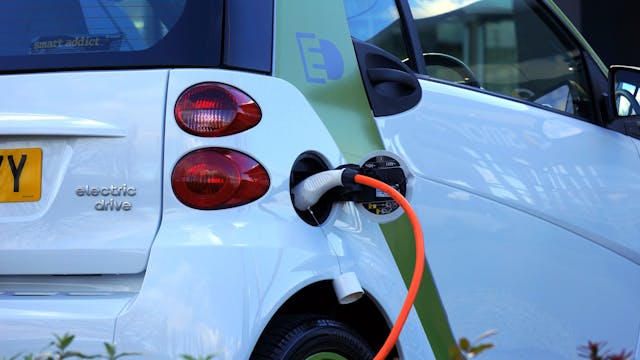

The car is going through its biggest transformation in over a century.
For decades, automotive innovation meant bigger engines, better mileage, and sleeker exteriors. In 2026, the shift is far deeper. The modern vehicle is no longer defined by pistons and horsepower — it is defined by software, artificial intelligence, battery science, and sustainability.
Electric vehicles (EVs) are not just replacing internal combustion engines. They are reshaping how cars are built, how they think, and how we experience them. The automobile is becoming smarter, cleaner, and more personal than ever before.
A New Generation of Batteries
At the heart of this transformation lies the battery.
Traditional lithium-ion technology still powers most EVs, but 2026 marks an important turning point. Automakers are beginning to introduce advanced battery designs, including semi-solid-state systems and high-silicon anodes. These innovations allow vehicles to travel farther on a single charge and reduce charging times significantly.
Imagine adding hundreds of kilometers of range in just minutes rather than hours. That’s the direction the industry is moving toward.
Beyond performance, battery transparency is also improving. Digital tracking systems now monitor battery health, sourcing, and recyclability. Sustainability is no longer limited to “zero emissions while driving” — it extends to how materials are mined, used, and reused.
The battery is not just a power source anymore. It is a carefully managed lifecycle system.
Design Without Limits
Electric architecture has quietly given designers unprecedented freedom.
Without bulky engines, gearboxes, and exhaust systems, engineers are building cars on flat “skateboard” platforms, where the battery sits beneath the floor and motors power the axles directly. This layout creates more interior space, better balance, and greater flexibility in shaping the vehicle.
Cabins feel more open. Floors are flatter. Storage areas expand.
At the same time, manufacturing is evolving. New production techniques reduce the number of parts needed to build a vehicle, making cars lighter and simpler. Fewer components mean fewer emissions during production and improved structural efficiency.
Design is no longer constrained by mechanical complexity — it is guided by aerodynamics, energy efficiency, and human comfort.
The Rise of the Software-Defined Vehicle
Perhaps the most profound change in 2026 is invisible.
Cars are becoming software-defined vehicles (SDVs). Instead of being fixed machines whose features remain the same from the day they leave the factory, they now function more like smartphones.
Through over-the-air (OTA) updates, manufacturers can:
-
Improve battery performance
-
Enhance safety systems
-
Refine driving dynamics
-
Add new digital features
This means your car can improve long after you purchase it.
Behind this capability is a simplified electronic architecture that separates hardware from software. Engineers can now update code without redesigning physical components. The vehicle evolves over time.
Ownership no longer marks the end of innovation — it marks the beginning.
Artificial Intelligence in the Driver’s Seat
Artificial intelligence is redefining the relationship between humans and machines.
Smarter Safety
Modern driver-assistance systems use advanced sensor fusion — combining cameras, radar, and LiDAR — to understand the vehicle’s surroundings in real time. AI helps predict potential hazards before they fully develop, making roads safer.
These systems are no longer just reactive. They are increasingly predictive.
Assisted Autonomy
In certain controlled environments, vehicles now allow drivers to briefly shift attention away from active steering. While fully autonomous driving remains under development, partial autonomy is steadily expanding.
The driver is gradually becoming a supervisor rather than a constant operator.
AI as a Personal Copilot
Inside the cabin, AI assistants are becoming more conversational and intuitive. Instead of responding only to direct commands, they can suggest optimal charging stops, adjust cabin temperature based on past preferences, or alert drivers to upcoming maintenance needs.
The vehicle begins to understand routines, habits, and patterns.
It feels less like a machine — and more like a companion.
Connected to the World
Cars are also becoming part of a larger digital ecosystem.
Through vehicle-to-everything (V2X) communication, modern EVs can interact with traffic systems, other vehicles, and charging networks. A car might adjust its speed automatically to avoid stopping at a red light or reroute to a less congested area in real time.
Mobility is shifting from isolated driving to connected movement.
The road ahead is becoming more cooperative and intelligent.
Sustainability as a Core Principle
Sustainability now influences every stage of vehicle creation.
Manufacturers are increasingly using recycled plastics, renewable fabrics, and alternative interior materials to reduce environmental impact. Lightweight construction improves efficiency. Cleaner manufacturing processes reduce emissions before the car even reaches the road.
The focus is no longer simply on eliminating fuel consumption — it is about minimizing total environmental footprint.
The modern EV is designed with the planet in mind.
The Cabin as an Experience Space
Step inside a 2026 electric vehicle, and you might feel as though you’ve entered a digital lounge.
Large panoramic displays stretch across dashboards. Personalized driver profiles adjust seating, lighting, and infotainment automatically. Entertainment systems rival home setups.
As vehicles become quieter and more autonomous, the interior transforms from a driver’s cockpit into a multi-purpose space — for work, relaxation, or entertainment.
The car is becoming an extension of our digital lifestyle.
A New Philosophy of Mobility
What defines the automotive industry in 2026 is not simply more features — it is smarter integration.
Instead of adding complexity, manufacturers are simplifying systems through digital intelligence. Instead of chasing raw power, they are optimizing efficiency. Instead of focusing only on performance, they are prioritizing sustainability and user experience.
The shift is philosophical as much as technological.
Cars are no longer just built to move people from one place to another. They are designed to think, adapt, and evolve.
The Human Side of the Transformation
Amid all this technology, one question remains: what does it mean for drivers?
For many, it means less stress, safer journeys, and a more intuitive experience behind the wheel. It means fewer trips to fuel stations, lower emissions, and vehicles that feel aligned with a more sustainable future.
The transformation is not about replacing humans with machines.
It is about building machines that better serve humans.
The Road Ahead
The automobile is entering a new chapter — one powered by electricity, guided by artificial intelligence, and shaped by environmental responsibility.
In 2026, the car is no longer just transportation.
It is intelligent.
It is connected.
It is continuously improving.
And as this evolution accelerates, one thing is certain: the future of mobility will not just be driven — it will be designed with purpose.