

India’s BRICS chairship focused on stronger economic cooperation, resilient supply chains, digital innovation, easier cross-border payments and a greater voice for developing nations.
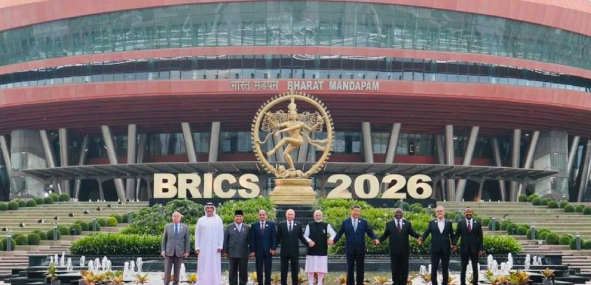
The 2026 BRICS Summit in New Delhi was about more than meetings between world leaders. It reflected a broader change taking place in the global economy, where emerging nations are seeking a larger role in decisions that affect trade, investment, technology, energy and development.
India, which held the BRICS chairship this year, placed the concerns of the Global South at the centre of the summit. Under the theme “Building for Resilience, Innovation, Cooperation and Sustainability,” the discussions focused on how developing economies can work together at a time when the world is dealing with geopolitical tensions, trade restrictions, economic uncertainty and disruptions to global supply chains.
The two-day summit on September 12 and 13 concluded with the adoption of the New Delhi Declaration, giving the expanded BRICS grouping a broad framework for cooperation on global governance, economic development, technology, sustainability and international peace.
For ordinary people and businesses, however, the importance of the summit lies in what these discussions could mean beyond diplomatic meetings — from smoother international trade and payments to new technology partnerships, investment opportunities and stronger cooperation among emerging economies.
India gives the Global South a stronger voice
One of the clearest messages from the summit was India’s push for greater representation of developing countries in global decision-making.
Prime Minister Narendra Modi said countries of the Global South are often deeply affected by international decisions even though they have limited influence over how those decisions are made.
India therefore called for a more balanced global system in which emerging and developing economies are not simply expected to follow rules but also have a greater role in shaping them.
This approach reflects the growing economic importance of countries across Asia, Africa, Latin America and the Middle East. As these economies expand, their governments are increasingly seeking greater influence over institutions dealing with trade, finance, development and international security.
BRICS tries to stay united despite global conflicts
The summit took place against a difficult geopolitical backdrop, with conflicts in the Middle East and Ukraine creating differences among member countries.
BRICS members were able to agree on broad calls for dialogue, restraint and peaceful resolution of disputes, although the declaration avoided taking positions that could deepen divisions within the group.
This was an important moment for the expanded grouping. BRICS now includes countries with different foreign-policy priorities and relationships with major global powers.
Maintaining consensus therefore requires balancing competing interests.
The New Delhi summit showed that BRICS can continue working together even when its members do not agree on every international issue. Instead of allowing geopolitical differences to completely dominate the agenda, the group kept its focus on areas where cooperation remains possible.
Trade and supply chains become central to the economic agenda
Global trade has changed significantly in recent years. Tariffs, geopolitical tensions, shipping disruptions and changing production strategies have encouraged companies to rethink where they manufacture and source products.
Against this background, BRICS placed greater emphasis on resilient and reliable supply chains.
For businesses, stronger cooperation between BRICS economies could create new opportunities to source raw materials, manufacture products and access growing consumer markets.
This could be particularly important for small and medium enterprises. Better trade connectivity and simpler procedures can make it easier for smaller companies to participate in international markets instead of leaving global trade largely to large corporations.
India’s own efforts to expand manufacturing and strengthen domestic supply chains also fit closely with this broader BRICS objective.
Easier payments could help businesses
Financial cooperation was another important part of the summit.
BRICS countries continued discussions on making cross-border payments more efficient and improving cooperation around payment systems and local currencies.
The idea is not simply about reducing dependence on one currency. It is also about making international transactions faster, cheaper and more accessible.
For exporters, importers and smaller businesses, payment delays and transaction costs can become a significant burden. Greater cooperation among BRICS countries could eventually reduce some of these difficulties.
The summit did not create a common BRICS currency. Instead, the focus remained on practical steps to improve payment connectivity and financial cooperation.
Technology is becoming a new area of BRICS cooperation
Technology featured prominently in the broader BRICS agenda, reflecting the fact that innovation is increasingly linked with economic growth.
Members discussed cooperation in science, technology and emerging fields, including advanced and quantum technologies.
For developing countries, technology is not only about creating high-tech industries. It can also improve everyday services.
Digital systems can make financial services more accessible, help farmers receive information, improve healthcare delivery, expand educational opportunities and make government services easier to access.
India’s experience with digital public infrastructure has given it an important platform for sharing technology-led solutions with other developing economies.
At the same time, greater research and innovation partnerships could create opportunities for Indian start-ups, technology companies, universities and researchers to collaborate with counterparts across BRICS countries.
Sustainability moves from discussion to economic necessity
The summit’s focus on sustainability also reflects a practical economic challenge.
Developing economies need jobs, infrastructure and faster growth, but they also face rising climate risks and increasing pressure to use energy and natural resources more efficiently.
BRICS cooperation in clean technology, renewable energy, sustainable infrastructure and climate-resilient development could therefore become increasingly important.
For businesses, sustainability is also becoming part of competitiveness. Companies that adopt cleaner technologies and use resources efficiently can gain access to new markets while reducing long-term operational risks.
A more people-focused BRICS
One of India’s key efforts during its BRICS chairship was to make the grouping more people-centric.
The summit’s wider programme included business, innovation, cultural and people-to-people engagements. This broader approach is significant because international groupings can sometimes appear distant from the everyday concerns of citizens.
A more people-focused BRICS could connect international cooperation with issues that directly affect livelihoods — employment, entrepreneurship, education, technology, healthcare, financial inclusion and sustainable development.
The growing role of young entrepreneurs and innovators could also help give the grouping a more practical dimension.
What the summit means for India
For India, hosting the BRICS Summit provided an opportunity to strengthen relationships with major emerging economies while maintaining its independent foreign-policy approach.
India has economic relationships with countries across the BRICS grouping as well as with Western economies. Its message that BRICS should not be viewed simply as an anti-Western alliance reflects this balancing approach.
Economically, stronger BRICS cooperation could benefit India through expanded export markets, investment opportunities, technology partnerships and greater integration with emerging-market supply chains.
Indian manufacturers, start-ups, technology companies, financial institutions and exporters could all potentially benefit if the agreements and cooperation frameworks developed through BRICS translate into practical projects.
The bigger picture
The most important takeaway from the New Delhi Summit is perhaps not a single agreement but the changing role of emerging economies.
BRICS has grown from a small group of major emerging markets into a broader platform representing a significant share of the world’s population and economic activity.
That expansion gives the group greater influence, but it also makes consensus harder.
India’s 2026 chairship attempted to address that challenge by focusing on areas where countries can work together despite their political differences — trade, technology, finance, sustainability, development and people-to-people cooperation.
The success of the New Delhi Summit will ultimately depend on implementation.
If the commitments lead to easier trade, stronger digital connections, better payment systems, new investment, technology partnerships and more opportunities for businesses and young people, BRICS could become more relevant to everyday economic life.
For the Global South, the message from New Delhi is equally significant: emerging economies increasingly want to participate not just in the global economy, but in shaping the rules and institutions that determine its future.