
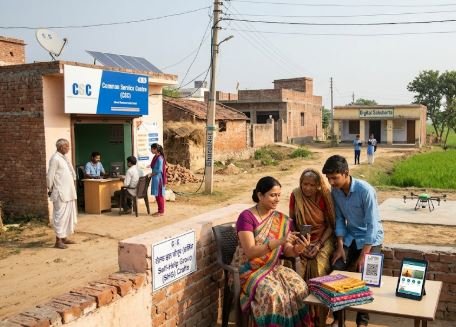
Digital technology in rural India is emerging as a powerful driver of economic growth, creating new opportunities for farmers, small businesses, entrepreneurs and local communities. What began as an effort to improve internet connectivity has gradually evolved into a broader transformation of agriculture, financial services, education, healthcare and rural commerce. As digital infrastructure reaches more villages, rural communities are gaining access to markets, financial services and business opportunities that were once largely concentrated in urban centres.
The expansion of BharatNet, the growing network of Common Service Centres (CSCs) and the increasing adoption of digital payment systems are providing a strong foundation for this transformation. According to the Press Information Bureau, more than 2.15 lakh Gram Panchayats, representing approximately 97% of the total, have been connected through optical fibre. With more than 6.5 lakh CSCs facilitating access to digital services, technology is becoming an increasingly important part of rural economic activity.
For businesses, this shift represents an opportunity to reach new customers, develop innovative services and expand beyond traditional urban markets. From agricultural technology and digital banking to online retail and healthcare services, rural India is creating fresh opportunities for startups, MSMEs and established companies. More importantly, digital adoption is helping local enterprises improve their operations, connect with wider markets and participate in the country’s growing digital economy.
How Digital Technology Is Transforming Rural India’s Economy
1. Agricultural Technology Is Modernising Rural Farming
Agriculture remains a major source of rural employment and income, making technological adoption particularly important for improving farm productivity and profitability. Digital platforms are helping farmers access market information, agricultural advice and services that can support better cultivation and selling decisions.
The Electronic National Agriculture Market (e-NAM) is connecting agricultural markets through an online trading platform, offering farmers opportunities to explore a wider network of buyers and improve price discovery.
At the farm level, soil-testing technologies, weather-based advisory services, smart irrigation systems and agricultural drones are supporting more efficient resource management. These solutions can help farmers make informed decisions about water usage, crop health and agricultural inputs.
For businesses, the growing adoption of digital agriculture is creating opportunities in agritech platforms, equipment rental, precision farming, agricultural logistics and digital advisory services. Startups that develop affordable solutions suited to small and marginal farmers could find significant opportunities in this expanding market.
2. Digital Payments Are Strengthening Rural Financial Inclusion
The growing use of UPI and digital banking services is changing how rural businesses manage transactions. Small retailers, street vendors, artisans and local service providers can now accept digital payments without depending entirely on cash transactions.
Government initiatives such as the Pradhan Mantri Jan Dhan Yojana have also expanded access to banking services. Direct Benefit Transfer systems enable eligible beneficiaries to receive welfare payments and subsidies directly into their bank accounts.
This growing financial connectivity is creating opportunities for fintech companies, payment service providers, banking correspondents and insurance businesses. Digital transaction records can also help small enterprises maintain better financial information and potentially improve their access to formal credit.
3. E-Commerce Is Expanding Market Access for Rural Entrepreneurs
Digital marketplaces are helping rural entrepreneurs move beyond the limitations of local markets. Artisans, self-help groups, small manufacturers and home-based businesses can use online platforms and social media to promote products to customers in larger towns and cities.
Handicrafts, handloom products, processed foods and locally manufactured goods are among the categories that can benefit from wider digital visibility.
This shift is also creating business opportunities in packaging, warehousing, logistics, digital marketing and online payment services. Companies that help rural sellers manage product promotion and delivery can become important partners in the expanding rural commerce ecosystem.
4. Telemedicine Is Improving Access to Rural Healthcare
Digital healthcare is helping address geographical barriers that often prevent rural residents from accessing specialist medical services. Platforms such as e-Sanjeevani allow patients to connect with healthcare professionals through remote consultations.
Telemedicine can reduce unnecessary travel for selected consultations and follow-up appointments while helping local healthcare facilities connect with larger medical institutions.
For healthcare businesses, this creates opportunities in teleconsultation platforms, digital diagnostics, patient management systems and technology-enabled healthcare networks.
5. Digital Education Is Creating New Skill Development Opportunities
Access to digital learning is expanding educational opportunities for students and young people in rural communities. Government initiatives such as PM e-VIDYA, DIKSHA and SWAYAM provide digital educational resources, online courses and learning materials.
Digital literacy programmes, including the Pradhan Mantri Gramin Digital Saksharta Abhiyan (PMGDISHA), are also helping rural citizens become more familiar with digital services.
This creates opportunities for edtech companies, vocational training institutions and local learning centres. Practical training in digital marketing, accounting, e-commerce and computer applications can help rural youth develop skills relevant to employment and entrepreneurship.
6. Common Service Centres Are Supporting Grassroots Digital Businesses
Common Service Centres are playing an important role in connecting rural residents with government and private digital services. They provide access to facilities such as online applications, banking services, bill payments and other approved digital transactions.
These centres also create income opportunities for local entrepreneurs who provide digital assistance within their communities.
For banks, insurance companies, telecommunications providers and other businesses, the CSC network offers a valuable channel to reach rural customers and expand service delivery.
7. Digital Technology Is Empowering Women Entrepreneurs
Digital platforms are creating new opportunities for women-led businesses and self-help groups to participate in the wider economy.
Women involved in handicrafts, food processing, tailoring and other small enterprises can use online marketplaces, digital payments and social media to promote products and connect with customers.
This is creating opportunities for businesses offering digital literacy programmes, financial services, e-commerce support and entrepreneurship training.
Affordable devices, local-language assistance and greater digital confidence will be important in ensuring that more women can benefit from these opportunities.
Challenges to Rural India’s Digital Transformation
Despite significant progress in digital connectivity, several challenges continue to affect technology adoption across rural communities.
-
Digital literacy: Many first-time users require practical guidance on digital banking, online payments, cybersecurity and e-commerce.
-
Infrastructure reliability: Internet interruptions, electricity shortages and last-mile connectivity gaps can restrict access to digital services in remote areas.
-
Affordability: Small farmers and rural businesses may find advanced technology, equipment and software subscriptions expensive.
-
Cybersecurity: Growing digital adoption increases the need for awareness about online fraud, suspicious links and unauthorised transactions.
Addressing these barriers will be essential to ensure that digital transformation reaches communities across different income groups and geographical regions.
Business Opportunities in Rural India’s Growing Digital Economy
The expansion of rural digital services is creating opportunities across several business segments:
-
Agritech: Smart farming, agricultural advisory, digital marketplaces and irrigation technology.
-
Fintech: Digital payments, rural banking, insurance and financial management services.
-
E-commerce: Online marketplaces, product distribution, packaging and logistics.
-
Edtech: Digital learning, vocational training and employment-oriented education.
-
Healthcare: Telemedicine, digital diagnostics and remote patient management.
-
Digital services: Business software, digital marketing, cybersecurity and technology support.
For startups, MSMEs and established companies, the opportunity lies in developing affordable, accessible and locally relevant solutions that address the everyday requirements of rural consumers and enterprises.
Conclusion
Digital technology is gradually transforming rural India into an increasingly connected and opportunity-driven economic market. Its influence extends beyond internet access, creating new possibilities in agriculture, financial services, healthcare, education, e-commerce and local entrepreneurship. Farmers are gaining access to wider markets, small businesses are adopting digital transactions and rural entrepreneurs are finding new ways to reach customers.
For businesses, this transformation offers significant opportunities to expand their reach, develop new services and participate in the growth of rural markets. However, sustained progress will depend on affordable technology, reliable connectivity, digital literacy and stronger cybersecurity awareness.
The real potential of rural India’s digital transformation lies in converting connectivity into economic participation. As more communities adopt technology in their daily activities, rural enterprises could become increasingly important contributors to India’s digital economy, entrepreneurship ecosystem and long-term business growth.
