
Pic Credit: Pexel
September 18: India is looking at new ways to expand renewable power as electricity demand rises and land becomes increasingly valuable. Floating solar projects, combined with battery energy storage, are emerging as a promising option that can add clean power without requiring large stretches of land.
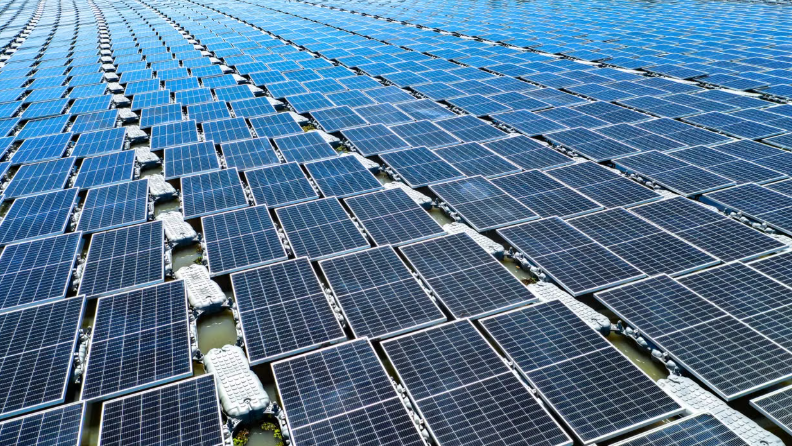
Floating solar photovoltaic systems are installed on suitable reservoirs, dams, lakes and other water bodies. For a country with a large network of reservoirs, the technology offers an opportunity to use available water surfaces for electricity generation while keeping land free for agriculture, housing, industry and other activities.
The technology is receiving greater policy attention. The Centre has approved a programme to support floating solar projects along with energy storage, reflecting the growing importance of combining renewable generation with technologies that can make electricity available beyond daylight hours.
Why floating solar is gaining attention
Traditional ground-mounted solar projects require significant land. Floating solar can reduce this requirement by placing panels on water surfaces. This can be particularly useful in densely populated states where acquiring large parcels of land for solar parks can be challenging.
There can be operational benefits as well. Water surrounding the floating panels can help moderate their temperature, which may support solar generation under suitable conditions. Panels can also provide shade over parts of a reservoir, potentially reducing evaporation. The actual benefits depend on factors such as the size of the project, local climate, reservoir characteristics and panel coverage.
Floating solar can also be developed near existing hydropower and other electricity infrastructure. Where transmission facilities are already available, this could potentially reduce some infrastructure requirements, although each project needs detailed technical and environmental assessment.
Battery storage fills the solar gap
Solar power has one obvious limitation: it depends on sunlight. Generation is generally strongest during the day, while electricity demand often remains high during the evening.
Battery Energy Storage Systems can help bridge this gap. Excess electricity generated during the day can be stored and supplied later when solar production falls. This can help utilities manage peak demand and make renewable electricity more flexible.
The combination of floating solar and storage therefore offers a different approach to renewable power. Instead of simply adding generation capacity, projects can be designed to provide electricity at times when it is most valuable to the grid.
Growing business opportunities
The development of floating solar and storage can create opportunities across several industries. Companies involved in solar modules, floating platforms, batteries, electrical equipment, anchoring systems, engineering, construction, monitoring and maintenance could see greater demand as projects expand.
It can also encourage the development of domestic manufacturing and specialised technical services. Smaller businesses and MSMEs can potentially participate in areas such as component supply, installation, maintenance, transportation and digital monitoring.
The expansion of the sector could therefore generate economic activity beyond the power plants themselves, creating opportunities across the wider renewable-energy supply chain.
Supporting energy security
India’s growing economy requires a dependable electricity supply. Manufacturing units, offices, commercial establishments, households and electric mobility are all contributing to rising power consumption.
A larger renewable-energy base can help diversify the country’s electricity mix. Battery storage can further strengthen the system by allowing some renewable electricity to be shifted from periods of high generation to periods of high demand.
For states with limited land availability, floating solar could offer an additional route to expand clean-energy capacity. Reservoirs associated with existing infrastructure may provide suitable locations, subject to environmental, technical and water-use considerations.
Challenges still need to be addressed
The technology also comes with challenges. Floating solar projects must account for water-level fluctuations, anchoring, storms, equipment corrosion, maintenance and the ecological characteristics of individual water bodies.
Battery storage brings another set of considerations, including capital costs, battery life, safety, recycling and the availability of critical materials. Developing appropriate transmission infrastructure and ensuring the financial viability of projects will also be important.
Careful planning will therefore be necessary to ensure that renewable-energy development remains compatible with water management, environmental protection and other uses of reservoirs.
A new opportunity for India’s renewable-energy industry
Floating solar and battery storage represent the next stage in India’s renewable-energy expansion. The focus is increasingly moving from simply generating more solar power towards creating a system that can use renewable electricity efficiently throughout the day.
By using suitable water surfaces for generation and batteries for storing surplus electricity, India can explore a more flexible approach to clean power. The growth of this sector could also support investment, manufacturing, skilled employment and innovation across the renewable-energy value chain.
As electricity demand continues to increase, floating solar combined with energy storage could gradually become an important part of India’s efforts to build a cleaner, more reliable and economically sustainable power system.
