

Urban commuting in India is moving towards sustainable mobility choices. Government figures indicate that electric vehicle registrations crossed 15 lakh units in 2024, reflecting annual growth of more than 40 percent. Two-wheelers contributed significantly to this number, showing increased confidence in electric scooters for daily travel. This trend has encouraged many prospective buyers to compare the price of an electric scooter with the price structure of a petrol scooter.
Some individuals evaluate financial advantages over time, while others consider riding comfort and maintenance. Petrol scooters remain well established and familiar to most households, supported by strong servicing networks. Electric scooters focus on lower running costs and a quieter riding experience. A structured comparison helps riders understand how both vehicle types align with personal needs and long-term expectations.
Understanding the price of an electric scooter begins with examining the core elements that influence its cost, including battery capacity, range output, structural materials, and embedded technology.
Battery and Technical Features Impacting the Price of an Electric Scooter
Prices of electric scooters are highly impacted by the battery capacity, range, and several other technical features as well.
- Battery, Range, and Motor Output
Battery units form a large portion of the production cost. Some electric scooters offer a commuting range of 120 km, while other models offer a range beyond 150 km. Larger batteries and higher motor strength influence pricing. Electric scooters designed for extended travel distance or stronger acceleration typically hold higher values.
- Smart Features and Hardware Quality
Digital instrumentation, connected dashboards, geolocation, reverse support, hill-hold assistance, and steel or alloy frames are key differentiators. These additions elevate usability and convenience, which is reflected in the price of an electric scooter across segments.
Why Petrol Scooters Cost the Way They Do
Petrol scooter pricing is shaped by internal combustion engineering, servicing requirements, fuel system design, and long-term maintenance needs.
- Engine and Mechanical Structure
Internal combustion engines feature pistons, spark plugs, belts, valves, and multiple lubrication points. The servicing demands of these systems influence ownership cost, particularly over long usage periods.
- Servicing Network Comfort
Petrol scooters benefit from a widespread service network. Easy access to authorised workshops maintains convenient upkeep and appeals to riders who prefer on-site mechanical attention.
Charging vs Refuelling Convenience
Charging routines and fuel refilling behaviours vary across both segments, influencing practical ownership decisions and personal suitability.
- Charging Flexibility for Electric Scooters
Charging at residential or workplace locations removes the need for frequent petrol station visits. Many scooters reach 0 to 80 percent charge in approximately three to four hours, making overnight charging viable.
- Refuelling Speed for Petrol Scooters
Refuelling petrol scooters requires minimal time at a fuel station. Individuals who travel long distances in one stretch or lack charging access may find this method more convenient.
- Running Cost Comparison
Long-term financial planning differs between scooters powered by electricity and those dependent on petrol, and directly affects how people evaluate the price of an electric scooter versus a petrol scooter.
Sustainability and Environmental Impact
Growing awareness around clean mobility and environmental protection has increased interest in the price of an electric scooter as part of long-term sustainable transport planning.
Electric Scooter Contribution to Cleaner Transport
Electric scooters do not produce tailpipe emissions. For individuals focused on reducing carbon output and improving urban air quality, this contributes to long-term transport planning.
Petrol Scooter Emissions Reality
Petrol scooters remain highly reliable and convenient, although exhaust emissions add to city air pollution. Environmental considerations are encouraging more individuals to evaluate non–fuel options.
Ride Feel and Technology Experience
Differences in riding behaviour and feature depth influence how both scooter formats meet user comfort expectations.
- Electric Scooter Ride Personality
Electric scooters deliver instant torque response, silent operation, digital connectivity, and display–based alerts. These qualities contribute to a modern riding experience.
- Petrol Scooter Ride Personality
Petrol scooters create a familiar sensation through engine vibration and throttle response, appealing to individuals who enjoy mechanical feedback.
Modern Electric Scooter Examples: Real Market Direction
Electric scooter diversity has expanded, offering a wide range of ranges, speeds, designs, and connectivity features at different pricing brackets. This variation assists prospective buyers in understanding how the price of an electric scooter aligns with performance needs and comfort preferences.
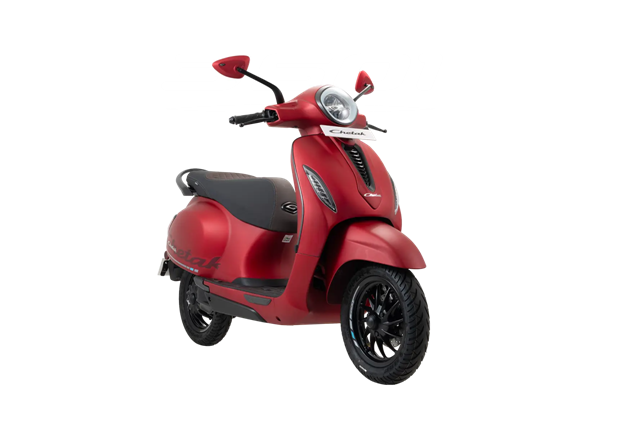
Image Source: Bajaj Chetak
- Range and Speed Variety
Riding ranges differ across brands. Some scooters provide relaxed travel speeds near 63 km/hr, while others achieve speeds close to 73 km/hr for broader use.
- Feature Depth and Charging Design
Current electric scooters offer metal unibody structures, colour LCD or TFT displays, Bluetooth calling, Eco and Sport modes, weather resistance, and app compatibility. Charging speeds from 0 to 80 percent generally take between 3 and 4 hours, depending on the battery size.
Models as Market Reference
Several models within the Indian market demonstrate how electric scooters vary by technology and build strength. As an example, the Chetak 3001 features a steel structure, a range of around 127 km, and relaxed city-speed capability.
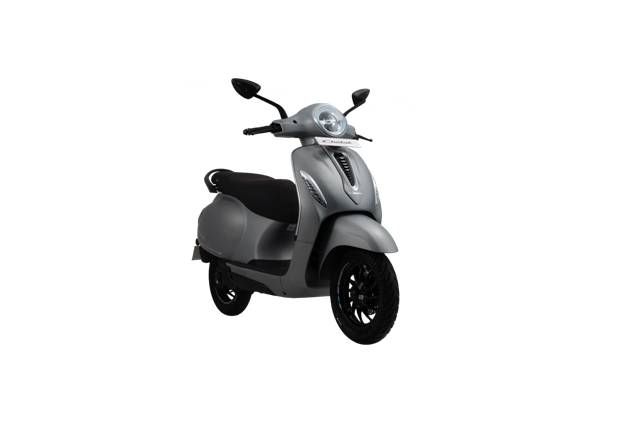
Image Source: Bajaj Chetak
Other e-scooters include:
- The Chetak 3501 offers an extended riding range of nearly 153 km and a top speed of close to 73 km/hr, supported by hill hold assist, reverse mode, on–board charging, and a key fob locator.
- The Chetak 3502 offers a range of 153 km as well, app–based features, geo-location, an on–board charger, and hill hold and reverse movement through TecPac.
- The Chetak 3503 encourages modern riding comfort with a metal unibody, eco and sport modes, alloy wheels, IP67 durability, Bluetooth calling, and music support.
These references show how the price of an electric scooter changes according to range output, battery strength, and software enhancement.
Maintenance Expectations
Maintenance methods vary for electric and petrol scooters because each power system has distinct mechanical demands.
- Electric Scooter Maintenance
Electric motors consist of fewer internal components, lowering servicing frequency. Routine care generally centres around tyres, braking parts, and battery checks.
- Petrol Scooter Maintenance
Ongoing engine oil replacement, filter cleaning, belt adjustments, and spark plug servicing are part of the annual maintenance requirements for petrol scooters.
- Practical Ownership Factors
Personal lifestyle considerations, local infrastructure, and refuelling access influence scooter selection alongside the price of an electric scooter.
- Charging Access and Living Conditions
Overnight residential charging benefits individuals with personal parking facilities. Public charging networks are expanding across India, improving long-distance suitability.
- Service and Local Infrastructure
Petrol refuelling infrastructure is widespread, providing convenience in semi–urban regions. Petrol stations are easily accessible, helping riders maintain uninterrupted mobility.
Maximising the Value of Electric Scooters’ Price
The price of an electric scooter becomes meaningful when evaluated against range output, charging convenience, and daily savings. Petrol scooters continue to hold value through instant refuelling and mechanical familiarity. Electric mobility offers sustainable movement and lower running expenses, supported by continuous product innovation.
Petrol scooters provide workshop comfort and a strong engine identity. Both vehicle formats serve different ownership expectations, making personal usage patterns crucial to the decision process. Modern electric scooter brands like Bajaj Chetak show how range, structural materials, and feature depth influence cost and purpose.
Both mobility styles will co–coexist as India advances towards cleaner transportation. The most suitable choice depends on lifestyle, routine distance, local infrastructure, and long-term financial planning.