

Chennai, Sep 07: SRM Medical College Hospital and Research Centre hosted IndiBioCom 2026, a three-day national conference on bioinformatics and computational biology, bringing together leading scientists, researchers, academicians, young scholars and industry experts to deliberate on emerging technologies shaping the future of biomedical research and healthcare.
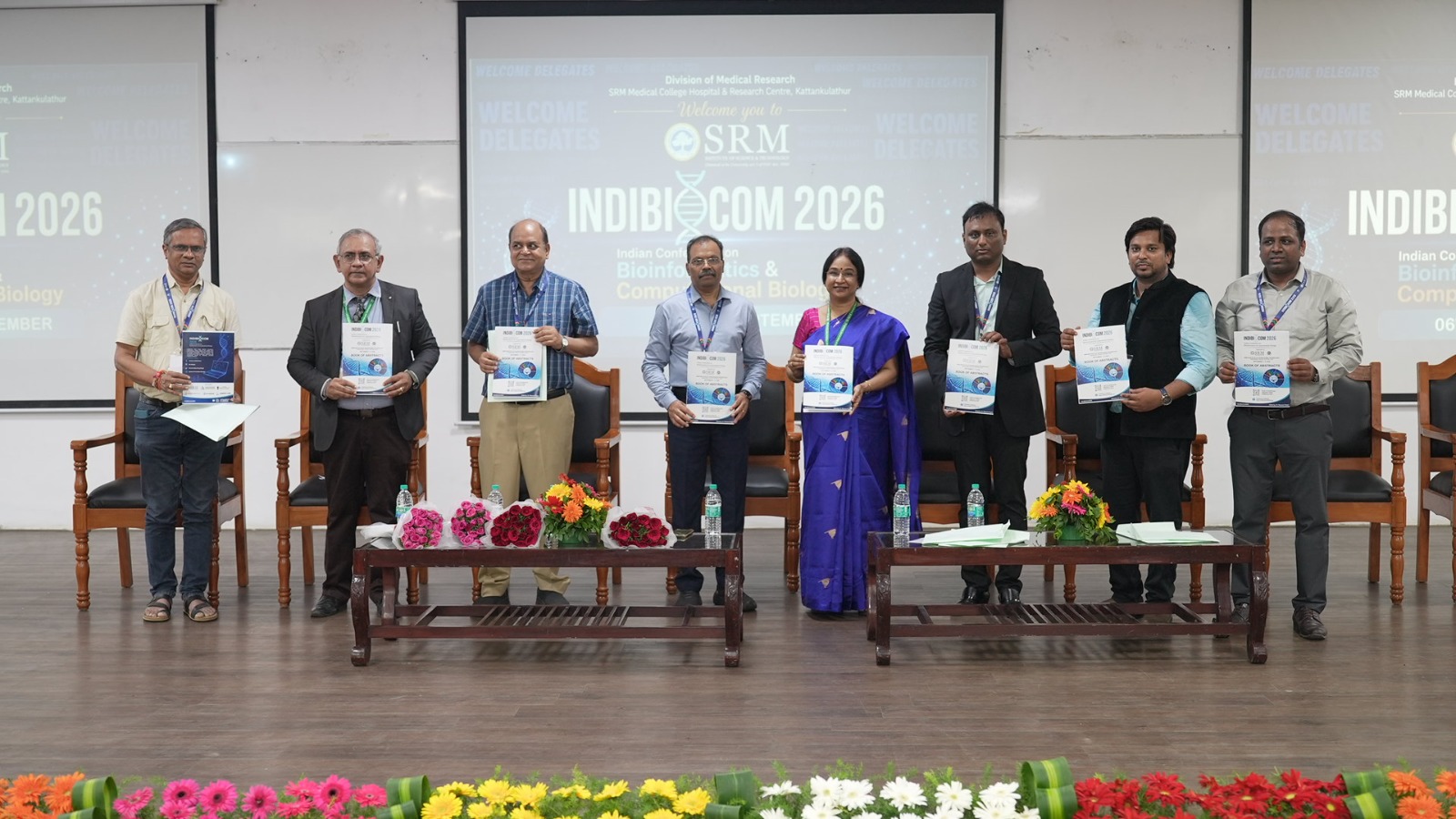
The conference provided a platform for researchers across disciplines to exchange ideas, present their work and explore collaborations in the rapidly advancing fields of computational biology, artificial intelligence and biomedical sciences.
The scientific programme addressed most significant developments in modern life sciences, including population genomics, cancer genomics, microbial genomics, computational drug discovery, vaccine design, antimicrobial resistance, digital pathology and AI-driven biomedical research.
The conference featured distinguished experts from leading research and academic institutions across India. Prof. K. Thangaraj, CSIR-Centre for Cellular and Molecular Biology, Hyderabad, and Prof. G. P. S. Raghava, Director, IIIT Delhi, were among the keynote speakers. Experts from institutions including IIT Madras, IIT Hyderabad, Jawaharlal Nehru University, CSIR-IGIB, CSIR-IMTECH, ICGEB, Banaras Hindu University, BITS Pilani, IISER Berhampur and the Institute of Mathematical Sciences, Chennai, participated in the conference.
“Behind every dataset, every molecular pathway and every computational prediction, there is ultimately a patient waiting for a better diagnosis, a more precise treatment and a better outcome. The strongest discoveries will emerge when computational expertise and clinical insight come together,” said Dr. R. Jayanthi, Dean, SRM Medical College Hospital and Research Centre, highlighting the importance of bringing computational science and clinical medicine together to develop meaningful, patient-centred healthcare solutions.
“This interdisciplinary conference, where biology meets computer science, engineering and bioengineering, is where innovation and creativity begin,” said Prof. Dr. Sunil K. Narayan, Dean (Research), SRMMCHRC, underscoring the importance of interdisciplinary collaboration in advancing bioinformatics, computational biology and the future of biomedical research.
With bioinformatics increasingly becoming central to modern biomedical research, the conference placed particular emphasis on translating large-scale biological data into meaningful scientific and clinical insights. The programme also provided young researchers with opportunities to present their work through oral and poster presentations, interact with established scientists and build academic and research collaborations.
Through IndiBioCom 2026, SRMIST aimed to strengthen interdisciplinary research and create greater opportunities for collaboration between computational scientists, biomedical researchers, clinicians and industry. The conference also underlined the growing role of data-driven approaches in accelerating discoveries in healthcare, drug development and precision medicine.