

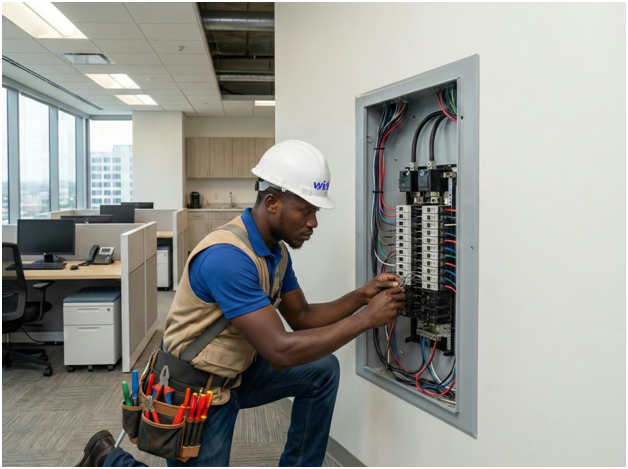
For many business owners, electrical systems are easy to overlook when everything appears to be working. Lights turn on, computers boot up, equipment runs, and employees go about their day without giving much thought to the wiring, panels, breakers, or circuits behind the walls. Unfortunately, an electrical system that seems perfectly fine today may already be struggling to keep up with the demands of a growing business.
This is becoming an important consideration for commercial property owners throughout Austin, Texas. As businesses expand, adopt new technology, add equipment, and renovate their spaces, their electrical needs can change considerably. An office that once relied on a few computers and basic lighting may now support multiple servers, conference room displays, security systems, dedicated HVAC equipment, and electric vehicle charging stations. Retail stores, restaurants, warehouses, and industrial facilities face their own challenges as their operations evolve.
When an electrical system cannot keep pace with these changes, the consequences can extend well beyond a tripped breaker. Unexpected downtime, equipment damage, inefficient lighting, and emergency repairs can all affect a company’s operating budget.
Understanding the business cost of outdated electrical infrastructure allows property owners to make informed decisions before minor electrical concerns become expensive disruptions.
How Outdated Electrical Infrastructure Affects Business Operations
An aging electrical system does not necessarily need to be replaced simply because it has been in service for many years. Its condition, maintenance history, design, and ability to support current loads are more important than age alone. However, older commercial buildings can have electrical infrastructure that no longer fits the way their occupants use the space.
For example, a building originally designed for a small professional office might eventually accommodate a medical practice, a busy call center, or a technology company. Each use brings different electrical requirements, including additional receptacles, dedicated equipment circuits, upgraded lighting, and potentially more demanding HVAC systems.
If the original electrical infrastructure was never evaluated during these changes, the business could experience recurring problems.
Warning signs may include breakers that trip frequently, lights that flicker when equipment starts, warm electrical panels, buzzing sounds, damaged receptacles, or insufficient circuit capacity for new equipment. These symptoms should not be dismissed as ordinary inconveniences. Some can indicate overloaded circuits, loose connections, deteriorating components, or other conditions that require professional attention.
The financial consequences are not always obvious at first. A maintenance employee might spend an hour resetting a breaker, but repeated incidents can gradually consume staff time, delay work, and interrupt customer service. When the same issue begins affecting several departments, the cost can grow quickly.
Unplanned Downtime Can Cost More Than the Electrical Repair
One of the biggest risks associated with aging electrical infrastructure is unexpected downtime. Businesses often focus on the cost of repairing a faulty component without considering the revenue, productivity, and customer confidence that may be lost while the problem is being resolved.
Consider a restaurant that loses power to part of its kitchen during a busy dinner service. Even if the electrical repair is relatively straightforward, the restaurant may need to slow service, turn away customers, or discard temperature-sensitive inventory if refrigeration is affected.
A warehouse can face a different set of problems. If electrical trouble interrupts conveyor systems, charging stations, lighting, or essential material-handling equipment, orders may be delayed and employees may be unable to complete their normal tasks. For a professional office, an electrical outage affecting networking equipment can disrupt appointments, communications, and access to essential business systems.
These situations illustrate why electrical reliability should be treated as an operational priority rather than simply a maintenance expense.
Business owners can begin evaluating their exposure by asking a few practical questions:
- Which electrical systems are essential to daily operations?
- What would happen if those systems lost power for two hours, half a day, or longer?
- Are there critical circuits that need backup power?
- Does the business have a plan for protecting sensitive equipment?
- How quickly could a qualified electrician investigate and repair an electrical failure?
The answers can help property owners determine where preventive maintenance, targeted upgrades, or backup-power planning could make the greatest difference.
Growing Equipment Loads Require More Than Available Breaker Space
Business expansion often brings additional electrical demand. New computers, commercial refrigerators, production equipment, machinery, electric vehicle chargers, upgraded HVAC systems, and other installations can change the load requirements of an existing building.
One common misconception is that an electrical panel has sufficient capacity whenever an unused breaker space is available. In reality, physical breaker space and electrical capacity are two different things.
An electrician needs to evaluate the existing service, panel ratings, connected equipment, expected demand, circuit conditions, and applicable electrical requirements before determining whether a new load can be accommodated safely.
For example, a commercial property owner may want to add several workstations and a server room while renovating an office. Another owner may be planning to install additional refrigeration equipment or expand a warehouse’s production area. In both situations, simply adding circuits without evaluating the larger electrical system can create problems.
Capacity planning is especially valuable when a business has several improvements scheduled over the next few years. Instead of completing separate electrical projects without considering their combined demands, property owners can discuss the full scope of planned changes with a qualified electrician.
That conversation may identify the need for additional circuits, panel modifications, service upgrades, or improvements to distribution equipment. It can also help establish a realistic budget and avoid paying for repeated work that could have been coordinated during an earlier project.
For Austin businesses operating in older commercial buildings, this planning can be particularly useful when changing tenants, renovating workspaces, or converting a property to a different commercial use.
Preventive Electrical Inspections Help Identify Problems Earlier
Waiting for electrical equipment to fail is rarely a sound maintenance strategy. Preventive inspections give business owners an opportunity to identify developing concerns, review system capacity, and address maintenance needs before they interfere with normal operations.
The appropriate inspection schedule depends on the type of property, the equipment involved, the environment, the system’s condition, and applicable requirements. A light-duty office and a facility with heavy machinery may need different maintenance approaches.
A commercial electrical inspection may include reviewing panelboards, breakers, visible wiring, grounding and bonding, receptacles, disconnects, and other accessible electrical components. An electrician can also investigate recurring breaker trips, inconsistent lighting, damaged equipment connections, and circuits that appear to be carrying excessive loads.
Depending on the property, an evaluation may include infrared thermography or other specialized testing to identify potential hot spots and developing equipment problems. Such testing is not necessary for every building, but it can be useful in appropriate circumstances.
Property owners should also consider inspections when purchasing a commercial building, preparing for a major renovation, installing new equipment, or investigating unexplained electrical interruptions.
It is important to distinguish a preventive maintenance assessment from a formal code inspection or an inspection required by an authority having jurisdiction. The scope and purpose of each can differ.
For businesses in Austin, scheduling electrical work before a known problem becomes urgent can make it easier to coordinate access, obtain necessary approvals, and plan around employee and customer activity.
Lighting Upgrades Can Improve Efficiency and the Work Environment
Lighting is another part of commercial electrical infrastructure that deserves attention. Older lighting systems may consume more electricity than necessary, require frequent maintenance, or provide inconsistent illumination across work areas.
LED upgrades can reduce lighting energy consumption in many applications and often provide longer service life than older lighting technologies. The actual savings depend on the existing fixtures, operating hours, lighting controls, electricity rates, and the design of the replacement system.
For a business that operates a large office, retail store, warehouse, or parking area for extended hours, these improvements can become meaningful over time.
Lighting projects also provide an opportunity to improve the quality and distribution of illumination. Employees may benefit from better-lit workstations, while customers can find it easier to navigate a retail space. Warehouses may need more consistent lighting along aisles, loading areas, and work zones.
Occupancy sensors, daylight controls, and other lighting automation features may offer additional savings where appropriate. However, these systems should be selected according to how the space is actually used. Poorly configured controls can frustrate employees or leave important areas inadequately illuminated.
Commercial lighting upgrades should account for fixture compatibility, circuit requirements, emergency lighting, exit signs, applicable building and electrical codes, and any necessary permits. An electrician can help determine how to complete the installation while minimizing disruption to occupied areas.
Surge Protection Helps Protect Valuable Equipment
Modern businesses depend on electronics for much more than routine office work. Point-of-sale terminals, networking hardware, access control systems, security cameras, industrial controls, computers, and specialized equipment may all be vulnerable to electrical disturbances.
Power surges can originate from lightning-related events, utility switching, or changes associated with electrical equipment operating within a building. The level of risk varies by location, system design, equipment sensitivity, and the effectiveness of existing protective measures.
Austin-area businesses should consider surge protection as part of a broader electrical reliability plan rather than assuming that ordinary power strips will protect every device.
Whole-building or service-level surge protective devices can help limit certain transient overvoltages entering through the electrical supply. Additional protection at distribution panels or sensitive equipment may be appropriate depending on the installation. Proper grounding, bonding, and coordination between protective devices also matter.
Surge protection does not eliminate every electrical risk, and it should not be treated as a substitute for backup power. A surge protective device is designed to address transient voltage events, while a generator or battery-based system addresses interruptions in the supply of power.
Business owners should discuss their most valuable or operationally critical equipment with an electrician to determine which protective measures are appropriate. Protecting a network cabinet, for example, may involve surge protection, a properly sized uninterruptible power supply, suitable ventilation, and a plan for safely shutting down equipment during an extended outage.
The objective is to reduce avoidable equipment damage and improve the chances of maintaining essential operations when electrical conditions are less than ideal.
Backup-Power Installations Need Careful Planning
For some businesses, losing electricity for even a short period can create significant operational problems. Others may be able to pause their activities without major consequences. Determining which category a business falls into is an important first step in planning backup power.
A commercial generator is not automatically the right solution for every property. Some businesses need enough power to maintain essential lighting, refrigeration, communications, security, or selected equipment. Others may require a more extensive standby-power system capable of supporting a larger portion of their operations.
Battery-based backup systems and uninterruptible power supplies can also serve specific purposes, particularly where equipment needs continuous power long enough to ride through a brief interruption or shut down safely.
Before choosing a system, property owners should identify critical loads, estimate how long those loads must operate, evaluate available installation space, and consider fuel or battery requirements, ventilation, noise, maintenance, and local permitting.
Generator installations also require appropriate transfer equipment and safeguards to prevent electricity from being fed improperly into utility lines. The system must be designed so that power sources are isolated and connected safely. Improper connections can create serious hazards for utility workers, occupants, and the property itself.
Businesses should also understand that backup power is only as dependable as its maintenance and testing program. Equipment that sits unused for long periods may not perform as expected during an emergency if batteries, fuel systems, controls, or other components have not been maintained.
Tejas Electric works with commercial electrical needs in the Austin area, making a qualified local electrician a useful resource for businesses evaluating electrical upgrades, inspections, and backup-power requirements.
Plan Electrical Work Around Business Operations
Even necessary electrical improvements can create complications if they are scheduled without considering the business’s operating hours and essential activities.
A retail store may prefer electrical work before opening or after closing. An office might be able to accommodate certain installations during a quieter period, while a warehouse may need to coordinate work around shipping schedules and equipment availability.
The first step is to identify which areas and systems will be affected. Business owners should communicate operating requirements, restricted-access areas, critical equipment, and any activities that cannot be interrupted. The electrician can then determine what work can be completed while the building remains occupied and what tasks require a planned shutdown.
For larger projects, it may be possible to complete work in phases. For example, lighting upgrades could be divided by floor or department, or electrical improvements could be coordinated with an already scheduled renovation.
Not every project can be completed without an outage. Some work requires circuits or equipment to be de-energized to protect workers and building occupants. A realistic plan should account for these requirements instead of promising uninterrupted operations when they cannot be guaranteed.
Business owners should also discuss lead times for equipment, permit requirements, inspections, and any coordination needed with the utility provider. Addressing these issues early can reduce scheduling surprises and help keep the project within budget.
Should a Handy Person Handle Commercial Electrical Work as a DIY Project?
A capable maintenance employee or handy property owner may be comfortable handling many routine building tasks, such as assembling furniture, replacing non-electrical hardware, or carrying out other work that does not involve electrical installation. Commercial electrical work, however, can involve risks and requirements that go beyond general repair skills.
Replacing or modifying circuits, installing commercial lighting, adding dedicated equipment circuits, upgrading panels, connecting generators, and altering electrical distribution systems can expose workers to electric shock, arc-flash hazards, fire risks, and equipment damage. An installation that appears to work may still have improper grounding, incorrect conductor sizing, inadequate overcurrent protection, or other hidden problems.
Texas licensing requirements also matter. Electrical contracting and electrical work are regulated under state law, with specific licensing, exemptions, and requirements that depend on the type of work and who performs it. A business owner should not assume that owning a property or having maintenance experience automatically authorizes someone to perform regulated electrical work.
For commercial installations, using a properly licensed and qualified electrical contractor is generally the prudent approach. The contractor can assess the existing system, select appropriately rated components, follow applicable codes, and determine whether permits or inspections are required. Local requirements and the specific circumstances of the project should be confirmed before work begins.
Attempting a complex installation as a DIY project may appear to save money initially, but mistakes can lead to rework, failed inspections, damaged equipment, unexpected downtime, or serious safety incidents. Electrical work can also affect insurance and warranty considerations, depending on the policy and circumstances.
Business owners can trust the commercial electricians from Tejas Electric when it comes to professional commercial electrical services especially when discussing inspections, capacity planning or backup-power installations.
The key is to treat electrical work as a specialized trade rather than a routine handyman task. Property owners can still play an active role by documenting recurring problems, explaining operational needs, reviewing project proposals, and coordinating access to the building.
Build an Electrical Maintenance Plan Before Problems Develop
Outdated electrical infrastructure does not always demand an immediate, building-wide replacement. In many cases, a qualified assessment can help establish which components need attention now, which improvements can be scheduled later, and which future projects should be considered during capacity planning.
A practical maintenance plan should identify essential electrical equipment, document known issues, establish appropriate inspection intervals, and prioritize improvements according to safety, business continuity, and available budget.
Property owners may also benefit from maintaining records of electrical repairs, panel changes, equipment installations, permits, and inspection results. These records can help electricians understand the history of the system and provide better recommendations when the business expands or changes how the building is used.
For example, a company anticipating a new production line next year can begin evaluating capacity well before the equipment arrives. A landlord preparing to lease an older retail space can arrange an electrical assessment before a new tenant starts construction. A restaurant planning a kitchen renovation can discuss equipment loads and dedicated circuits while the layout is still being developed.
These decisions can be easier to manage when they are part of a planned capital budget rather than emergency expenditures.
Keep Your Business Moving With Proactive Electrical Planning
Commercial electrical infrastructure plays a direct role in how reliably a business operates. Aging components, increasing equipment loads, inadequate surge protection, and insufficient backup-power planning can all contribute to avoidable interruptions and unexpected expenses.
For Austin property owners, the goal is not to replace every older component simply because it has been in service for a long time. It is to understand the condition and capacity of the existing system, identify operational risks, and make improvements based on the building’s actual needs.
Preventive inspections, properly planned lighting upgrades, surge protection, and backup-power installations can all contribute to a more dependable electrical system when selected and installed appropriately. Coordinating that work around business operations can also reduce unnecessary disruption for employees, customers, and tenants.
Tejas Electric can be a resource for Austin-area businesses evaluating their commercial electrical needs. By involving qualified electrical professionals early in the planning process, property owners can make more informed decisions about maintenance, renovations, equipment additions, and long-term infrastructure investments.
A little planning today can help businesses avoid some of the costliest surprises tomorrow.