

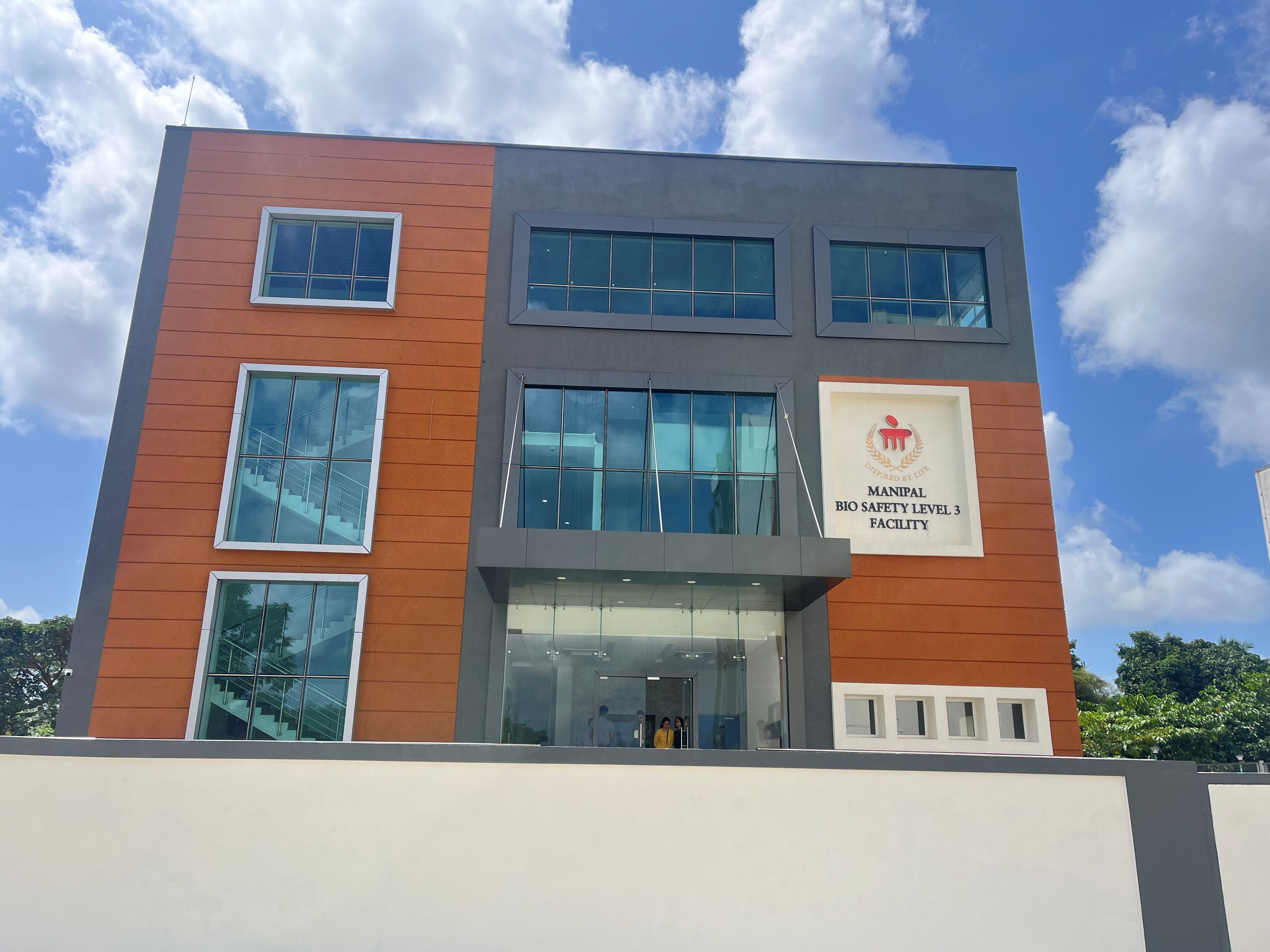
Manipal, Mar 18th: Manipal Academy of Higher Education (MAHE), an Institution of Eminence Deemed to be University, proudly announces the successful certification of its Biosafety Level 3 (BSL-3) Laboratory, marking a major milestone in the university’s continued commitment to excellence in biomedical research, infectious disease preparedness, and global health security. This achievement significantly strengthens the research, diagnostic, and training capabilities of the Manipal Institute of Virology (MIV), Manipal. BSL-3 laboratories are specialised high-containment facilities designed for the safe handling and study of infectious microorganisms that may cause serious or potentially lethal diseases through inhalation. The certification reflects MAHE’s strict adherence to internationally recognised biosafety and biosecurity standards and demonstrates the institution’s dedication to maintaining the highest levels of laboratory safety and scientific integrity.
The BSL-3 laboratory has been developed with state-of-the-art infrastructure and advanced biosafety engineering. The facility incorporates specialised containment architecture, directional airflow with negative pressure, high-efficiency particulate air (HEPA) filtration systems, secure access controls, and rigorous operational protocols to ensure the safe handling of high-risk pathogens. The certification process involved a comprehensive and meticulous evaluation of the facility, including laboratory design, engineering controls, biosafety management systems, operational procedures, personnel competency, and emergency response preparedness. The establishment and successful certification of the BSL-3 facility were achieved under the leadership of Dr Chiranjay Mukhopadhyay, Director, Manipal Institute of Virology (MIV), whose vision and guidance were pivotal in strengthening the institution’s high-containment research capacity.
With this important milestone, MAHE further consolidates its position as a leading centre for advanced research, diagnostics, and capacity building in infectious diseases. The BSL-3 facility will enable scientists and clinicians to safely investigate high-risk pathogens, study emerging and re-emerging infectious diseases, and develop innovative strategies for improved diagnostics, surveillance, and therapeutic interventions. The laboratory will also serve as a critical platform for interdisciplinary collaboration among microbiologists, virologists, clinicians, epidemiologists, and public health experts. In addition to supporting cutting-edge research, the facility will play an important role in strengthening national and regional preparedness by offering training in biosafety practices, high-containment laboratory operations, and outbreak response strategies.
Speaking on the occasion, Lt. Gen. (Dr.) M D Venkatesh, VSM, (Retd.) Vice Chancellor, MAHE said, “The certification of the BSL-3 laboratory is a proud and defining moment for MAHE. It reflects our unwavering commitment to scientific excellence, innovation, and public health. This advanced facility will empower our researchers to conduct impactful studies on dangerous pathogens while maintaining the highest standards of biosafety and responsibility. It also reinforces MAHE’s role in strengthening India’s biomedical research ecosystem and contributing to global infectious disease preparedness.”
Dr Sharath K. Rao, Pro Vice Chancellor, Health Sciences, MAHE, said, “This achievement underscores MAHE’s leadership in biomedical research as an Institution of Eminence. With this certification, MAHE now hosts one of India’s most advanced BSL-3 laboratory facilities. It will expand our capacity to collaborate on critical health initiatives and train experts while upholding the highest safety standards.”
With this achievement, MAHE joins a select group of institutions in India equipped with certified BSL-3 facilities, further reinforcing its leadership in biomedical innovation, infectious disease research, and global health security.
