

If you’ve ever found yourself wide awake at 2 a.m., shifting from one side to the other while your hips ache and your belly feels impossibly heavy, you’re far from alone. Sleep during pregnancy can feel like an elusive luxury, especially as your body transforms week after week. The discomfort of sore hips, lower back tension, and the inability to find a position that doesn’t leave something throbbing is a reality most expecting mothers face. The good news? A pregnancy body pillow can be a genuine game-changer, offering the targeted support your changing body desperately needs. This guide is designed to help you reclaim restful nights by understanding exactly how these pillows work and which one suits you best. We’ll explore why pregnancy disrupts sleep, how body pillows specifically tackle hip pain, which pillow styles match your preferred sleep positions, and how top maternity pillow options compare against each other. Whether you’re in your first trimester or counting down the final weeks, better sleep is within reach.
Understanding Pregnancy Sleep Discomfort and the Need for Relief
As pregnancy progresses, your body undergoes remarkable changes that directly impact how well you sleep. The growing uterus shifts your center of gravity, placing increased pressure on your hips, pelvis, and lower back. By the second trimester, many women gain enough weight to strain joints that weren’t designed to bear the extra load during extended periods of lying down. The hormone relaxin, which loosens ligaments to prepare for delivery, can also make joints feel unstable and achy when unsupported at night.
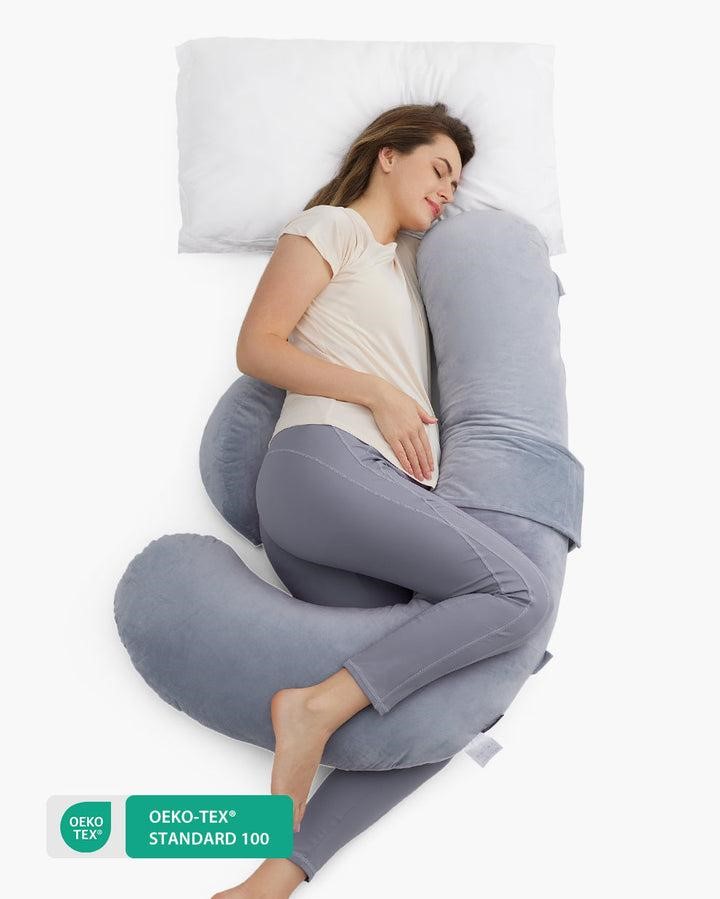
Hip pain ranks among the most common complaints, often caused by the pressure of sleeping on your side without adequate cushioning between your body and the mattress. Poor sleep posture compounds the problem—when your spine falls out of alignment, muscles compensate by tensing, leading to stiffness and soreness that lingers into the next day. Beyond physical discomfort, disrupted sleep affects mood, energy levels, and even immune function during a time when maternal health matters most. Addressing these issues isn’t a luxury; it’s a necessity. This is precisely where specialized pregnancy pillows step in, offering structured support that standard bed pillows simply cannot provide. By cradling your body’s curves and distributing weight more evenly, they help restore the alignment your changing frame needs to rest deeply.
How Pregnancy Body Pillows Provide Effective Hip Pain Relief
The magic behind a pregnancy body pillow lies in its ability to redistribute pressure across multiple contact points rather than concentrating your body’s weight on a single hip joint. When you sleep on your side without support, gravity pulls your top leg downward, rotating your pelvis and creating a shearing force through your hip socket. A body pillow positioned between your knees keeps your legs parallel, maintaining neutral pelvic alignment and dramatically reducing the strain on your hip joints and surrounding muscles.

Beyond the knees, proper belly support matters enormously. As your abdomen grows heavier, it pulls your spine into an exaggerated curve when you lie on your side, forcing your lower back muscles and hip flexors to work overtime. Tucking the lower portion of a body pillow beneath your belly creates a shelf that carries that weight, allowing your muscles to fully relax. Meanwhile, hugging the upper section prevents your top shoulder from rolling forward, which would otherwise twist your thoracic spine and create a chain reaction of misalignment down to your hips.
C-shaped pillows excel at cradling your back while simultaneously supporting your front, making them ideal if you tend to roll backward during the night. U-shaped pillows surround your entire body, eliminating the need to reposition your pillow every time you switch sides—particularly helpful during the third trimester when turning over already feels like an athletic event. For targeted relief, place the thickest part of the pillow directly at hip height and adjust until you feel your spine forming a straight, relaxed line from neck to tailbone. Start using your pillow during the second trimester before pain becomes entrenched, and keep it in place throughout the night rather than pushing it aside after initially falling asleep.
Key Features to Look for in Hip Pain Relief Pillows
Firmness is the single most important factor for hip pain specifically. A pillow that’s too soft compresses under your leg’s weight and fails to maintain the separation your pelvis needs. Medium-firm density holds your joints in position without creating uncomfortable pressure points. Memory foam responds well to body heat, conforming to your unique curves while providing consistent support throughout the night—it won’t flatten like polyester fill after a few weeks of use. Look for pillows with adjustable filling so you can add or remove material as your body changes and your comfort needs shift between trimesters. A removable, washable cover is practical given the night sweats many pregnant women experience, and breathable fabrics like bamboo-derived rayon or organic cotton help regulate temperature so you’re not waking up overheated. Finally, consider the pillow’s overall length relative to your height; it should extend from your head to at least past your knees to provide continuous support along your entire side.
Choosing the Right Pregnancy Pillow for Your Sleep Positions
Your preferred sleep position should be the starting point for selecting a pregnancy pillow, because even the highest-quality pillow won’t help if it doesn’t match how your body naturally rests. Start by honestly assessing how you sleep most often—not how you think you should sleep, but where you actually end up by morning. If you’re primarily a side sleeper, you’ll benefit from full-length body pillows that support your entire frame simultaneously. If you tend to drift onto your back, you need a pillow with rear support that gently prevents full supine positioning, which becomes inadvisable after about 20 weeks due to pressure on the vena cava.
For those who were stomach sleepers before pregnancy, the transition to side sleeping can feel deeply unnatural. A full-body C-shaped or U-shaped pillow creates a cocoon-like sensation that mimics the enclosed feeling of lying face down, easing the psychological adjustment. Wedge pillows work well as supplemental support for women who primarily sleep on their backs during early pregnancy and need to gradually shift toward a side-lying position—placed behind your back at a 20-degree angle, a wedge keeps you tilted just enough to relieve vascular pressure without feeling like you’re balancing on your side.
As your pregnancy progresses, your needs will shift. During the first trimester, a simple knee pillow may suffice. By the second trimester, belly support becomes critical, and a longer pillow or dedicated wedge beneath your abdomen prevents that pulling sensation on your round ligaments. In the third trimester, consider upgrading to a full-body option that eliminates the need to rearrange multiple pillows every time you turn. When transitioning between sides during the night, move slowly as a unit—roll your body and your pillow together rather than twisting your torso independently, which protects both your hips and your lower back from sudden strain.
Optimizing Side Sleeping with Supportive Pillows
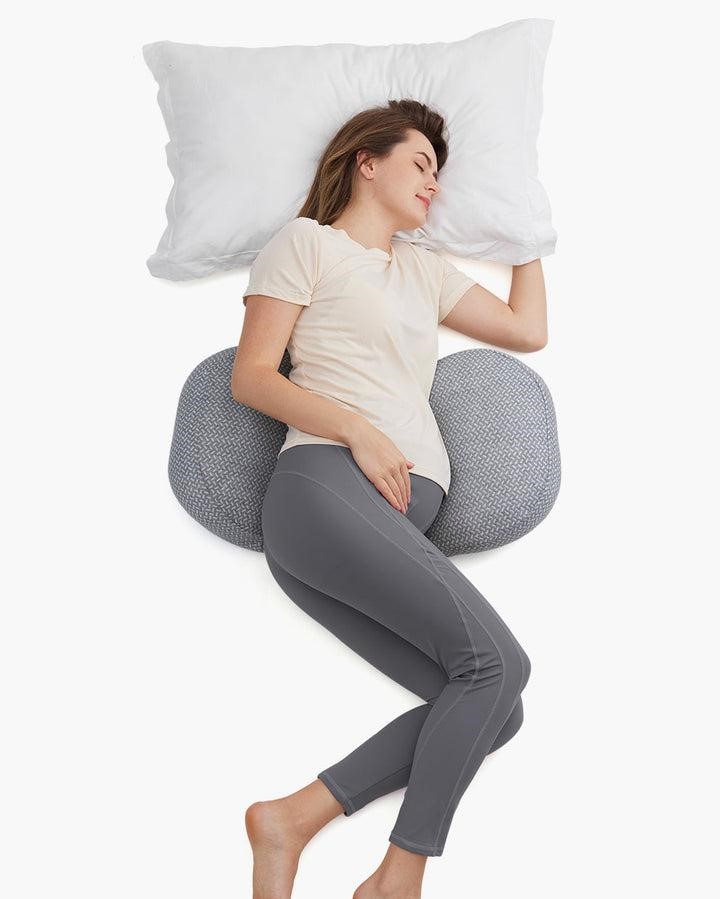
Side sleeping is the gold standard during pregnancy, particularly on your left side where blood flow to the placenta is optimized. To make this position genuinely comfortable rather than merely tolerable, place a firm pillow between your knees with enough thickness that your top leg rests at hip height—this keeps your pelvis neutral rather than allowing it to drop and rotate. Simultaneously, tuck a smaller wedge or the lower curve of a J-shaped pillow beneath your belly so the weight of your uterus doesn’t pull your spine into lateral flexion. Your top arm should drape over the pillow’s body rather than tucking beneath you, which prevents shoulder compression and the numbness that often wakes side sleepers mid-cycle. J-shaped pillows are particularly effective here because their curved hook supports your head and neck while the long tail extends between your legs, providing continuous alignment in a single piece rather than requiring you to coordinate multiple separate pillows that shift apart overnight.
Maternity Pillow Comparison: Finding Your Perfect Match
With so many maternity pillow options available, understanding how they stack up against each other helps you invest wisely. C-shaped pillows offer excellent back support and front cradling in a single piece, making them ideal for women who stay on one side most of the night—but they require repositioning when you switch sides. U-shaped pillows eliminate that problem entirely by surrounding your body on both sides, though they take up significant bed space, which can be a challenge if you share a queen-size mattress with a partner. Full-length straight body pillows are the most versatile and affordable option, working well for mild discomfort and doubling as nursing support postpartum, but they lack the structured curves that hold your spine in alignment during later trimesters.
Foam-filled pillows maintain their shape longer and provide firmer, more consistent support, while polyester-filled alternatives are lighter, more affordable, and easier to compress for travel or storage. Brands like Momcozy have developed pregnancy pillows with adjustable fill and breathable covers designed specifically for the evolving needs of expecting mothers, making it easier to find an option that adapts as your body changes. Inflatable options offer ultimate portability for overnight trips but sacrifice the conforming comfort that memory foam delivers. For women dealing with severe hip pain, a U-shaped memory foam pillow provides the most comprehensive relief. If you travel frequently, a compact wedge paired with a lightweight straight pillow replicates full-body support without filling an entire suitcase. Those on a tighter budget can start with a firm knee pillow and a belly wedge—two small investments that address the most critical pressure points without the cost of a full-body system. Ultimately, your best match depends on balancing your pain severity, bed size, mobility needs, and how many weeks remain in your pregnancy.
Additional Tips for Enhancing Pregnancy Comfort Beyond Pillows
While the right pillow makes a dramatic difference, pairing it with complementary habits amplifies your results. Establish a consistent wind-down routine thirty minutes before bed—dim the lights, practice gentle deep breathing, and avoid screens that stimulate your brain when it should be powering down. A supportive mattress with medium firmness prevents your hips from sinking too deeply, working in tandem with your body pillow to maintain spinal alignment. Light stretching or prenatal yoga before bed loosens tight hip flexors and lower back muscles, reducing the tension you carry into sleep. Stay hydrated throughout the day but taper fluid intake two hours before bedtime to minimize disruptive bathroom trips. Even a short evening walk can improve circulation, ease restless legs, and signal to your body that rest is coming. These small adjustments compound over time, transforming your sleep environment into one that genuinely supports recovery and restoration throughout every trimester.
Reclaim Restful Nights Throughout Every Trimester
Pregnancy sleep doesn’t have to mean endless nights of tossing, turning, and waking up with aching hips. Throughout this guide, we’ve seen how body pillows work by redistributing pressure, maintaining pelvic alignment, and supporting your belly’s growing weight—addressing the root causes of discomfort rather than just masking symptoms. The right pillow depends on your unique combination of sleep position, trimester, pain severity, and practical constraints like bed size and budget. Whether you choose a full U-shaped pillow for total body support, a C-shaped option for back and front cradling, or a simple wedge-and-knee-pillow combination for targeted relief, the key is matching the solution to how your body actually rests at night. Pair your pillow with consistent sleep habits, gentle stretching, and a supportive mattress, and you create an environment where genuine rest becomes possible again. You deserve restorative sleep during this transformative time—not as a luxury, but as a foundation for your health and your baby’s well-being. Take the step tonight to set up your sleep space with intention, and let your body finally get the rest it’s working so hard to earn.