

June 09: The role of nutrition in healthcare has evolved significantly over the past decade. Traditionally viewed as a supportive element of treatment, nutrition is now increasingly considered a therapeutic intervention capable of influencing patient outcomes. Healthcare professionals are recognizing that proper nutritional support can help reduce hospital stays, improve recovery rates, enhance immune function, and contribute to overall patient well-being.
This growing awareness is encouraging hospitals, rehabilitation centers, long-term care facilities, and home healthcare providers to incorporate oral clinical nutrition supplements into standard patient care protocols. As clinical evidence supporting the benefits of targeted nutritional interventions continues to expand, the demand for specialized products is expected to increase across the healthcare ecosystem.
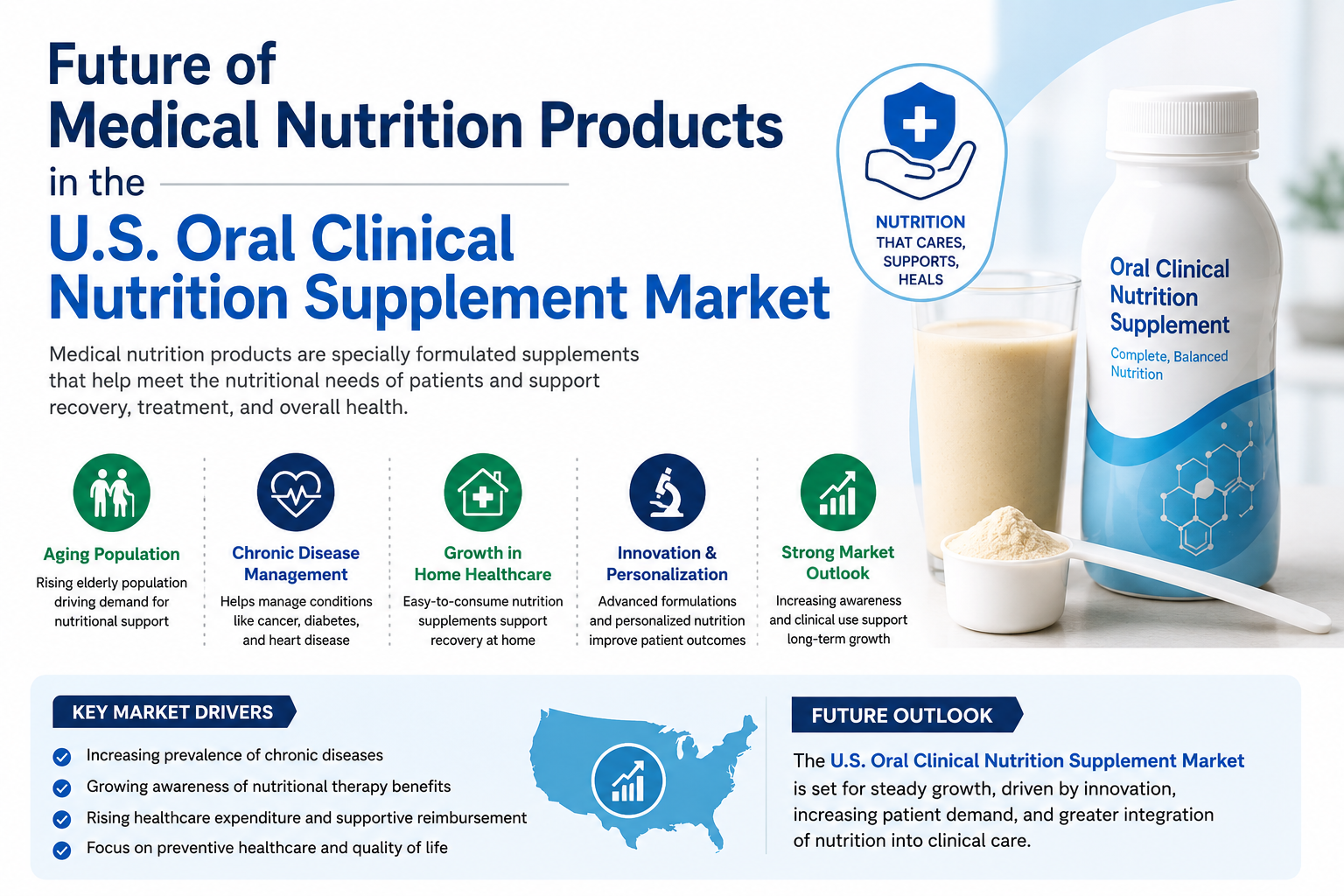
Aging Population Driving Long-Term Demand
One of the most influential factors shaping the future of medical nutrition products is the rapidly aging U.S. population. Older adults often face nutritional deficiencies due to reduced appetite, chronic health conditions, medication interactions, and physiological changes associated with aging. These challenges create a growing need for convenient, nutrient-dense nutritional supplements that can help maintain health and quality of life.
As the number of elderly individuals continues to rise, healthcare providers are increasingly recommending oral nutrition supplements to support muscle maintenance, bone health, immune function, and overall nutritional status. The trend toward aging in place and home-based healthcare further strengthens the demand for easy-to-consume nutritional products tailored to senior populations.
Manufacturers are responding by developing formulations specifically designed to address age-related nutritional requirements, creating new opportunities for innovation and market growth.
Rising Prevalence of Chronic Diseases
Chronic diseases remain one of the most significant healthcare challenges in the United States. Conditions such as cancer, diabetes, cardiovascular disorders, gastrointestinal diseases, and neurological conditions often impact nutritional intake and absorption. Many patients require specialized nutritional support to manage symptoms, maintain body weight, and improve treatment outcomes.
Medical nutrition products are increasingly being integrated into comprehensive disease management programs. Healthcare providers recognize that nutritional interventions can complement traditional therapies by helping patients maintain strength and resilience during treatment.
The increasing prevalence of chronic diseases is expected to sustain long-term demand for oral clinical nutrition supplements. This trend is likely to encourage manufacturers to develop disease-specific formulations that address unique nutritional needs while supporting clinical objectives.
Innovation Transforming Product Development
Innovation is becoming a defining characteristic of the medical nutrition industry. Advances in nutritional science, ingredient research, and manufacturing technologies are enabling companies to develop more effective and patient-friendly products.
Modern consumers and patients are seeking products that not only deliver clinical benefits but also offer improved taste, texture, convenience, and variety. Manufacturers are investing heavily in research to create formulations that enhance patient compliance and encourage consistent use.
Emerging innovations include high-protein supplements, immune-supporting formulations, condition-specific nutritional products, and personalized nutrition solutions. Functional ingredients such as probiotics, prebiotics, omega-3 fatty acids, and specialized protein blends are increasingly being incorporated into product portfolios.
According to industry observations highlighted by Persistence Market Research, innovation remains one of the most important competitive strategies among leading companies operating in this evolving sector.
Expanding Role of Personalized Nutrition
Personalized healthcare is rapidly becoming a major focus across the medical industry, and nutrition is no exception. Patients are increasingly seeking nutritional solutions tailored to their specific health conditions, genetic profiles, lifestyle factors, and treatment requirements.
Advances in data analytics, digital health technologies, and nutritional assessment tools are making personalized nutrition more accessible than ever before. This trend is expected to reshape product development strategies within the medical nutrition sector.
Companies that successfully offer targeted nutritional solutions supported by scientific evidence are likely to gain a competitive advantage. Personalized nutrition has the potential to improve patient adherence, enhance outcomes, and strengthen healthcare provider confidence in nutritional interventions.
Home Healthcare Creating New Opportunities
The growing shift toward home-based healthcare is significantly influencing demand for oral clinical nutrition supplements. Patients recovering from surgery, managing chronic illnesses, or receiving long-term care increasingly prefer treatment in home environments whenever possible.
Oral nutrition supplements provide a convenient and effective way to support patient health outside traditional healthcare settings. Their ease of use, portability, and accessibility make them ideal for home care applications.
Healthcare systems are also recognizing the potential cost benefits associated with preventive nutritional support, particularly when it helps reduce hospital readmissions and improve patient outcomes. This trend is expected to create substantial growth opportunities for manufacturers offering user-friendly nutritional solutions designed for home-based care.
Regulatory Support and Clinical Validation
The future growth of medical nutrition products will also depend on strong clinical validation and regulatory compliance. Healthcare providers increasingly demand evidence-based solutions supported by rigorous research and clinical trials.
Manufacturers are investing in scientific studies to demonstrate product effectiveness and build trust among physicians, dietitians, and healthcare institutions. Products backed by credible clinical data are more likely to gain acceptance and achieve long-term success in the marketplace.
Persistence Market Research notes that companies focusing on research-driven product development and transparent quality standards are better positioned to capitalize on evolving market opportunities and healthcare trends.
The future of medical nutrition products appears highly promising as healthcare systems increasingly recognize nutrition as a fundamental component of patient care. Rising chronic disease prevalence, an aging population, expanding home healthcare services, and ongoing product innovation are collectively driving demand for advanced nutritional solutions.
As personalized healthcare continues to gain traction and clinical evidence supporting nutritional interventions expands, the U.S. Oral Clinical Nutrition Supplement Market is expected to witness sustained growth and transformation. Companies that prioritize innovation, scientific validation, and patient-centered product development will be best positioned to succeed in this rapidly evolving healthcare segment. The coming years are likely to establish medical nutrition as a central pillar of modern healthcare, creating new opportunities for patients, providers, and industry stakeholders alike.