

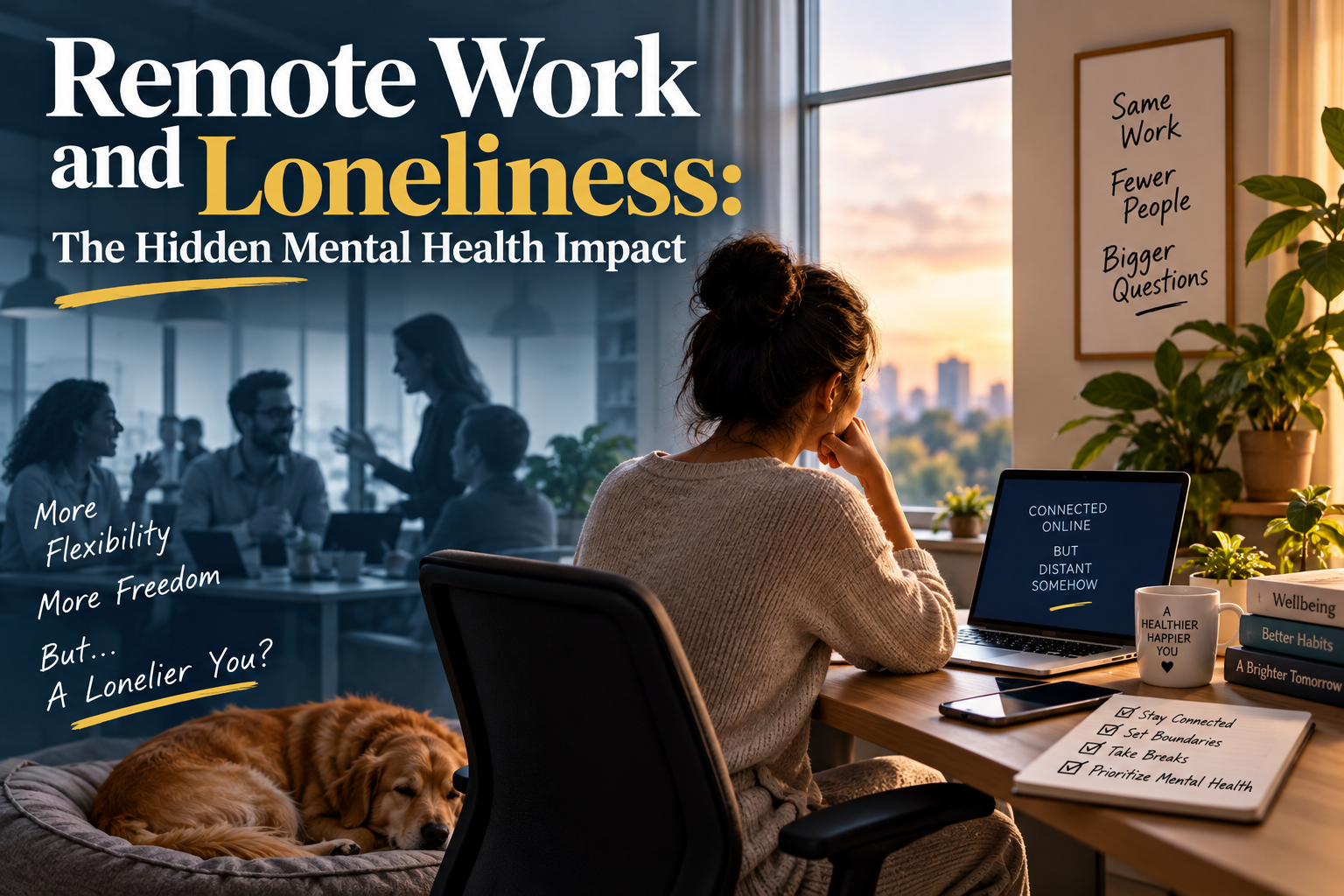
Remote work has transformed the modern workplace.
For millions of professionals, the ability to work from home means no daily commute, greater flexibility, more control over working hours and, in many cases, a better opportunity to balance professional and personal responsibilities.
But there is another side to the remote-work revolution that receives considerably less attention: loneliness.
A person can spend an entire working day communicating through email, Slack, Microsoft Teams, video calls and instant messages while still experiencing very little genuine human connection.
This creates a paradox of modern employment: we can be more digitally connected than ever while feeling socially disconnected at the same time.
The issue is not that remote work is inherently harmful. For many people, it can be highly beneficial. The challenge is that the social interactions naturally built into a traditional workplace—casual conversations, shared lunches, spontaneous collaboration and simply being around other people—can disappear when work moves entirely online.
Understanding the connection between remote work and loneliness is therefore becoming increasingly important for employees, managers and organizations.
What Is Remote Work Loneliness?
Remote work loneliness refers to feelings of social disconnection or lack of meaningful workplace interaction experienced while working remotely.
It is different from simply enjoying solitude.
Some people genuinely prefer working alone and can feel energized by having fewer interruptions. Loneliness, however, is about perceived social disconnection rather than the number of people physically around you.
A remote employee might have dozens of meetings every week but still feel that they have no one to talk to about a difficult day, career concerns or even something as simple as weekend plans.
This distinction matters.
Remote work does not automatically cause loneliness. Instead, certain remote-work conditions can increase the risk of social isolation, particularly when employees have limited opportunities for meaningful interaction.
Remote Work and Loneliness: The Hidden Mental Health Impact
1. The Hidden Cost of Working From Home
Remote work has transformed the modern workplace, offering employees flexibility, reduced commuting time and greater control over their schedules. However, behind these benefits lies a less visible challenge: loneliness. Employees can spend an entire day communicating through emails, messaging platforms and video meetings while still feeling socially disconnected. The absence of casual conversations, shared lunches and spontaneous interactions can gradually make working from home feel isolating. This has made remote work and loneliness an increasingly important issue for employees and employers alike.
2. Why Remote Work Can Feel Isolating
Working from home does not automatically cause loneliness, but it can remove many of the informal interactions that naturally occur in an office. A quick conversation over coffee, an impromptu discussion with a colleague or simply being surrounded by other people can create a sense of belonging. Remote communication, by contrast, is often focused on specific tasks and deadlines. Employees may attend several virtual meetings every day but have few opportunities for genuine social interaction. As a result, being digitally connected does not always mean feeling emotionally connected.
3. Who Is Most at Risk of Remote Work Loneliness?
The impact of remote work varies from person to person. Employees who live alone, new workers who have not yet developed workplace relationships and younger professionals at the beginning of their careers may be particularly vulnerable to isolation. Fully remote employees can also face greater challenges when their organizations rarely arrange face-to-face meetings. For new employees, remote onboarding can make it harder to understand workplace culture, develop friendships and find informal mentors. Over time, this lack of connection can affect both job satisfaction and overall wellbeing.
4. The Mental Health Impact of Workplace Isolation
Loneliness is more than simply feeling bored or having a quiet day. Persistent social disconnection can affect emotional wellbeing and may contribute to stress, low mood, anxiety and reduced quality of life. For remote employees, the problem can become particularly difficult because the workplace no longer provides an obvious source of social interaction. Someone who feels isolated in an office can easily approach a colleague, whereas a remote employee has to make a deliberate effort to initiate contact. This can create a cycle in which reduced interaction leads to weaker relationships and greater feelings of isolation.
5. Remote Work Can Also Support Better Wellbeing
It is important to recognize that remote work is not inherently bad for mental health. For many employees, working from home can improve wellbeing by eliminating lengthy commutes, increasing flexibility and making it easier to balance professional and personal responsibilities. Some people are also more productive and comfortable outside a traditional office environment. The real challenge is finding the right balance between autonomy and social connection. Remote work can support wellbeing when employees have flexibility while also maintaining meaningful relationships with colleagues, friends and their wider communities.
6. When the Home Becomes the Entire Workplace
One of the less obvious challenges of remote work is the blurring of boundaries between professional and personal life. Employees may wake up, work, eat and relax in the same environment without the physical transition that comes with commuting to an office. This can make it harder to mentally switch off at the end of the working day. Checking work messages late at night or returning to unfinished tasks can further extend the working day. When work consumes more time, employees may have less opportunity to socialize, exercise, pursue hobbies or spend time with family and friends.
7. Seven Ways Remote Workers Can Stay Connected
Employees can take practical steps to reduce loneliness while working remotely. Scheduling informal conversations with colleagues, working occasionally from a coworking space or café and meeting friends during lunch breaks can introduce more social interaction into the day. Regular exercise classes, community groups and professional networking events can also help create connections outside work. Establishing a daily routine is equally important. Taking a morning walk, leaving the house during lunch and setting a firm end to the workday can create healthier boundaries. Most importantly, employees should maintain social relationships proactively rather than waiting until loneliness becomes overwhelming.
8. Employers Have a Role to Play
The responsibility for addressing remote-work loneliness should not fall entirely on employees. Organizations can help by creating stronger remote onboarding programs, assigning mentors or workplace buddies and providing opportunities for informal interaction. Occasional in-person gatherings can also strengthen relationships among distributed teams. Managers should be encouraged to understand the difference between productivity and employee wellbeing. At the same time, companies should avoid filling calendars with unnecessary video meetings simply to increase communication. The objective should be meaningful connection rather than more screen time.
9. Can Hybrid Work Provide a Better Balance?
Hybrid work offers a potential middle ground between fully remote and traditional office-based employment. Employees can retain the flexibility of working from home while using office days for collaboration, mentoring and social interaction. However, hybrid work only delivers these benefits when in-person attendance has a clear purpose. If employees travel to an office only to spend the day on video calls with colleagues elsewhere, the social advantages are limited. A successful hybrid workplace should therefore use office time to strengthen relationships, creativity, teamwork and organizational culture.
10. The Future of Work Must Include Human Connection
The future of work is unlikely to be completely remote or entirely office-based. Instead, companies will continue experimenting with remote and hybrid models designed around flexibility and productivity. But one lesson is becoming increasingly clear: technology can enable communication, but it cannot automatically create connection. Organizations and employees need to deliberately build cultures where people feel seen, included and supported. Remote work should provide freedom without creating isolation. The goal of the modern workplace should therefore be more than productivity—it should be creating an environment where flexibility, belonging and mental wellbeing can coexist.
Final Thoughts
Remote work has changed where we work, but it has also changed how we experience work.
The freedom to work from almost anywhere is one of the great advantages of the modern workplace. Yet freedom without connection can sometimes become isolation.
The solution is not to reject remote work.
It is to recognize that human beings need more than digital communication to feel that they belong.
For employees, that may mean leaving the house, maintaining friendships, developing meaningful relationships with colleagues and creating boundaries around work.
For employers, it means designing remote and hybrid workplaces where productivity is important—but so are trust, belonging and human connection.
The future of work should not be a choice between flexibility and wellbeing.
It should be about creating a workplace where people can have both.
Frequently Asked Questions
Does remote work cause loneliness?
Remote work does not automatically cause loneliness. However, working remotely can reduce spontaneous social interaction and may increase feelings of isolation for some people, particularly when there are few opportunities for meaningful connection.
Why do I feel lonely working from home?
Working from home can remove many informal social interactions that occur naturally in an office. Even if you communicate with colleagues online throughout the day, the absence of face-to-face interaction can contribute to feelings of disconnection.
Is remote work bad for mental health?
Not necessarily. Remote work can improve flexibility, reduce commuting stress and help employees manage personal responsibilities. Its effect on mental wellbeing depends on factors such as workload, autonomy, social connection, home environment and organizational support.
How can I stop feeling lonely while working remotely?
Create opportunities for regular social interaction. Consider coworking spaces, meeting friends during breaks, participating in local activities, maintaining relationships with colleagues and establishing routines that encourage you to leave the house.
Can hybrid work reduce loneliness?
Hybrid work can provide opportunities for face-to-face interaction while retaining some of the flexibility of remote work. However, its effectiveness depends on whether in-person days actually facilitate collaboration and social connection.
What can companies do to reduce loneliness among remote employees?
Organizations can create mentoring programs, facilitate informal interaction, organize occasional in-person gatherings, strengthen remote onboarding and train managers to recognize signs of employee isolation.
Is loneliness the same as social isolation?
They are related but different. Social isolation generally refers to limited social contact or relationships, while loneliness describes the subjective feeling of being disconnected or lacking meaningful relationships. A person can have frequent interactions and still feel lonely.