

Greater Noida, May 12: The Department of Pediatrics at Sharda School of Medical Sciences and Research, Sharda Hospital, Sharda University successfully hosted the Basic Neonatal Resuscitation Programme (BNRP) Training Day at its Simulation Centre as part of the nationwide Neonatal Resuscitation Programme (NRP) Day initiative led by the National Neonatology Forum of India under the theme “One Day, One Nation, One Mission.” The programme was conducted in collaboration with the UP Neonatal Health Academy and the Noida Neonatal Society under the guidance of Dr. Rajeev Kumar Thapar, Professor and Head of Department, Paediatrics, Sharda School of Medical Sciences and Research. The event commenced with an inaugural address by Dr. Thapar, who emphasized the critical importance of timely neonatal resuscitation in reducing preventable newborn deaths.
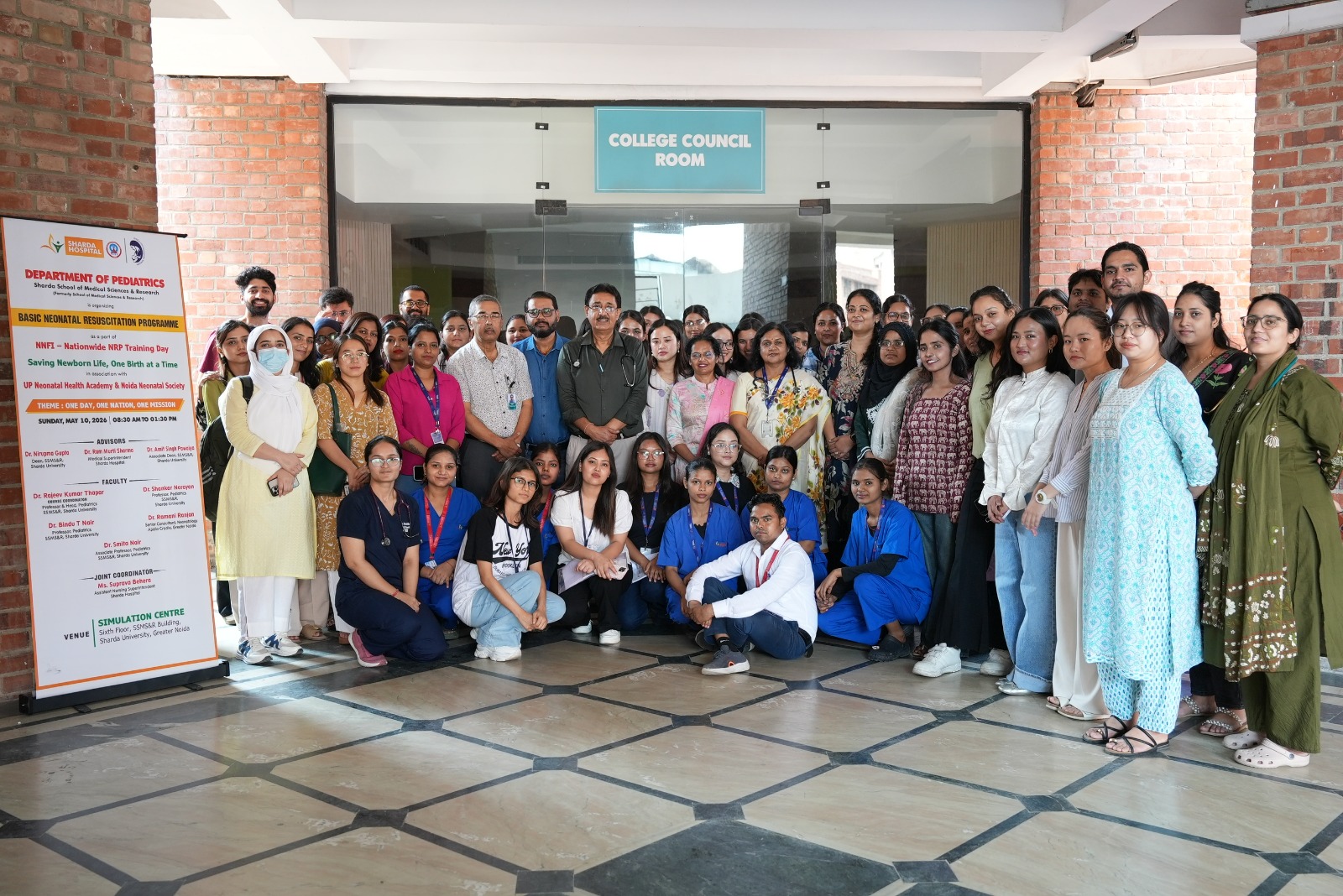
The hands-on training programme witnessed enthusiastic participation from over 50 healthcare professionals, including doctors, nurses, and nursing students from both government and private healthcare institutions. The sessions focused on evidence-based neonatal resuscitation techniques designed to help newborns establish breathing immediately after birth, a crucial intervention during the first few minutes of life. The BNRP training faculty included Dr. Rajeev Kumar Thapar, Dr. Shankar Narayan, Dr. Bindu T Nair, Dr. Ramani Ranjan, Dr. Smita Nair, and Dr. Suprava Behera.
Speaking on the occasion, Dr. Rajeev Kumar Thapar, Professor and Head of Department, Paediatrics, Sharda School of Medical Sciences and Research said,
“Newborn mortality continues to remain a significant healthcare challenge, particularly due to birth asphyxia and delayed resuscitation. Through initiatives like NRP Day, we are strengthening the capabilities of frontline healthcare providers with life-saving skills that can make an immediate difference at the time of birth. Every trained provider adds another layer of safety for newborns and brings us closer to achieving India’s neonatal mortality reduction goals.”
India continues to face challenges in reducing neonatal mortality, with a significant proportion of deaths occurring because babies are unable to establish breathing at birth. Experts believe that timely intervention by trained healthcare professionals can prevent many of these avoidable fatalities. The nationwide NRP Day initiative is expected to play an important role in supporting India’s goal of achieving a Neonatal Mortality Rate (NMR) of 12 by 2030. The synchronized training effort conducted across urban, rural, and remote regions of the country also marks a historic milestone in India’s public health landscape by setting a benchmark for the highest number of neonatal resuscitation skill trainings conducted in a single day.
The nationwide initiative, spearheaded by Dr. Lallan Kumar Bharti, President, NNF India aims to strengthen newborn survival by ensuring that every birth is attended by a healthcare provider trained in neonatal resuscitation. Newborn mortality remains a major public health challenge in India. A significant proportion of neonatal deaths occur due to inability of the baby to establish breathing at birth. The first few minutes after birth are critical, and timely intervention by trained healthcare providers can prevent these avoidable deaths. Simple, evidence-based skills to help babies breathe at birth can make the difference between life and death. Recognizing this urgent need, NNF India has conceptualized and executed this massive capacity-building initiative. Across the country, 998 training courses are being conducted, with nearly 20,000 healthcare providers participating. These trainings are reaching not only metropolitan cities but also rural and remote regions, including geographically challenging areas.