

Your hospital may quote $60,000 for a surgery, accept $24,000 from your health plan as payment in full, and still send you a statement showing the larger figure. Weeks later, the plan wants its $24,000 back out of your settlement. Three numbers, one treatment, and a fight over which of them a jury gets to hear. That fight is what the Indiana collateral source rule governs.
How the Indiana Collateral Source Rule Works
The Rule in Simple Terms
So how does this rule actually operate in an Indiana injury case? Under Indiana Code §§ 34-44-1-1 through 34-44-1-3, courts in personal injury and wrongful death actions can let in evidence of qualifying collateral-source payments, though the statute excludes certain categories. A collateral source is simply money that helps cover your losses but comes from somewhere besides the defendant. The chapter aims to pin down the real financial loss and prevent anyone from recovering twice for the same harm.
Why “Considered” Is Not “Automatically Deducted”
Can a jury hear evidence of collateral source payments in Indiana? Yes, when the evidence qualifies under the statute. Indiana Code § 34-44-1-3 tells the fact-finder to weigh admitted evidence when fixing an award. Weigh is the operative word. Nothing in the statute forces a dollar-for-dollar subtraction. Settlement talks work differently still: the parties bargain toward a number, and no judge hands down a damages figure.
Why Billed Charges, Payments, Reductions, and Liens Are Different Figures
Four Numbers Can Describe the Same Treatment
| Figure | Practical meaning | Why it cannot stand alone |
| Billed charge | The hospital’s original stated price | Often far above what anyone actually pays |
| Allowed or paid amount | Plan-negotiated allowance or money that changed hands | Neither figure fixes your repayment duties or your full recoverable loss |
| Contractual reduction | Charges written off under a provider-plan agreement | Nobody hands you this money |
| Reimbursement claim | A health plan’s or carrier’s demand against your recovery | Can shrink what you keep even after another entity paid first |
Under Indiana Evidence Rule 413, statements of medical charges serve as initial evidence the charges are reasonable. Initial only. The amount actually accepted for treatment can also inform the reasonable value of the medical services. That valuation question sits apart from collateral-source admissibility, and a discount does not guarantee a matching cut to damages.
Most claims go wrong right here, sorting these figures, which raises a key question: what is the collateral source rule in Indiana? Knowing it helps explain which of these numbers a jury hears and which live only in plan documents. Before any settlement, the file still needs a fact-specific look at liability evidence, applicable court rulings, plan terms, and attached liens.
A Crash Claim, Run Through the Numbers
Picture a hypothetical crash claim. Your medical account and reimbursement notice show these amounts:
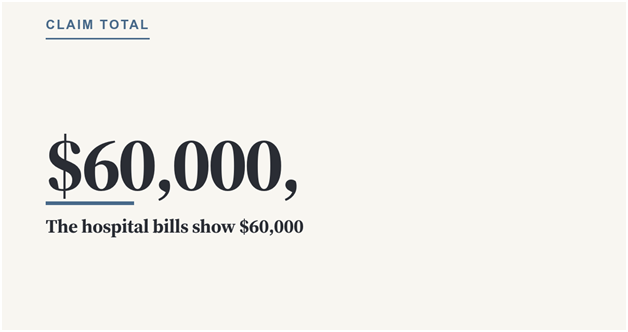
The hospital bills $60,000, and nobody ultimately pays that figure.
- The hospital bills $60,000, and nobody ultimately pays that figure.
- A contractual reduction cuts the provider’s billed charge to the contractually accepted balance.
- Your plan may come after you to be reimbursed for what it paid on your behalf.
- You paid $6,000 yourself, and that stays your out-of-pocket treatment expense.
None of this amounts to a settlement estimate. Liability disputes and policy limits can affect the recovery; nonmedical damages count too, and lien negotiations shape the repayment figure.
Payments Indiana Law Excludes
What Exceptions Apply to the Collateral Source Rule in Indiana?
Does insurance count as a collateral source in Indiana? It does, and a jury can hear qualifying payment evidence under Indiana Code § 34-44-1-2. The statute carves out life insurance and other death benefits. Benefits you or your family paid for directly are out too. So are government payments compensating the loss before trial, including qualifying payments by state or federal agencies, instrumentalities, or political subdivisions.
Who paid to obtain the benefit often decides whether an exclusion applies. Admissibility and repayment are two separate legal questions.
How Reimbursement Claims Shrink What You Keep
A Payment Made Today May Come Back Out Tomorrow
Indiana Code § 34-44-1-2 permits proof of amounts you must repay, including qualifying workers’ compensation obligations. It also lets in evidence of what you or your family spent to obtain the benefit. A lien can pull settlement money back to the entity that funded your treatment. How much it takes hinges on the governing plan, the claim’s validity and amount, and whatever reduction you can negotiate.
Documents That Reveal Your True Position
Keep the paperwork. Itemized bills and explanations of benefits put charges, payments, and adjustments in one place. Keep premium records with your out-of-pocket receipts. Written lien or subrogation notices spell out what someone claims you owe.
The Number That Matters Is the One the Evidence Supports
The hospital’s charge and the accepted payment answer different questions, and neither equals what you repay or what you recover. A contractual reduction is its own figure entirely. Indiana law admits some evidence and bars whole categories, so a bill or an insurer’s payment, standing alone, settles nothing. Accurate valuation takes the complete financial record and a case-specific application of Indiana law.
