

CTOs navigating the complexity of modern engineering face a consistent challenge: AI adoption, platform scalability, reliability, security, and team execution all compete for attention simultaneously. In that context, content production — specifically the video documentation, product walkthroughs, and feature announcement content that supports go-to-market and developer experience — tends to accumulate as a form of organizational debt that compounds quietly until it becomes a visible bottleneck.
The pattern is familiar to most technical leaders who have scaled a SaaS product. Engineering ships features faster than documentation catches up. Product pages exist and are well-written. Developer docs are maintained with care. But video — the format that actually shows how a feature works, that demonstrates value in a way that text descriptions cannot — falls behind the release cycle consistently. Not because anyone decided it wasn’t important, but because the production infrastructure for video content doesn’t scale at the speed that engineering does.
CTOs in high-growth companies are managing $1M to $50M in team budget, infrastructure, and third-party costs — and every dollar of that budget is competing for allocation against other priorities. Commissioning video production for every feature update, every documentation page, and every product launch isn’t the right use of those resources. But the alternative — a growing gap between what the product can do and what users and prospects can see it doing in video — has its own cost in activation, conversion, and developer adoption metrics.
URL to Video AI: Closing the Gap Between Documentation and Video
The most direct answer to this gap is converting existing product content — documentation pages, feature landing pages, changelog entries — directly into video without a separate production process. The content is already written and maintained. The value proposition is already articulated. The visual assets are already there. URL-to-video AI extracts that existing content and generates video that communicates what the page contains.
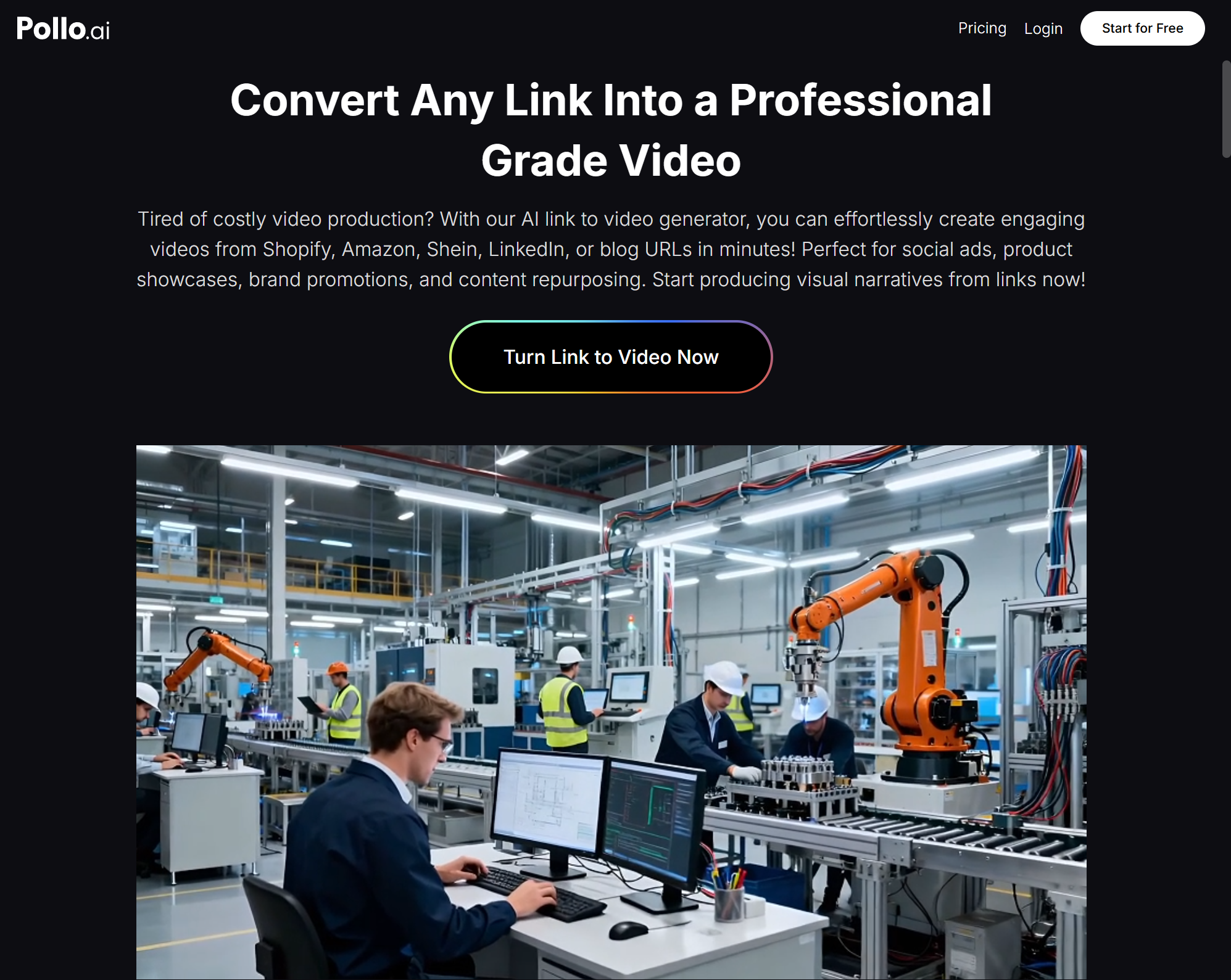
Pollo AI’s dedicated URL to Video tool inside its Marketing Studio handles exactly this workflow. For SaaS teams that already invest in well-developed product pages and documentation — which most serious engineering-led companies do — this means the raw material for video content exists at URLs that are already maintained by the product and engineering teams. The production step is generating video from that existing content rather than initiating a parallel content creation process with its own stakeholders, timelines, and resource requirements.
See how an ex-Google CTO uses AI agents to build software faster, automate finance workflows, and redesign development around human creativity. The same logic applies to content production: AI generation doesn’t replace the human judgment that produces strong product pages and documentation — it extends the reach of that judgment into video format at a scale and speed that manual production cannot match. For CTOs thinking about where AI automation delivers the most compounding return, converting existing written content into video is one of the clearest current applications.
The Developer Experience Dimension
Data poisoning threatens AI models by corrupting the datasets that power them. But in developer experience, the equivalent threat is documentation that lags behind the product — and video documentation specifically is where the gap between what a product can do and what developers can quickly understand tends to be widest. A three-minute video walkthrough of an API integration or a new SDK feature communicates information that would take a developer twenty minutes of reading and experimentation to extract from text documentation alone.
For developer-focused products especially, video documentation has a direct impact on time-to-first-value — the metric that predicts long-term retention more reliably than almost any other early signal. Developers who can see a feature working in context, who understand where it fits in a workflow from watching rather than reading, activate faster and require less support overhead. URL-to-video generation from existing documentation makes this accessible without a dedicated developer relations video production budget.
Building the Content Production System That Scales With Engineering
The CTO Club has expanded its scope to include broader technology leadership topics such as scaling teams, aligning tech with business goals, and navigating emerging trends. Content production infrastructure belongs in that category — not as a marketing function that operates separately from engineering, but as a system that needs to scale in alignment with the engineering output it supports.
The architecture for that system in 2026 looks something like this: product pages and documentation serve as the source of truth for what the product does. URL-to-video generation converts that source content into video assets on a cadence that tracks the release cycle. Those video assets feed developer documentation, product marketing, paid campaigns, and organic content distribution from the same production step rather than requiring separate production processes for each channel.
Pollo AI’s Marketing Studio connects this URL-to-video capability to the platform’s Creative Studio for general video generation and Commerce Studio for product imagery — all on shared credits within one platform. For engineering-led companies that are consolidating their tool stack wherever possible, having video content production across multiple use cases managed through one platform relationship rather than several reduces both vendor overhead and integration complexity.
PicLumen AI and Understanding the Broader Generative Content Landscape
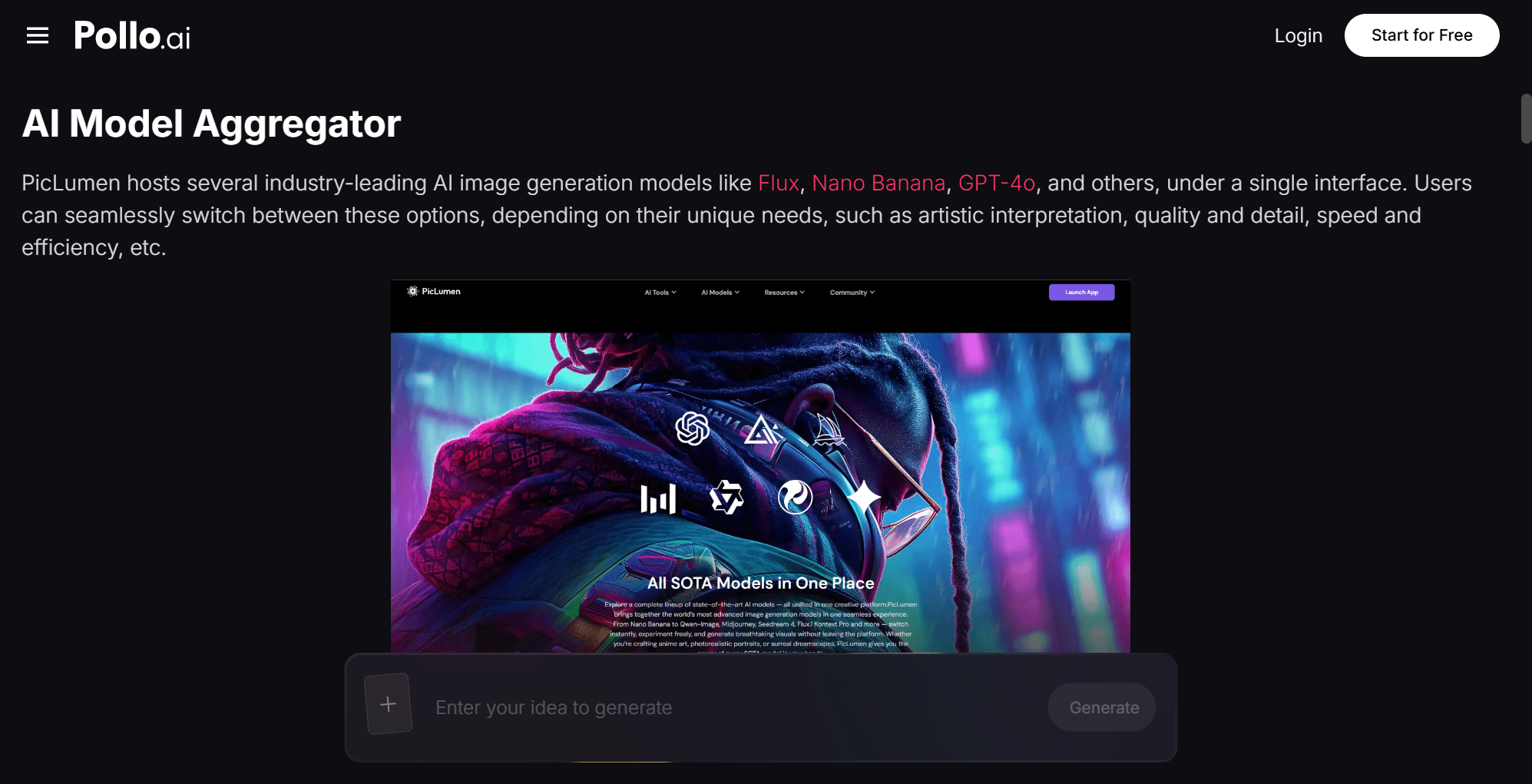
CTOs staying ahead requires more than technical expertise — it demands strategic leadership, operational savvy, and a constant commitment to understanding the tool landscape. In the AI creative tools category specifically, PicLumen AI offers AI image generation with its own model approach and aesthetic range — relevant for engineering and product teams that need to generate visual assets for documentation, blog content, or design mockups from text descriptions rather than from existing web content. For content operations that span both original image generation and URL-based video production, understanding where different tools are optimised helps technical teams allocate production work to the right capability at each stage of the content workflow.
The Strategic Case for Treating Content as Engineering Infrastructure
The CTO Club helps CTOs navigate complexity and focus on building durable systems and delivering outcomes. Video content production infrastructure is a durable system in exactly that sense — when it’s built to scale with the product rather than lag behind it, it delivers compounding returns in activation, developer adoption, and GTM efficiency that accumulate over time rather than requiring periodic catch-up investments.
URL-to-video generation is the production layer that makes building that system practically viable for engineering-led companies operating at scale. The documentation investment is already being made. The product pages are already being maintained. Converting that existing content investment into video assets that extend its reach into the format that drives the most understanding and action is the operational decision that closes the loop between what the engineering team builds and what the market can see and understand. For CTOs thinking about where AI automation delivers meaningful compounding value in the organizational systems they’re responsible for, that loop is worth closing deliberately rather than leaving as an ongoing content debt.